
Pests
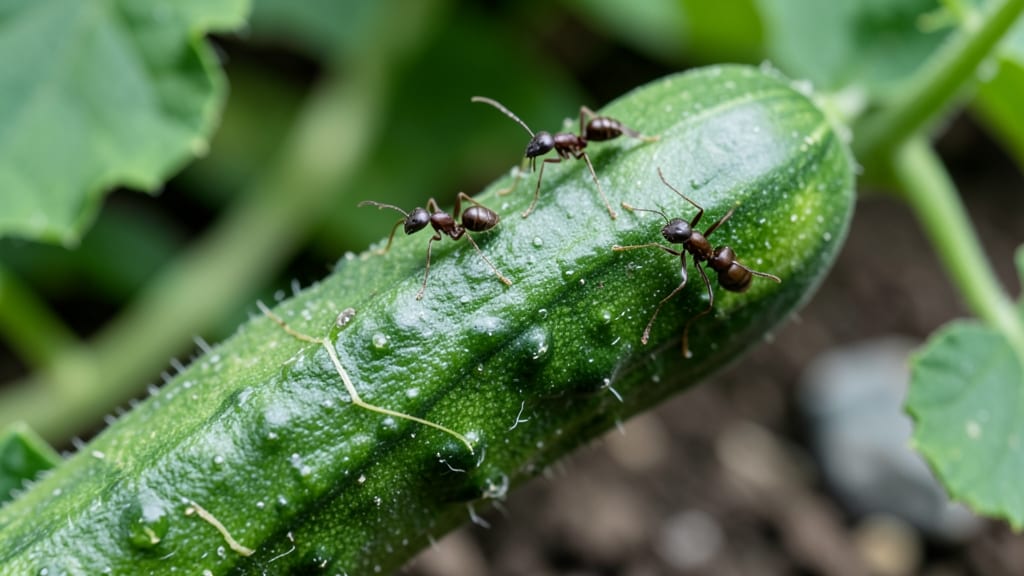
Cucumber and ants mean your harvest could be at risk if you don’t act fast. 🐜 I’ve battled these tiny invaders ruining my prized cucumbers—ants don’t just march through your garden; they’re the uninvited chefs bringing aphids and other pests to the party.
The good news? A simple, organic spray barrier can stop them without harming your plants or the planet.
Here’s the secret: ants follow scent trails, so disrupting their highways works better than traps. A mix of sprayable organic oils (like neem or horticultural oil) and dish soap creates a sticky, scent-blocking shield that confuses their navigation.
Apply it to stems and soil around your cucumbers, and you’ll see fewer ants within 24 hours. The key is reapplication after rain.
What you’ll gain is cleaner leaves, fewer aphids, and cucumbers that stay free of sticky honeydew. Your plants will grow stronger because they’re not stressed by pests, and you avoid the chemical residue that can linger on your veggies.
This method works for all garden pests that hitch rides on ants—no guesswork, just results.
Works in containers, raised beds, or in-ground gardens, and it’s safe for pollinators too. The barrier breaks down naturally, so you can harvest without worry. Let’s get those cucumbers protected—and your garden back to thriving!
The hidden attraction factors
When you spot ants marching across your cucumbers, it’s not just random pest behavior—it’s a deliberate, science-backed quest for food and shelter. Understanding the why behind this invasion is the first step to stopping it.
Let’s break down the key reasons these tiny critters are drawn to your garden’s star produce.
Cucumbers aren’t just water-rich; they’re sugar magnets for ants. The plant’s natural extrafloral nectaries (tiny sugar-producing glands) secrete a sweet, sticky liquid that ants love. This nectar isn’t just a snack—it’s a trail marker that lures more ants to the party.
Why it matters: Ants farm these nectaries like cattle, protecting them in exchange for sugar. If you don’t intervene, they’ll recruit armies to defend their new food source—often by herding aphids (who excrete honeydew) onto your cucumbers.
Actionable insight: Prune nectary-heavy leaves or use a homemade organic spray to disrupt their sugar supply.
Ants and aphids have a symbiotic relationship—one that turns your cucumbers into an all-you-can-eat buffet. Aphids pierce plant stems to suck sap, but they can’t digest all of it. What they excrete? Honeydew, a sugary liquid that ants adore.
Why it happens:
- Protection racket: Ants patrol aphid colonies, attacking predators (like ladybugs) that threaten their food supply.
- Trail reinforcement: The honeydew leaves a scent trail, making it easier for more ants to find the party.
- Cucumber chaos: Aphids weaken plants by sapping nutrients, while ants block natural defenses (like parasitic wasps) from controlling the infestation.
Actionable insight: Introduce aphid-eating insects (like lacewings) or wipe honeydew off leaves with a damp cloth to break the ants’ supply chain.
Cucumbers thrive in high-humidity conditions, and ants are no different—they’re drawn to the microclimate your plants create. The damp soil, dew-covered leaves, and even the water channels in cucumber stems provide the perfect hideout for ant colonies.
Why it works for them:
| Ant Need | How Cucumbers Provide It |
|---|---|
| 💧 Hydration | Dew on leaves and moist soil near roots give them easy water access. |
| 🏠 Nesting sites | Cracks in mulch, hollow stems, or leaf litter near cucumbers become ant highways. |
| 🌡️ Temperature control | Shady, humid spots under vines regulate their body temperature better than open soil. |
Actionable insight: Reduce mulch near stems, improve airflow around plants, and avoid overwatering to make your cucumbers less ant-friendly.
Ants are opportunistic scavengers, and cucumbers—especially as they age or get damaged—become a magnet for decay. Overripe cucumbers, fallen leaves, or even rotting fruit on the vine release volatile organic compounds (VOCs) that ants detect from yards away.
Why it’s a problem:
- Food decay = ant buffet: Fungi, bacteria, and fermenting matter emit smells that ants can’t resist.
- Secondary infestations: Once ants find one food source, they’ll expand their territory to nearby plants.
- Disease risk: Decay attracts other pests (like fruit flies), creating a pest ecosystem around your cucumbers.
Actionable insight: Pick cucumbers regularly, remove fallen debris, and compost far from your garden to starve out ant scouts.
Now that you know why ants are crashing your cucumber party, the next step is turning the tables—and making your garden the last place they’d want to visit. 🚫🐜
Practical Fixes for Cucumber Pests
Ants marching across your cucumbers aren’t just a nuisance—they can attract worse pests like aphids and even damage your plants. But don’t worry! With the right strategies, you can kick these tiny invaders to the curb without harsh chemicals.
Below, we’ve broken down the most common causes of ants on cucumbers and matched them with easy, organic solutions—plus prevention tips to keep your garden ant-free long-term.
Ants often wander onto cucumber plants in search of sweet sap (like honeydew from aphids) or moisture. If they’re still just exploring, act fast to deter them before they set up camp.
Fix:
- 🍳 Diatomaceous Earth Barrier – Sprinkle food-grade diatomaceous earth (DE) around the base of your cucumber plants, creating a thin ring (about 2–3 inches wide). Ants will avoid crossing it because DE dehydrates their exoskeletons.
- 🌿 Citrus or Vinegar Spray – Mix 1 part white vinegar or citrus juice with 3 parts water in a spray bottle. Lightly mist the soil and lower leaves where ants are active. The strong scent confuses and repels them.
- 🥘 Coffee Grounds Trap – Sprinkle used coffee grounds near ant trails or plant bases. Ants dislike the smell and won’t cross it. Bonus: It enriches the soil!
💡 Pro Tip: Reapply DE or sprays after rain, as moisture washes it away.
If ants are protecting aphids (their favorite snack), you’ll see sticky honeydew on leaves and curled, yellowing foliage. This is a two-pest problem—kill the ants, and the aphids will vanish.
Fix:
- 🔪 Soap Spray for Aphids – Mix 1 tbsp mild liquid soap (like castile) with 1 quart water. Spray directly on aphids and ants. The soap disrupts their protective wax layer, killing them on contact.
- 🌱 Introduce Predatory Insects – Ladybugs and lacewings love aphids. Buy them online or attract them by planting dill, fennel, or marigolds nearby.
- 🥘 Sticky Traps for Ants – Place yellow sticky cards near the plants to trap foraging ants. Check and replace them weekly.
✨ Prevention: Remove weeds and debris near cucumbers—ants nest in dark, moist areas.
If you spot tiny mounds or trails leading to underground tunnels, you’ve got a full-blown ant colony. These pests will keep coming back unless you eliminate the queen.
Fix:
- 🔥 Boiling Water Treatment – Carefully pour boiling water directly into ant hills (avoid roots!). This kills workers and disrupts the colony. Do this in the early morning or late evening to avoid harming beneficial insects.
- 🌿 Essential Oil Bombs – Mix 10 drops peppermint or tea tree oil with 1 cup water in a spray bottle. Drench the ant mound and surrounding soil. These oils smother and repel ants.
- 🏗️ Physical Barriers – Install copper tape (ants hate the electrical charge) around pot edges or garden beds. For in-ground plants, create a sand or gravel border (ants avoid rough textures).
🎯 Long-Term Defense: Plant mint, lavender, or basil near cucumbers—ants despise these scents!
Even after picking, ants can contaminate your harvest or chew into ripe cucumbers. Keep them away from your storage and garden beds.
Fix:
- 🥘 Store Cucumbers Properly – Keep picked cucumbers in the fridge (ants avoid cold surfaces) or in mesh bags to block access.
- 🌿 Ant-Proof Garden Storage – Use metal or glass containers (not cardboard) for storing garden tools or harvested veggies. Ants can’t chew through them!
- 🔪 Vinegar Wipe-Down – Wipe down harvesting tools and surfaces with a vinegar-water mix to remove scent trails that lure ants.
💡 Quick Fix: Sprinkle chili powder or cayenne pepper around storage areas—ants avoid the spicy kick!
Stop ants before they start with these low-effort habits:
- 🌿 Mulch with cedar or pine needles (ants hate the scent).
- 💦 Keep soil moist but not soggy (ants seek out dry, cracked earth).
- 🌱 Rotate crops to disrupt ant nesting patterns.
- 🔍 Inspect plants weekly for early signs of trails or hills.
By combining immediate fixes with long-term prevention, you’ll keep your cucumber patch ant-free—and thriving! 🚜🌱
Frequently asked questions
Why do ants suddenly appear on my cucumber plants?
Ants target cucumbers because they produce extrafloral nectar—a sweet liquid that ants love as food. They also follow scent trails from honeydew (aphid waste) or seek moisture in damp garden soil. Once they find your plants, they'll recruit more ants to protect their food source.
Will ants actually harm my cucumber plants?
Directly, no—but they create bigger problems. Ants protect aphids (which weaken plants) and leave honeydew that attracts mold and other pests. Their trails can also spread fungal spores. The real damage comes from the secondary pests they bring to your cucumbers.
How do I know if ants have built a nest near my cucumbers?
Look for tiny mounds (like miniature volcanoes) in soil or mulch, or visible trails leading to underground tunnels. If you see ants carrying debris or larvae, that's a sure sign of a colony. Check the base of plants and along garden edges first.
Can I use vinegar spray on cucumber leaves without damaging them?
Yes, but use it sparingly—mix 1 part vinegar with 3 parts water and apply only to soil and lower leaves. Vinegar can burn foliage if sprayed directly. For leaves, try neem oil instead, which is safer for plants. Always test on a small area first.
How long does it take for organic ant repellents to work?
Most organic methods show results within 24-48 hours, but full colony elimination can take 1-2 weeks. Diatomaceous earth works fastest (ants avoid it immediately), while essential oil sprays need 3-5 days of repeated application. Consistency is key—reapply after rain.