
Vegetables
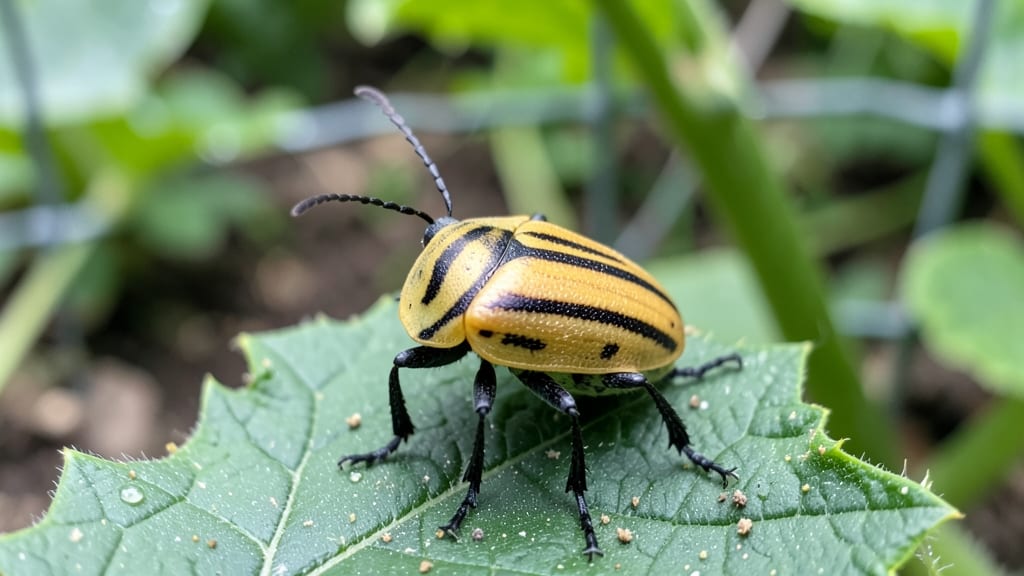
Controlling striped cucumber beetle is a must—these striped pests can turn your cucumbers into a skeleton garden in days. 🌱 I’ve lost entire squash plants to them, but these organic barrier tricks saved my harvest—and they’re easier than you think. The key is stopping them before they lay eggs.
Row covers work like magic when you put them on at planting, while collars around young plants create a physical barrier they can’t chew through. Even a simple diatomaceous earth ring around stems keeps them away without chemicals.
You’ll see healthier vines, fewer holes in leaves, and cucumbers that stay bigger and straighter than ever. The best part? These methods work for melons and pumpkins too, not just cucumbers. No more helplessly watching your plants get devoured.
Here’s exactly how to set up these protective barriers before the beetles arrive.
Root Causes Of Beetle Infestations
Understanding why striped cucumber beetles (Acalymma vittatum) invade your garden is the first step to stopping them. These pests don’t just show up randomly—they’re drawn by specific conditions and cues.
Let’s break down the real reasons behind their unwelcome visits, so you can address the problem at its source.
Striped cucumber beetles are specialized feeders with a strong preference for plants in the Cucurbitaceae family—think cucumbers, squash, pumpkins, melons, and even some weeds like buffalo gourd. Here’s why they target these plants:
- Volatile Organic Compounds (VOCs): Healthy cucurbit plants emit sulfur-containing compounds (like cis-jasmone and linalool) that act as chemical beacons, signaling to beetles that a meal—and potential breeding grounds—are nearby. - Young, Tender Leaves: Beetles favor new growth because it’s softer and easier to chew.
If your plants are just sprouting, they’re essentially invitation flags for these pests. - Weeds as Stepping Stones: Plants like buffalo gourd (Cucurbita foetidissima) and wild cucumbers (Echinocystis lobata) are beetle magnets and can act as bridge hosts, allowing populations to build up before moving to your cultivated crops.
Actionable Insight: 💡 Remove or suppress weeds in the cucurbit family within a 50-foot radius of your garden. Even a few wild plants can turn your garden into a beetle buffet.
Striped cucumber beetles overwinter as adults in leaf litter, garden debris, or soil cracks. When conditions warm up, they emerge en masse—and your garden becomes their priority. Here’s the science:
- Temperature Threshold: Beetles become active when soil temperatures reach 50–55°F (10–13°C). If your spring warms quickly, you’ll see them earlier and in larger numbers. - Moisture Boosts Survival: After overwintering, beetles need moisture to rehydrate.
Gardens with recent rain or irrigation see higher activity because beetles are more mobile and energetic. - Drought Stress = More Feeding: If your plants look wilting or stressed, beetles detect the increased sugar and nutrient content in the leaves and go into feeding frenzy mode.
Actionable Insight: ⏰ Monitor soil temps with a thermometer—if it hits 50°F, beetle patrol mode is ON. Use row covers before planting to block adults from landing.
In a balanced ecosystem, striped cucumber beetles face predation pressure from birds, parasitic wasps (Tachina flies), ground beetles, and even toads. But when their predators are missing, populations explode. Common reasons:
- Pesticide Overuse: Broad-spectrum synthetic insecticides (like neonicotinoids or pyrethroids) kill beneficial insects first, leaving beetles with no competition.
- Monoculture Gardens: Planting only cucurbits in a row removes diversity, which means fewer hiding spots for predators and more beetles.
- Habitat Loss: If your garden lacks ground cover, rocks, or water sources, predators like ground beetles won’t stick around.
Actionable Insight: 🌿 Encourage biodiversity with flower borders (dill, fennel, yarrow) to attract predatory wasps and ladybugs. Avoid harsh chemicals—even organic ones can disrupt the food web.
If you plant too early in the season, your seedlings are vulnerable before natural defenses (like silverleaf whitefly or entomopathogenic nematodes) can establish. Here’s why timing matters:
- Early Planting = Early Feeding: Beetles emerge before beneficial insects wake up.
If your plants are up when beetles arrive, they get unopposed access. - Slow-Germinating Seeds: If your seeds take weeks to sprout, beetles have plenty of time to chew on young leaves, stunting growth. - Transplants Bring Hidden Risks: Store-bought seedlings may already be infested with beetle eggs or larvae from the nursery.
Actionable Insight: ✨ Use row covers until flowers appear (when beetles are most active). For direct sowing, plant after the last frost but before soil hits 55°F—a sweet spot to outpace beetle emergence.
Once beetles start feeding, they leave behind chemical signals that attract more beetles. It’s like a pest party invitation—and the more damage, the bigger the crowd.
- Salicylic Acid Spike: When beetles chew leaves, plants release salicylic acid, a stress hormone that lures in more beetles.
- Honeydew & Fungal Growth: Beetles excrete honeydew, which attracts sooty mold—a black fungus that further stresses plants, making them even more appealing to pests.
Actionable Insight: 🔥 Act fast if you spot the first beetle—remove them manually or use neem oil to break the chemical chain before it spreads.
Striped cucumber beetles thrive when conditions are perfect for them and terrible for their enemies. The good news? You can tip the balance by understanding—and disrupting—their environmental triggers.
The key is proactive defense: suppress weeds, time plantings, protect young plants, and nurture predators before beetles even arrive.
Now that you know why they’re there, the next step is what to do about it—and that’s where organic barrier tricks come into play. 🚀
Beat Back Beetle Damage Fast
Striped cucumber beetles may seem like a tiny nuisance, but their damage adds up quickly—chewed leaves, wilting plants, and even bacterial wilt spread like wildfire. The good news? You don’t need harsh chemicals to stop them.
Below, we’ll map out practical, organic solutions tailored to the root causes of your beetle problem. Whether it’s early-season prevention or mid-season rescue, these fixes will help you reclaim your garden—without sacrificing your veggies or the planet.
Cause: Beetles arrive early in the season, targeting young seedlings and tender shoots. Fix: Protect seedlings with physical barriers before they even hatch.
- 🔥 Use Row Covers Early
- Deploy floating row covers (lightweight fabric) over seedlings as soon as you plant. These block beetles while allowing sunlight, water, and pollinators through.
- Pro Tip: Secure edges with soil or bricks to prevent beetles from crawling underneath. 🌡️
- 🍳 Plant Trap Crops Strategically
- Radishes, nasturtiums, or buckwheat lure beetles away from your cucumbers. Plant them 10–15 feet away from your main crops.
- Harvest trap crops weekly to keep beetle populations in check.
- ⏰ Time Your Planting
- Striped cucumber beetles emerge in late spring to early summer. Delay planting cucumbers, squash, or melons until after the last frost when soil is warm (70°F+). Beetles prefer cooler soil temps for egg-laying.
Cause: Beetles are already feasting, and your plants show signs of stress (skeletonized leaves, yellowing). Fix: Combine barriers with natural repellents for immediate relief.
- 👨🍳 DIY Collar Barriers
- Cut cardboard or aluminum foil rings (3–4 inches tall) and place them around seedlings and young plants. Beetles can’t climb smooth surfaces!
- Pro Tip: Crumple foil into a cone shape for extra durability. ✨
- 🥘 Spray On Natural Deterrents - Neem oil spray (1 tbsp neem oil + 1 tsp dish soap + 1 quart water) disrupts beetle feeding and egg-laying.
Spray early morning or late evening to avoid harming bees. - Garlic or hot pepper spray (blend 1 chopped garlic bulb + 1 tbsp cayenne + 1 quart water; strain and spray) confuses beetles with strong odors. - Reapply every 5–7 days or after rain.
- 🔪 Handpick & Drown
- Morning is prime time—beetles are sluggish and easy to spot. Drop them into soapy water to eliminate them instantly.
- Bonus: Check under leaves and near stems where they hide.
Cause: Bacterial wilt (transmitted by beetles) has set in—plants suddenly wilt despite healthy roots. Fix: Isolate and replace to prevent spread.
- 💡 Remove Infested Plants Immediately
- Dig up wilting plants and dispose of them in sealed bags (do not compost). Beetles can reinfect healthy plants.
- Warning: Once bacterial wilt takes hold, there’s no cure. Prevention is your best defense.
- 🎯 Rotate Crops & Soil Treatment
- Avoid planting cucurbits (cucumbers, squash, melons) in the same spot for 3–4 years to break disease cycles.
- Amend soil with compost or mycorrhizal fungi to boost plant resilience.
- 🌡️ Boost Plant Immunity
- Compost tea or fish emulsion (high in nitrogen) strengthens plant health, making them less appealing to beetles.
- Interplant with basil or dill—their strong scents mask cucumber odors that attract beetles.
Cause: Year after year, beetles return to the same garden. Fix: Break their cycle with smart garden habits.
- 🔥 Clean Up Debris
- Remove old plant debris, weeds, and mulch in fall—beetles overwinter in these spots. Tilling soil exposes pupae to predators like birds.
- 🌱 Encourage Beneficial Predators
- Ladybugs, lacewings, and parasitic wasps eat cucumber beetle eggs. Attract them with:
- Dill, fennel, or yarrow (host plants for their larvae).
- Shallow water dishes with pebbles for adult predators to drink.
- Ladybugs, lacewings, and parasitic wasps eat cucumber beetle eggs. Attract them with:
- 💡 Use Kaolin Clay (Surround WP)
- A white, chalky spray that coats leaves, making them unappetizing to beetles. Safe for organic gardens and pollinators.
- How to use: Mix 1–2 tbsp per gallon of water, spray plants weekly, and reapply after rain.
| Problem | Solution | When to Use |
|---|---|---|
| Early-season seedlings | Row covers + trap crops | Planting to early summer |
| Chewed leaves | DIY collars + neem spray | Active beetle season |
| Bacterial wilt | Remove plants + crop rotation | Immediately upon wilt signs |
| Persistent infestations | Kaolin clay + predator plants | All season |
Final Thought: Striped cucumber beetles are relentless, but with layered defenses—barriers, repellents, and predator support—you can outsmart them organically. Start with prevention, then escalate to mid-season shields, and break their cycle for next year. Your cucumbers (and sanity) will thank you! 🥒💪
Frequently asked questions
What’s the first sign of a striped cucumber beetle problem?
Look for skeletonized leaves—beetles chew away everything but the leaf veins. You’ll also spot their yellow and black striped bodies crawling on plants or flying away when disturbed. Check under leaves where they hide during the day.
Can I use row covers after my plants start flowering?
No, row covers should be removed once flowers appear to allow pollination. Beetles are most active before flowering, so focus on protecting seedlings with covers until blooms open. After that, switch to neem oil or collar barriers.
How long does neem oil take to repel beetles?
Neem oil works within 24 hours to deter beetles, but you’ll see best results after 3-5 days of consistent spraying. Reapply every 5-7 days or after rain. For immediate relief, combine it with handpicking in the morning when beetles are sluggish.
Will diatomaceous earth work on cucumber beetles?
Yes, but it must be food-grade diatomaceous earth and applied correctly. Sprinkle a 1-inch band around plant stems (not directly on leaves) to create a barrier. It works by dehydrating beetles, but reapply after rain or watering since it loses effectiveness when wet.
What’s the best way to prevent bacterial wilt from beetles?
Remove any wilting plants immediately and dispose of them in sealed bags (never compost). Rotate crops for 3-4 years and avoid planting cucurbits in the same spot. Strengthen plants with compost tea and interplant with basil or marigolds to mask attractive cucumber scents.