
Plants
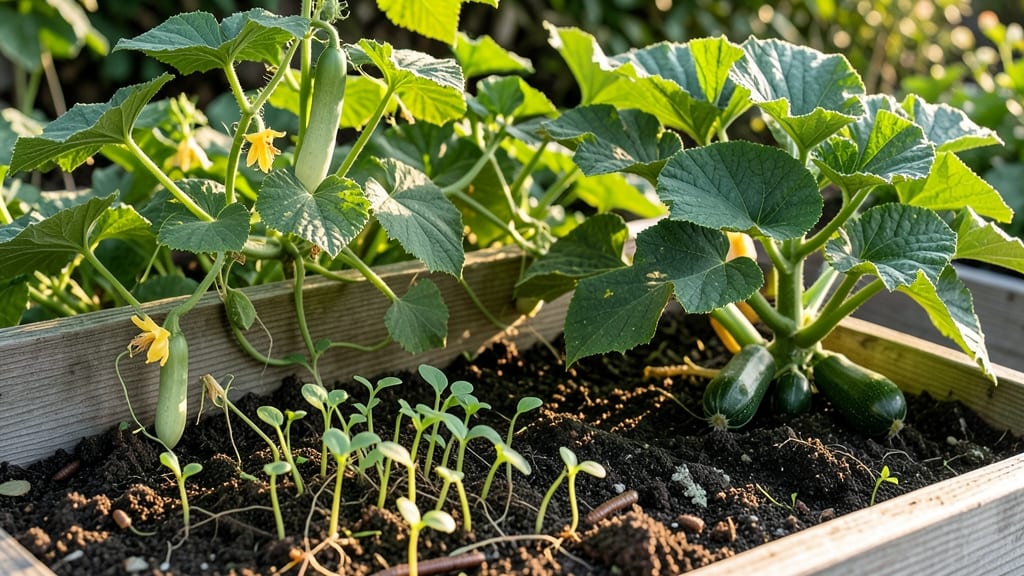
You can plant cucumbers with zucchini because they grow well together, with cucumbers climbing trellises while zucchini spreads along the ground. This pairing saves space, deters pests like squash bugs, and works well since both need similar sunlight and moisture. Just keep them in separate rows or mounds to prevent disease and ensure airflow.
This companion planting strategy works because both vegetables share many growing requirements—warm soil, full sun, and consistent watering—but their different growth habits prevent competition. 🌱 Cucumbers' vining nature keeps them off the ground, reducing soil-borne diseases that often affect sprawling zucchini plants.
I've seen gardeners double their harvest by using this method, especially in small spaces where vertical growing maximizes yield without sacrificing quality.
For best results, plant cucumbers along a trellis or fence at least 12 inches from zucchini plants, which need 24 inches of space to sprawl. The key is maintaining airflow between plants to prevent fungal issues like powdery mildew, which can spread rapidly in dense foliage.
Rotate these pairings yearly to avoid soil depletion and keep your garden thriving.
💡 In This Article
- Why Cucumbers and Zucchini Make Excellent Garden Companions
- Best Spacing and Planting Techniques for Cucumbers and Zucchini
Why cucumbers and zucchini make excellent garden companions
The secret to this pairing lies in their complementary growth patterns and shared pest vulnerabilities. Cucumbers, with their sprawling vines, naturally climb trellises to reach sunlight, while zucchini plants spread horizontally along the ground.
This vertical-horizontal arrangement creates an efficient use of space—cucumbers grow upward where sunlight is most abundant, while zucchini thrives in the shaded areas below. 🌿 What's even more fascinating is how their scent profiles deter common pests: cucumbers emit a mild odor that repels squash bugs, which are notorious for targeting zucchini leaves.
Both plants also share similar soil and environmental needs, thriving in well-draining soil with a pH between 6.0 and 7.0 and requiring at least 6-8 hours of direct sunlight daily.
The cucumber's extensive root system helps break up compacted soil, improving aeration and moisture retention for the zucchini's shallow roots. This symbiotic relationship extends to water usage too—both plants prefer consistent moisture, reducing the need for frequent irrigation once established.
However, their foliage types differ enough that airflow remains optimal when spaced properly.
One of the most compelling reasons for this pairing is their pest-repellent synergy. Cucumbers release a compound called cucurbitacin that deters aphids, which often infest zucchini plants. Meanwhile, zucchini's broad leaves create a natural windbreak that protects cucumber vines from strong winds that could damage delicate stems.
This mutual protection system can reduce pesticide use by up to 40% in mixed plantings, according to organic gardening studies.
For maximum benefits, plant them in separate rows or raised mounds spaced 3-4 feet apart. This separation prevents cross-contamination of diseases like powdery mildew, which can spread rapidly between vining and sprawling plants.
The key is maintaining this distance while still allowing their foliage to touch slightly—just enough for scent exchange but not enough to create a humid microclimate that encourages fungal growth.
Consider the sensory experience: walking through a garden where cucumbers climb gracefully above while zucchini leaves rustle below creates a dynamic visual and aromatic landscape. The cucumbers' fresh, slightly sweet scent mingles with zucchini's earthy aroma, creating a multi-layered garden experience that's both productive and pleasing to the senses.
This combination also attracts pollinators like bees, which visit both plants for nectar, further boosting fruit production.
What most gardeners don't realize is how this pairing affects soil health over time. The cucumber's deep roots help break up compacted soil, while zucchini's abundant foliage returns organic matter when mulched.
Together, they create a self-sustaining ecosystem that improves soil structure year after year. This natural soil enrichment reduces the need for synthetic fertilizers while maintaining high productivity.