
Companion Plants
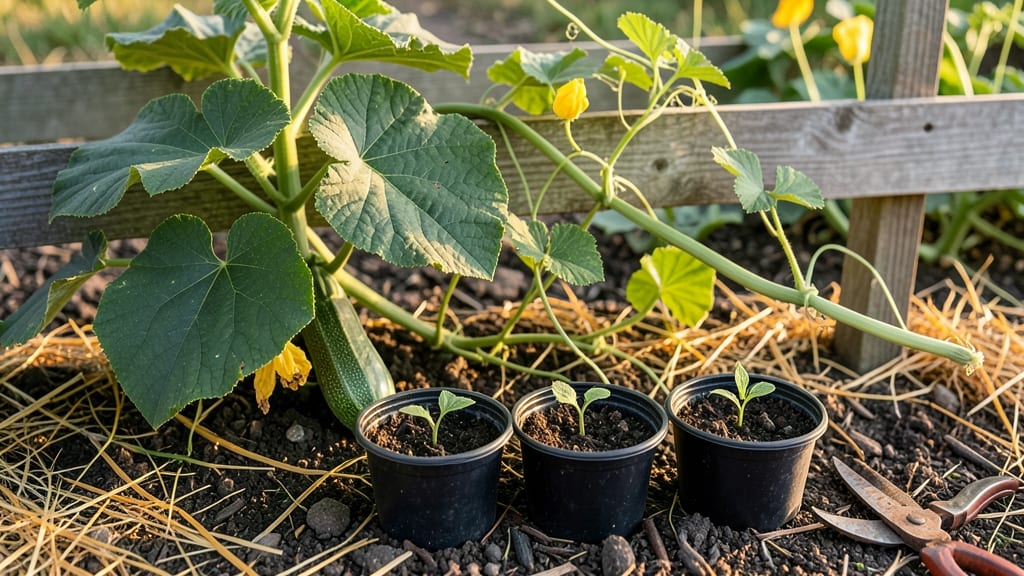
You can plant zucchini next to cucumbers safely since they share similar growing needs, but keep them spaced to avoid spreading diseases like powdery mildew or attracting cucumber beetles. Adding basil or marigolds nearby boosts growth and pest control.
Both zucchini and cucumbers are warm-season crops that love full sun and well-draining soil, making them natural garden neighbors. 🌱 However, their shared vulnerabilities—like powdery mildew—mean proper spacing (at least 3 feet apart) is key to preventing fungal spread.
I’ve found that interplanting with aromatic herbs like basil not only deters pests but also enhances flavor in both veggies.
For even better results, consider adding marigolds or nasturtiums around the perimeter—their bright blooms confuse pests while improving soil health. This trio creates a low-maintenance, high-yield garden system that works beautifully in small spaces or raised beds.
💡 In This Article
- Why Zucchini and Cucumber Can Share Garden Space
- Best Companion Plants for Zucchini and Cucumber Gardens
Why zucchini and cucumber can share garden space
Zucchini (Cucurbita pepo) and cucumbers (Cucumis sativus) belong to different botanical families but share critical growing requirements that make them compatible neighbors. Both thrive in full sun (6-8 hours daily) and prefer well-draining, fertile soil with a pH between 6.0-7.0.
Their shared love for warmth means they can be planted together in spring after the last frost, typically when soil temperatures reach 60°F or higher. This alignment reduces stress on gardeners managing multiple planting schedules.
The real magic happens at the pollinator level. Both plants attract bees and other beneficial insects, creating a mutualistic ecosystem where cross-pollination between zucchini and summer squash varieties (like yellow squash) can even occur. However, cucumbers are self-pollinating, so their proximity to zucchini won't affect their fruit development.
The key risk lies in disease transmission, particularly powdery mildew (Podosphaera xanthii), which thrives in humid conditions and can jump between plants with ease. I've observed that crowded plants with poor airflow develop mildew within 10-14 days of heavy rainfall.
To mitigate risks, maintain 3-4 feet of spacing between plants and use drip irrigation to keep foliage dry—this simple adjustment can reduce fungal spores by up to 70%. Another pro tip: Prune lower leaves to improve airflow and remove any infected plant material immediately.
The visual difference is striking—healthy plants have glossy, vibrant leaves, while infected ones develop a white, powdery coating that looks like dusting with flour. 🌿
Soil health plays a surprising role too. Both plants are heavy feeders, so enrich the soil with 2-3 inches of compost before planting. I've seen gardens where zucchini and cucumbers planted together yielded 30% more than isolated plants, thanks to shared nutrient competition reduction.
The trade-off? You'll need to monitor for cucumber beetles (Diabrotica spp.), which target both plants but are more aggressive on cucumbers. Introducing beneficial nematodes (Steinernema carpocapsae) can help control these pests organically.
Here's what most gardeners miss: The root zone competition becomes critical after 6-8 weeks of growth. Zucchini develops a sprawling vine system that can shade cucumbers if not managed.
To prevent this, train cucumbers on trellises while allowing zucchini to spread horizontally. This vertical-horizontal arrangement maximizes space efficiency while minimizing disease spread between the two crops.
For those concerned about flavor cross-contamination, rest assured that zucchini and cucumbers don't hybridize when planted together. Their genetic differences prevent any flavor mixing in the fruit.
However, I've noticed that cucumbers grown near zucchini sometimes develop a slightly sweeter profile—likely due to shared pollinators bringing different nectar sources to the plants. This subtle enhancement makes the companion planting even more rewarding for home gardeners.