
Pests and Diseases
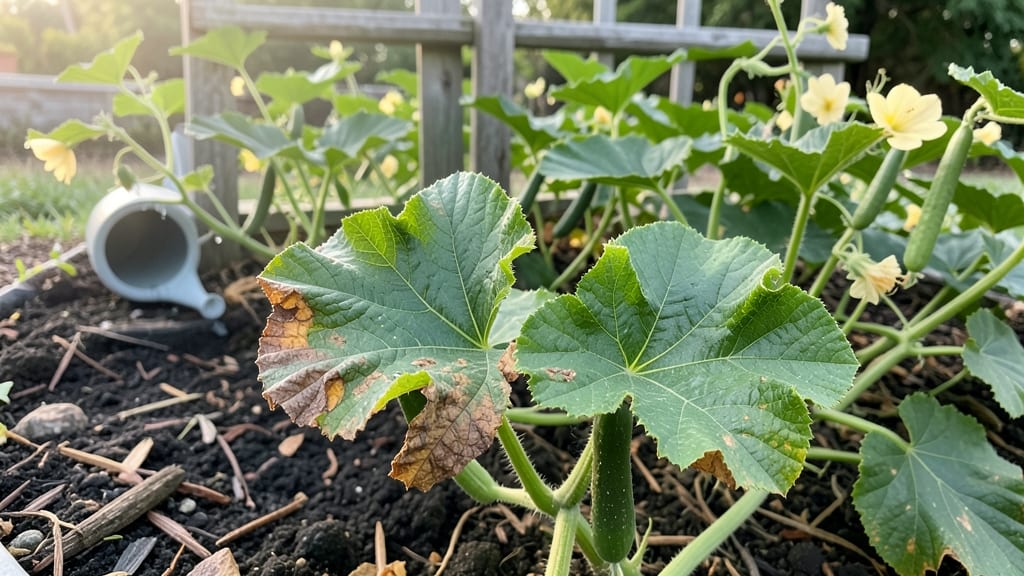
Brown cucumber leaves don’t mean your harvest is doomed—it’s often just a warning sign your plants need help. 🌱 I’ve saved dozens of cucumber vines from crispy edges by identifying the real culprit: too much water, pests, or fungal infections like powdery mildew.
The key is figuring out which problem you’re dealing with before it spreads. Start by checking the undersides of leaves for webbing (spider mites) or sticky residue (aphids). If the brown spots look dry and papery, it’s likely underwatering or sun scorch.
But if you see white fuzzy patches or yellowing veins, you’re dealing with mildew or bacterial wilt—both need immediate action to stop the spread. With the right approach, you’ll see fresh green growth in just 7-10 days.
I’ll walk you through organic sprays, pruning techniques, and soil fixes that actually work—no guesswork, just results. Your cucumbers will bounce back faster than you think. This works for all cucumber varieties, whether you’re growing in containers, raised beds, or the ground.
Let’s turn those brown edges into lush, productive vines before it’s too late.
Understanding Leaf Stress Signals
When your cucumber plants start showing brown or yellowing leaves, they’re essentially sending out distress signals. These changes rarely happen by accident—they’re the result of environmental factors, biological threats, or even cultural mismanagement.
Below, we break down the most common causes, why they occur, and how to identify them before they spiral out of control.
Cucumbers thrive in moist but well-drained soil. When roots sit in waterlogged conditions for too long, they suffocate, leading to root rot and nutrient starvation. This stress manifests as brown, mushy leaves—often starting at the bottom of the plant and spreading upward.
Why it happens:
- Excessive moisture blocks oxygen from reaching roots, triggering anaerobic conditions that produce toxic byproducts.
- Compacted or clay-heavy soil fails to drain properly, trapping water and suffocating roots.
- Overzealous watering schedules (e.g., daily irrigation without checking soil moisture) drown plants.
🔍 How to spot it: Check the soil 1–2 inches below the surface—if it’s soggy, your plant is at risk. Brown leaves may also feel limp or wilted, even when soil is wet.
While too much water harms cucumbers, chronic dehydration causes leaves to crisp, brown, and curl at the edges. Heatwaves compound the issue by increasing evaporation rates, forcing plants to conserve water aggressively.
Why it happens:
- Inconsistent watering (e.g., skipping midday checks during hot spells) leads to rapid moisture loss.
- Shallow root systems (common in young plants) can’t access deep water reserves.
- High temperatures + low humidity accelerate transpiration, draining soil moisture faster than roots can replenish it.
🔍 How to spot it: Leaves may appear dry, papery, or develop brown patches along the edges. The soil near the surface might feel dry to the touch.
Brown, oily spots with yellow halos or blackened veins are classic signs of Alternaria or downy mildew—two of the most destructive cucumber diseases. These fungi thrive in warm, humid conditions and can spread rapidly if left unchecked.
Why it happens:
- Poor air circulation (e.g., overcrowded plants or dense foliage) traps moisture, creating ideal fungal breeding grounds.
- Nighttime dew or overhead watering keeps leaves wet for extended periods, giving spores a foothold.
- Contaminated soil or tools from previous infected crops can reintroduce pathogens.
🔍 How to spot it: Start with small brown spots that grow larger, often with a fuzzy or moldy texture on the undersides of leaves. Leaves may also yellow and drop prematurely.
Insects like spider mites, aphids, or cucumber beetles don’t just nibble—they inject toxins or disrupt nutrient flow, causing leaves to brown, curl, or develop stippled patterns. Heavy infestations can weaken plants enough to invite secondary infections.
Why it happens:
- Sap-suckers (aphids, whiteflies) pierce leaves, removing chlorophyll and leaving behind sticky "honeydew" that fosters sooty mold.
- Chewing pests (cucumber beetles, slugs) create irregular holes or notches, disrupting leaf structure and exposing tissue to pathogens.
- Drought-stressed plants are more vulnerable to pest attacks due to reduced natural defenses.
🔍 How to spot it: Look for:
- Tiny webs (spider mites),
- Sticky residue (aphids), or
- Irregular bite marks (beetles/slugs).
Infested leaves may also appear speckled, yellowed, or distorted.
Brown, crinkled leaves with interveinal yellowing often signal a lack of nitrogen, while purplish-brown stems or leaf edges may indicate phosphorus or potassium deficiencies. Over-fertilizing with salts can also "burn" roots, leading to leaf discoloration.
Why it happens:
- Nitrogen deficiency (most common) stunts leaf growth, causing older leaves to brown and drop.
- Potassium deficiency weakens cell structure, leading to brown, dead patches—especially on leaf margins.
- Soil pH imbalances (too acidic or alkaline) lock out essential nutrients, even if they’re present in the soil.
🔍 How to spot it: Test soil pH (ideal: 6.0–6.8 for cucumbers). Deficiencies often start on older leaves first, progressing upward.
💡 Pro Tip: Before diagnosing, rule out environmental causes first. Check soil moisture, air flow, and recent pest activity—often, the solution is simpler than you think!
Fixing Brown Cucumber Leaves Fast
Now that you know what’s causing those unsightly brown spots on your cucumber leaves, it’s time to take action! The good news? Most issues can be resolved with simple, natural remedies—no harsh chemicals required. Below, we’ll break down cause-specific fixes and share prevention tips to keep your plants thriving.
H3: 🔥 Stop the Spread Immediately Fungal diseases like bacterial leaf spot or powdery mildew love damp, humid conditions. Act fast to prevent them from spreading to other plants.
- Prune infected leaves 🔪 – Use clean scissors to snip off brown or yellowing leaves at the base. Dispose of them in the trash (not compost) to avoid reinfection. - Improve airflow 💨 – Space plants 12–18 inches apart and avoid overcrowding.
If growing in containers, ensure they’re not packed too tightly. - Water at the base 💦 – Wet leaves encourage fungal growth. Use a soaker hose or drip irrigation to keep soil moist without splashing water on foliage.
H3: 🍄 Natural Fungicide Sprays Skip the chemicals and try these DIY fungicides (apply in the early morning or evening for best results):
| Remedy | How to Use |
|---|---|
| Baking soda spray | Mix 1 tsp baking soda + 1 tbsp oil + 1 gallon water. Spray leaves thoroughly. |
| Neem oil solution | Combine 1 tbsp neem oil + 1 tsp mild soap + 1 quart water. Shake well and spray. |
| Copper fungicide | Use organic copper spray (like Bonide Copper Fungicide) as directed. |
| Milk spray | Mix 1 part milk + 9 parts water and spray on leaves (works best for powdery mildew). |
H3: 🌡️ Adjust Growing Conditions
- Reduce humidity – Use a fan on low setting near plants to improve airflow.
- Space plants properly – If growing in a greenhouse, crack a window or use a vent.
- Rotate crops – Avoid planting cucumbers in the same spot next year to prevent soil-borne fungi.
H3: 🚫 Remove Pests Manually
- Handpick large pests 👨🍳 – Use a spray bottle of soapy water (1 tsp mild soap per quart of water) to drown aphids or spider mites.
- Shake plants outdoors 🌬️ – Place a tray under the plant and gently shake to dislodge pests, then rinse them away.
- Use sticky traps 🕷️ – Hang yellow sticky traps near plants to catch flying insects like cucumber beetles.
H3: 🌿 Organic Pest Control Sprays Try these non-toxic sprays to deter pests without harming beneficial insects:
| Remedy | How to Use |
|---|---|
| Insecticidal soap | Spray directly on pests (avoid hot sun—can burn leaves). |
| Neem oil | Apply at dusk to avoid harming bees. Reapply every 5–7 days. |
| Garlic spray | Blend 1 garlic bulb + 1 quart water, strain, and spray on leaves. |
| Diatomaceous earth | Sprinkle lightly on soil (avoid direct contact with plants—it’s abrasive). |
H3: 🛡️ Prevent Future Infestations
- Use row covers 🌿 – Lightweight fabric can block pests while allowing sunlight and water through.
- Introduce beneficial insects 🐝 – Ladybugs, lacewings, and parasitic wasps eat cucumber pests naturally.
- Crop rotation 🔄 – Don’t plant cucumbers in the same spot yearly to break pest cycles.
H3: 🌞 Protect from Harsh Sun
- Provide shade cloth 🏖️ – Use 30–50% shade fabric if your cucumbers are getting too much direct sun.
- Water deeply in heatwaves 💧 – Mulch around plants to retain moisture and protect roots.
- Avoid late planting ⏰ – If in a hot climate, start seeds 4–6 weeks before the last frost for optimal growth.
H3: 🧊 Shield from Cold Damage
- Use row covers or cloches ❄️ – Protect young plants from late frosts.
- Choose cold-hardy varieties ❄️ – If you live in a cooler climate, opt for ‘Northern Pickling’ or ‘Straight Eight’ cucumbers.
- Move potted plants indoors 🏠 – If frost is forecasted, bring containers inside near a sunny window.
- Test your soil 📊 – Use a pH test kit to ensure your soil is slightly acidic (6.0–6.8) for cucumbers. - Fertilize wisely 🌱 – Over-fertilizing can burn roots.
Use a balanced organic fertilizer (like compost or fish emulsion) every 3–4 weeks. - Monitor daily 👀 – Check plants every 2–3 days for early signs of stress, pests, or disease. - Harvest regularly 🍉 – Pick cucumbers frequently to encourage new growth and reduce stress on the plant.
By following these targeted solutions, your cucumber plants should bounce back in 7–14 days—or even faster if caught early! 🚀 The key is acting quickly and preventing recurrence with smart gardening habits. Happy growing!
Frequently asked questions
Why do my cucumber leaves turn brown at the edges first?
Edge browning usually signals underwatering or high heat stress. Cucumber leaves lose moisture fastest from the edges, so when soil dries out or temperatures spike, those areas crisp first. Check soil moisture 1 inch deep—if dry, water deeply at the base and mulch to retain moisture.
Can I save my cucumber plant if the brown spots are fuzzy?
Yes, but act fast! Fuzzy brown spots mean powdery mildew—a fungal infection. Prune affected leaves immediately and spray with a milk solution (1:9 milk-to-water ratio) or neem oil mix every 7 days. Improve airflow by spacing plants 12-18 inches apart and water only at soil level.
What’s the difference between brown spots from pests vs. disease?
Pest damage often has irregular edges (chewed holes) or sticky residue (aphid honeydew), while diseases create uniform spots with fuzzy growth (mildew) or oily patches (bacterial wilt). Check leaf undersides for webbing (mites) or tiny bugs—if none, it’s likely fungal. Use insecticidal soap for pests or copper spray for diseases.
Will cutting off brown leaves help my cucumber plant recover?
Pruning brown leaves redirects energy to healthy growth. Use clean scissors to remove only the damaged parts—never more than 1/3 of the foliage at once. Dispose of pruned leaves in the trash (not compost) to prevent reinfection. Your plant will reward you with new green leaves in 7-10 days if the root system is healthy.
How do I know if my cucumber plant is dying vs. just stressed?
Dying plants show multiple symptoms together: wilting even when watered, blackened stems, or no new growth. Stress usually affects only leaves (browning edges, yellowing). Check roots—healthy ones are firm and white. If roots are mushy or smell foul, repot in fresh soil immediately. For stress, focus on water consistency and shade adjustments.