
Vegetables
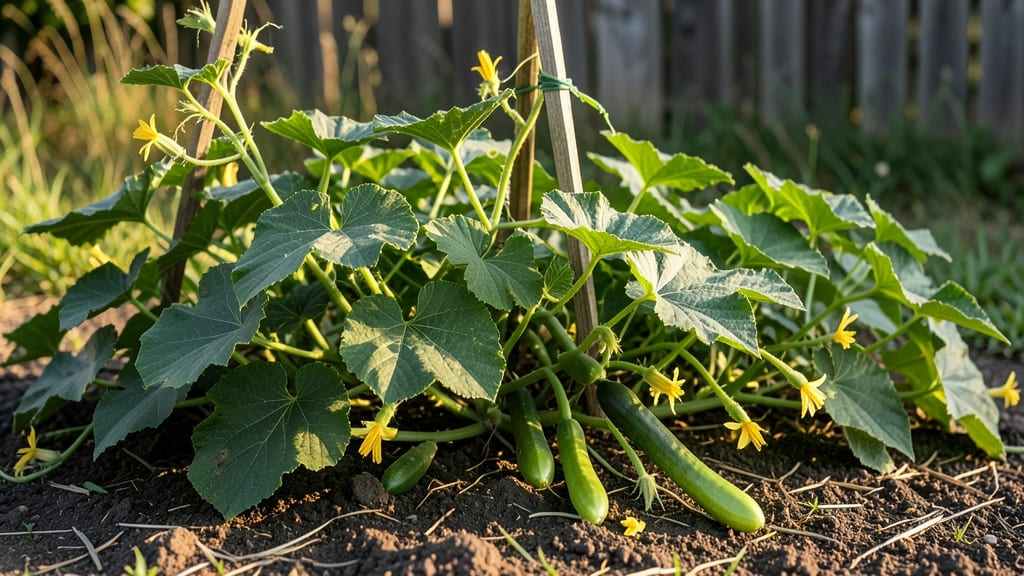
Cucumbers are not perennial in most climates, though they are technically tender perennials that regrow from seed each year. In warm zones (USDA 9-11), they may survive winters with protection, but frost kills them in colder regions. Planting fresh seeds annually is standard for optimal harvests.
Cucumbers belong to the Cucurbitaceae family, which includes other tender perennials like squash and melons—but their growth habits differ dramatically between climates. 🌱 In frost-free areas, they might self-seed and return the following year, but this isn't reliable growth.
Most gardeners treat them as annuals because their vines collapse after harvest, and new plants are needed for consistent yields. The key difference lies in their sensitivity to cold: even a light frost will kill the plant, making overwintering impractical in most regions.
What this means for you depends on your growing zone. In USDA zones 9-11, you can experiment with protective measures like row covers or containers moved indoors during winter. However, in cooler climates (zones 3-8), treating cucumbers as annuals ensures healthier, more productive plants each season.
The trade-off? Annual planting gives you control over seed varieties and disease prevention, while perennial attempts require extra effort for minimal payoff.
💡 In This Article
- Why Cucumbers Die Back After Harvest in Most Gardens
- Extending Cucumber Growth in Cold Climates
Why cucumbers die back after harvest in most gardens
Cucumbers are classified as tender perennials because they can technically regrow from seed each year—but their growth cycle is interrupted by frost sensitivity. The plant's main vine and leaves die back after harvest due to photoperiod sensitivity, where shorter daylight triggers dormancy.
In colder climates, even a 28°F (-2°C) frost will kill the entire plant, including the roots, because cucumbers lack cold-hardy adaptations like woody stems or deep root systems.
Botanically, cucumbers belong to the Cucumis sativus species, which evolved in tropical regions where frost never occurs. Their herbaceous vines (non-woody stems) contain 80-90% water by weight, making them highly susceptible to freezing.
When temperatures drop below 50°F (10°C), growth slows dramatically, and any frost causes cellular damage that halts photosynthesis entirely. 🌱 This is why gardeners in zones 3-8 treat them as annuals—replanting fresh seeds each spring ensures stronger, disease-free plants.
What makes this confusing is that cucumbers can self-seed in warm climates. If left undisturbed, they'll drop seeds that sprout the following year, creating the illusion of perennial behavior.
However, these volunteer plants often produce smaller, less vigorous vines because they compete with weeds and lack the care of intentional planting. The trade-off? While self-seeding saves effort, it sacrifices yield quality and consistency.
Another key factor is the plant's reproductive strategy. Cucumbers allocate energy to fruit production rather than root survival, which is why their vines collapse after harvest.
Unlike perennials like asparagus (which stores energy in thick roots), cucumbers invest all their resources into rapid vine growth and fruit development during their 60-70 day growing season. This biological focus explains why they "die back"—it's not a flaw, but their natural life cycle in frost-free environments.
For gardeners, this means planning ahead. If you're in a USDA zone 9-11, you might save seeds from your best plants and replant them the next year, but even then, the vines won't survive intact through winter.
In colder zones, the only reliable method is annual planting, which gives you full control over seed selection, spacing, and disease prevention. The effort required to overwinter cucumbers rarely justifies the minimal yield gains.
Here's what happens if you try to overwinter cucumbers in cold climates without protection: The roots may survive brief cold snaps, but the above-ground growth will die back completely. Even if the plant resprouts in spring, it often emerges weak and stunted due to root damage from freeze-thaw cycles.
This is why professional growers treat cucumbers as annuals—it's simply more efficient for consistent harvests.