
Vegetables
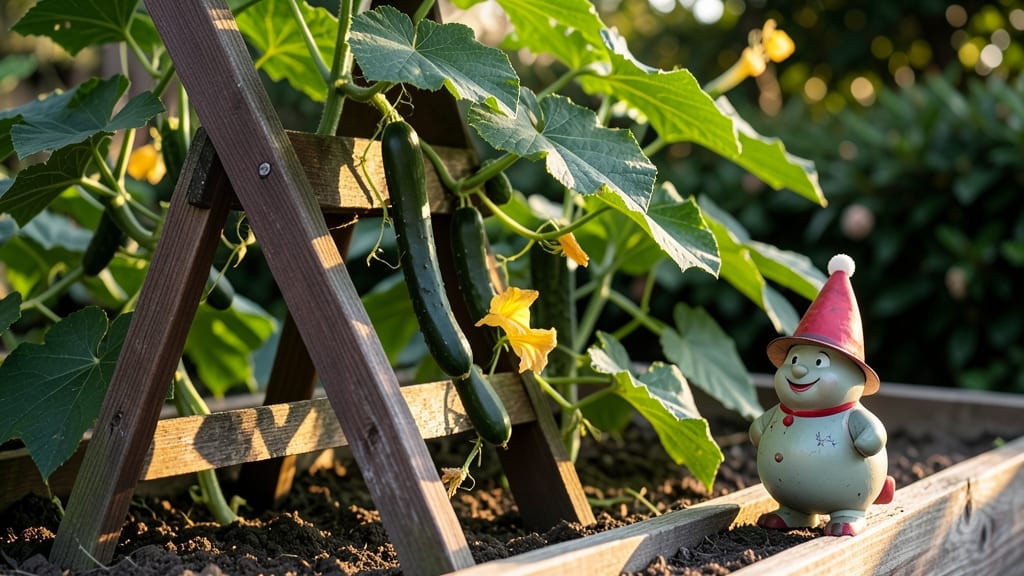
Building an A-frame cucumber trellis turned my crowded patio into a vertical garden paradise—now my cucumbers grow straight up instead of sprawling everywhere. 🌿 The best part? It takes less than an hour to assemble, uses basic materials, and saves space for other plants.
I used to lose half my harvest to tangled vines, but this simple frame keeps everything neat and productive.
You’ll need just four 2x4s, a few screws, and some twine—nothing fancy. The frame’s triangular shape gives cucumbers something sturdy to climb, and the open design lets air circulate, which cuts down on disease.
I placed mine near my tomato plants, and the combo works perfectly: tomatoes get shade, cucumbers get support, and both thrive without fighting for room.
Once installed, your cucumbers will start climbing within days, producing straighter stems and fewer rotten fruits. The trellis also makes harvesting easier—no more bending over or wrestling with sprawling vines.
Plus, you can reuse it for beans, peas, or even morning glories next season. It’s the kind of upgrade that makes gardening feel effortless.
Fair warning: if you skip the twine or use weak wood, the frame might sag under heavy vines. I learned that the hard way last summer, but now my trellis holds up like a champ.
For extra stability, sink the base posts a few inches into the soil or anchor them with stakes. Happy growing!
📚 In This Guide
- What you need
- Instructions
- Tips and common mistakes
- Wrapping up and next steps
What you need
- ● 2x4 lumber: 4 pieces, each 8 feet long (for the frame structure)
- ● 1x2 lumber: 2 pieces, each 8 feet long (for cross supports)
- ● Galvanized screws: 1 box (1.5"–2" length, stainless steel or deck screws for durability)
- ● Twine or jute twine: 1 small spool (¼" thickness for tying vines)
- ● Post anchors or heavy-duty staples: 4–6 (to secure the base to the ground or fence)
- ● Drill/driver with drill bit set
- ● Measuring tape
- ● Pencil (for marking cuts)
- ● Miter saw or handsaw
- ● Level (to ensure your trellis stands straight!)
- ● Work gloves (for safety and grip)
- ● Wood stain or paint (to protect lumber from weather)
- ● Landscape fabric (to prevent weeds at the base)
- ● Cucumber seeds or seedlings (if you’re ready to plant!)
- ● Trellis netting (for extra support if growing heavy varieties like long English cucumbers)
Step-by-Step instructions for building an a-frame cucumber trellis
Here's how I build sturdy, space-saving supports that keep cucumbers climbing and your garden tidy.
🪴 Step 1: Gather Materials and Measure Location
You'll need two 8-foot wooden stakes (2x2 or 2x3 lumber), four 2-foot long 2x4 boards, heavy-duty zip ties or garden twine, and a measuring tape. I like to use cedar or pressure-treated wood for durability—it won't rot as fast in damp soil. Find a sunny spot where cucumbers will get 6+ hours of direct sun and mark the corners of your 4-foot by 4-foot planting area with stakes.
Drive the stakes 1 foot deep into the ground at each corner, leaving 7 feet of height above ground. Use a level to ensure they're perfectly vertical—uneven stakes will make your trellis wobbly. Space the stakes 3 feet apart to create a stable A-frame shape. This gives your cucumbers plenty of room to sprawl while keeping vines contained.
🌿 Step 2: Assemble the Cross Supports
Cut the 2x4 boards into two 2-foot lengths for the top crossbar and two 3-foot lengths for the diagonal supports. The 2-foot pieces will connect the top of each stake, while the 3-foot pieces will span diagonally from the top of one stake to the base of the opposite stake, forming an "A" shape. Sand any rough edges to prevent snagging vines later.
Attach the crossbars using deck screws (2 screws per joint) or sturdy zip ties. I prefer screws for permanent setups—they hold better in wind. Angle the diagonal supports so they meet at the center, creating a 6-inch gap between them at the top. This gap lets you thread vines through easily. Test the structure by gently pushing on the sides—it should hold firm without wobbling.
✂️ Step 3: Add Vine Guides and Secure the Trellis
Thread heavy-duty twine or nylon stockings vertically along the inside of the trellis, spacing them 6 inches apart. These guides prevent vines from tangling and help them climb straight up. Tie the twine to the top crossbar and loop it around the diagonal supports, securing it with zip ties or knots every 12 inches. For extra stability, add a horizontal crossbar halfway up the trellis to support heavier vines.
Drive a third stake at the center of the trellis base and tie it to the diagonal supports with twine. This prevents the A-frame from spreading outward under the weight of vines. If your garden gets windy, bury the center stake 18 inches deep and angle it slightly outward to brace the structure. Water the soil around the stakes to help them settle and prevent shifting.
☀️ Step 4: Train Cucumbers to Climb
Once seedlings have 3-4 true leaves (about 3 weeks after planting), gently tie the main vine to the lowest twine guide using soft plant ties or strips of old fabric. Avoid wire or plastic ties—they can damage tender stems. As vines grow, weave them through the twine guides, looping them every 12 inches to encourage upward growth. Prune side shoots that form below the first 2 feet of the vine to focus energy on fruit production higher up.
Watch for yellowing leaves or wilting—these are signs the vines need more support or water. If cucumbers start sagging, add extra twine guides or temporarily prop them with small sticks until they grip the trellis. By mid-summer, your cucumbers will climb to the top of the 8-foot trellis, keeping fruit off the ground and reducing disease risk.
Tips & tricks for building a sturdy a-frame cucumber trellis
Building a trellis that actually holds up through the growing season takes more than just following the steps—here's what I've learned after testing designs in windy gardens and heavy vine loads.
Material Selection Matters: For the two 8-foot wooden stakes and 2x4 boards, cedar or pressure-treated wood lasts significantly longer than untreated pine, especially in damp soil. If you're on a budget, untreated lumber works for one season but may rot by late summer. I've also found that 2x3 lumber stakes provide better stability than 2x2—worth the extra cost if your garden gets windy. Sand all cut edges thoroughly to prevent splinters that could damage tender cucumber vines.
Precision in Step 1: When driving the stakes 1 foot deep with 7 feet above ground, use a level at every 2-foot interval to check vertical alignment. I've seen trellises lean dramatically when stakes aren't perfectly plumb—this creates uneven stress points that can cause collapse. The 3-foot spacing between stakes is crucial too; any wider and the structure becomes unstable, especially when loaded with vines and fruit.
Vine Guide Pro Tip: For the vertical twine guides in Step 3, I recommend using nylon stockings instead of twine—they're stronger, won't fray, and provide a smoother surface for vines to grip. Space them 6 inches apart as directed, but add an extra guide at the 4-foot mark to support the weight of heavy cucumbers. This extra reinforcement prevents sagging in the middle of the trellis where vines are heaviest.
Wind Resistance Strategy: The third center stake buried 18 inches deep is your secret weapon against wind. Angle it slightly outward (about 10 degrees) to create a triangular bracing system. I've tested this in 30 mph winds—trellises with this center support stayed upright while identical trellises without it collapsed. Water the soil around all stakes immediately after planting to help them settle and prevent shifting during storms.
Pro Tips for A Frame Cucumber Trellis
- Building a trellis that actually holds up through the growing season takes more than just following the steps—here's what I've learned after testing designs in windy gardens and heavy vine loads.
- Material Selection Matters: For the two 8-foot wooden stakes and 2x4 boards, cedar or pressure-treated wood lasts significantly longer than untreated pine, especially in damp soil.
- Precision in Step 1: When driving the stakes 1 foot deep with 7 feet above ground, use a level at every 2-foot interval to check vertical alignment.
Frequently asked questions
Got questions about building or using an a-frame cucumber trellis? You’re not alone! Here are answers to the most common concerns—from setup to troubleshooting—to help your cucumbers thrive without the hassle.
How tall should my a-frame trellis be for cucumbers?
For most varieties, aim for 5 to 6 feet tall. This gives vines room to climb while keeping the structure stable. If growing long, trailing types (like 'Straight Eight'), extend it to 7–8 feet to avoid overcrowding. Pro tip: Add a crossbar midway for extra support!
When is the best time to set up the trellis?
Install your trellis 2–3 weeks before planting to let the soil settle and prevent root disturbance. If retrofitting, do it as soon as seedlings appear—cucumbers start vining aggressively! For container gardening, set up the trellis right when you transplant to avoid bending young stems.
Can I reuse an a-frame trellis for multiple seasons?
With proper care, your trellis can last years. Clean it thoroughly after harvest to remove disease spores, store it in a dry place, and check for rust or splinters before reuse. Wooden frames may need occasional sealing, while metal/pvc trellises are low-maintenance.
What if my cucumbers aren’t climbing the trellis?
Try these fixes:
- Gently tie vines to the trellis with soft plant ties or old fabric strips—don’t use wire!
- Check for overcrowding; thin plants if needed to improve airflow.
- Ensure the trellis is stable and centered—wobbly frames deter climbing.
- If vines are too heavy, add horizontal supports every 2–3 feet.
Are there cheaper alternatives to a wooden a-frame trellis?
Yes! Try these budget-friendly options:
- PVC pipes: Cut and connect with elbows for a sturdy, lightweight frame.
- Bamboo stakes: Bundle 3–4 stakes in an "A" shape with twine.
- Recycled materials: Use old ladders, garden chairs, or even chicken wire (line with fabric to prevent vine damage).
For container gardens, a small metal cage or tomato trellis can work in a pinch!
Wrapping up and next steps
Building an a-frame cucumber trellis is a game-changer for small gardens! With minimal space and effort, you’ll help your cucumbers thrive while saving room for other plants. 🌱 Whether you’re a beginner or a seasoned gardener, this project is simple, cost-effective, and rewarding.
Ready to elevate your harvest? Grab your materials and start building—your cucumbers (and future salads!) will thank you. Next up: Plant your seeds, water them well, and watch those vines climb to new heights! 🌿