
Vegetables
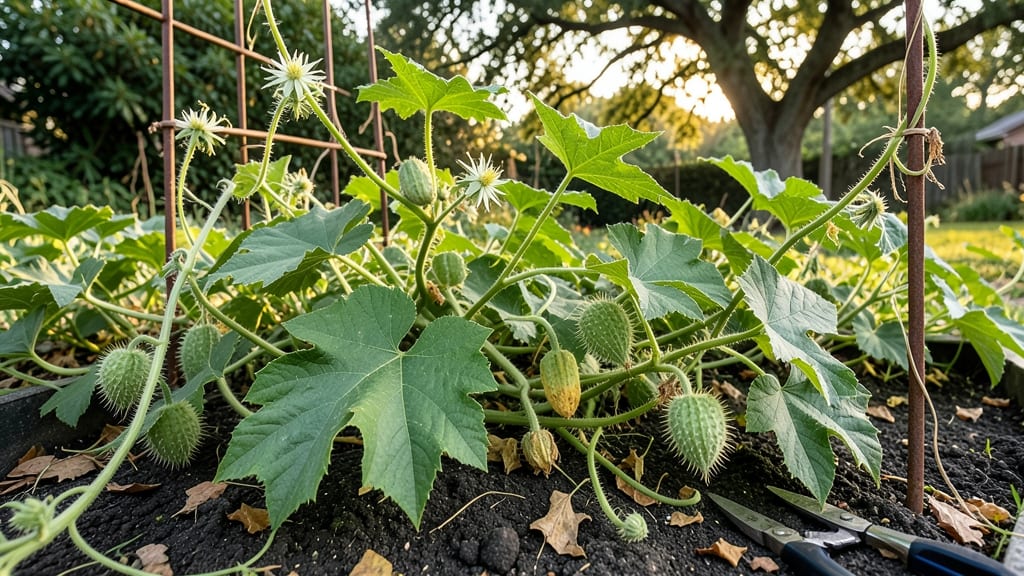
Wild cucumber can be poisonous if eaten raw or improperly prepared, since its unripe fruit, seeds, and leaves contain dangerous toxins like cucurbitacins and solanine, which may trigger severe stomach upset or allergic reactions. Proper cooking helps reduce these risks, though it doesn't guarantee complete safety.
Wild cucumber's toxicity comes from its natural defense chemicals, which act as bitter-tasting deterrents to animals. 🌿 The bitter taste isn't just unpleasant—it's a warning sign that the plant contains compounds like cucurbitacins, which can cause nausea, vomiting, or even skin irritation in sensitive individuals.
Even when cooked, some residual toxins may remain, so thorough preparation is essential. I always recommend consulting local foraging guides or experts before consuming any wild plant, as regional varieties can vary significantly in toxicity levels.
For gardeners and foragers, identifying safe parts is critical. Only fully ripe fruit—when it turns yellow and softens—should be considered for consumption, and even then, it must be cooked thoroughly. The seeds and leaves should never be eaten, as they concentrate the highest levels of toxins.
When preparing wild cucumber, I suggest boiling it for at least 10 minutes to break down some of the harmful compounds, then discarding the cooking water to minimize residual toxins.
💡 In This Article
- Toxic Compounds in Wild Cucumber and Their Effects
- Safely Handling Wild Cucumber in Gardens and Foraging
Toxic compounds in wild cucumber and their effects
The bitter compounds in wild cucumber—primarily cucurbitacins and solanine—are its built-in defense system. Cucurbitacins, found in concentrations up to 0.05% dry weight in unripe fruit, trigger a bitter taste that deters herbivores.
These compounds disrupt cellular membranes in the digestive tract, causing symptoms like nausea, vomiting, and diarrhea within 30 minutes to 2 hours of ingestion. Solanine, another glycoalkaloid, acts as a neurotoxin in high doses, potentially leading to muscle weakness or neurological symptoms in severe cases. 🔥
Cooking reduces—but doesn’t eliminate—toxicity because cucurbitacins are heat-stable, though prolonged boiling (15+ minutes) can degrade about 30-50% of their potency. The key is discarding the cooking water, which contains leached toxins.
For example, a study on bitter melon (a cucurbit relative) showed that even after boiling, residual cucurbitacins remained at 10-20% of original levels. Solanine, however, breaks down more easily with heat, especially in acidic environments (like lemon-infused water).
Symptom severity depends on dosage and individual sensitivity. A 100g serving of raw, unripe wild cucumber might contain enough cucurbitacins to cause mild gastrointestinal upset, while larger amounts could trigger allergic reactions like hives or swelling.
Children and those with liver conditions are at higher risk due to slower toxin metabolism. The bitter taste itself is nature’s warning—if the fruit tastes strongly bitter, it’s a clear sign to avoid consumption. 💛
Wild cucumber’s toxicity varies by plant part: leaves and stems contain highest concentrations of cucurbitacins, while ripe fruit has 50-70% less due to natural dilution during maturation. The seeds are particularly dangerous, containing up to 3x more toxins than the flesh.
Even when cooked, seeds should never be consumed. Foragers often compare wild cucumber to its cultivated cousin (cucumber), but the wild variety’s toxins make it non-edible without proper preparation.
Interestingly, some cultures traditionally prepare wild cucumber by fermenting it for 2-3 weeks, which reduces toxicity through microbial breakdown. However, this method isn’t foolproof—improper fermentation can leave harmful compounds intact. The safest approach remains thorough cooking followed by peeling (to remove surface toxins) and avoiding unripe or bitter-tasting specimens.
Always cross-reference with local botanical experts, as regional wild cucumber strains can vary in toxicity levels. ✨
To put it in perspective, the LD50 (lethal dose for 50% of test subjects) of cucurbitacins in rats is about 500 mg/kg, meaning a 150 lb human would need to ingest roughly 35g of pure cucurbitacins to reach lethal levels—a near-impossible scenario with normal consumption.
However, repeated exposure to lower doses can still cause chronic digestive issues. This highlights why moderation and proper preparation are critical. 💫