
Diseases
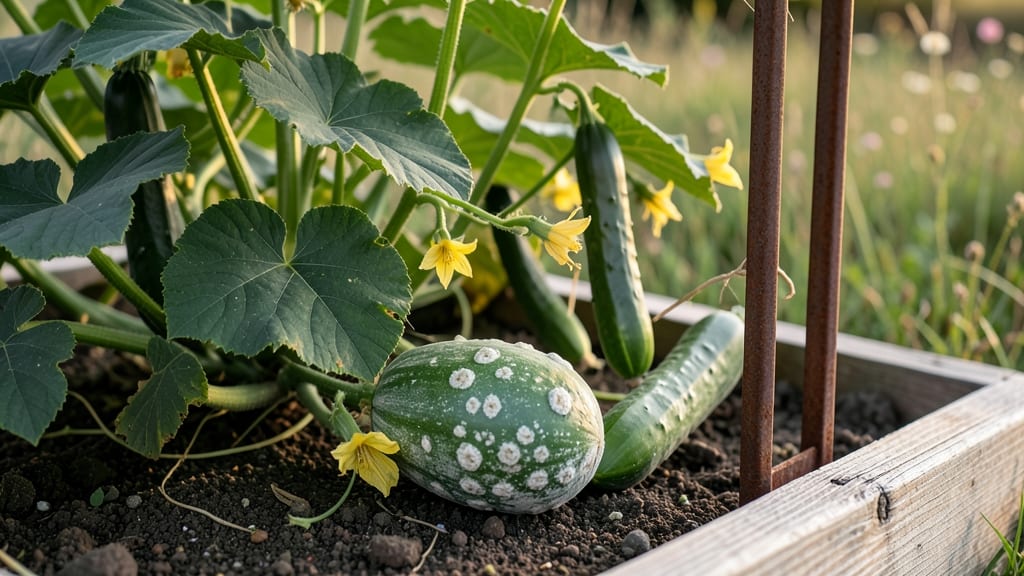
Those white spots on your cucumbers might be safe to eat—but not always. 🌱 I’ve picked cucumbers with similar spots and still enjoyed them, but knowing the difference between harmless blemishes and risky mold is key to avoiding food safety issues in your garden.
Most white spots come from powdery mildew (a fungal disease) or simple water spotting, both of which are usually harmless if the rest of the fruit looks healthy. However, fuzzy or discolored spots could signal mold, which means tossing that cucumber to avoid stomach upset.
The key is checking for softness or a sour smell—if it’s firm and tastes fine, it’s likely safe.
To prevent future spots, improve airflow between plants, water at the base (not the leaves), and harvest cucumbers regularly. A light spray of baking soda mix can help stop powdery mildew before it starts, keeping your harvest looking—and tasting—fresh.
When in doubt, peel the cucumber (if it’s a variety that allows it) or cut off the spotted section. Better safe than sorry, especially when you’ve worked hard to grow these crisp, green beauties!
Root Causes Of Cucumber Spots
Those mysterious white spots on your cucumbers can feel like a sudden mystery—why did they appear overnight? The truth is, these spots usually stem from a mix of environmental stress, fungal infections, or even natural physiological responses.
Understanding the why behind them helps you take action before they spread. Let’s break down the most common culprits, backed by science, so you can diagnose (and fix) the issue fast.
If your cucumbers are suddenly dotted with chalky white spots—especially on the side facing the sun—heat stress (or sun scorch) is likely the villain. Here’s how it works:
- Mechanism: Cucumbers have a thin, sensitive skin that can’t handle extreme heat. When temperatures soar above 90°F (32°C), the plant’s cells struggle to regulate moisture, leading to localized protein denaturation (a fancy term for proteins breaking down). This causes white, dry patches that feel like paper to the touch.
- Tell-tale signs:
- Spots appear on sun-exposed sides of the cucumber.
- Skin may look waxy or crusty, not slimy or moldy.
- Often paired with yellowing leaves (another heat stress symptom).
- Actionable fix:
- 💡 Provide afternoon shade with shade cloth (30-50% coverage).
- 🌱 Mulch heavily with straw or grass clippings to keep roots cool.
- 💧 Avoid overhead watering during peak sun—opt for drip irrigation early in the morning.
If the white spots look like flour dusting or a fuzzy coating, you’re dealing with powdery mildew—a common fungal disease caused by Podosphaera xanthii or Golovinomyces species. This isn’t just cosmetic; it weakens the plant and reduces yield.
- Mechanism: The fungus thrives in warm (60-80°F / 15-27°C), humid conditions with poor airflow. It spreads via spores carried by wind, water, or even your gardening tools. The white spots are mycelium (fungal threads) and conidia (spore-producing structures).
- Tell-tale signs:
- Spots start powdery white, then may turn gray or brown.
- Undersides of leaves develop yellow patches.
- Severe cases cause stunted growth or deformed fruit.
- Actionable fix:
- 🌬️ Improve airflow by spacing plants 12-18 inches apart.
- 💦 Water at soil level (avoid wetting leaves) and water early to let foliage dry.
- 🧴 Spray preventive fungicides like neem oil or baking soda mix (1 tbsp baking soda + 1 quart water + a drop of dish soap).
- ✂️ Prune infected leaves and sterilize tools with rubbing alcohol.
Sometimes, those white spots are a nutritional red flag. Cucumbers are heavy feeders, and imbalances in soil minerals can lead to strange blemishes.
| Symptom | Likely Cause | Fix It |
|---|---|---|
| White, crusty spots on fruit | Calcium deficiency (often due to blossom-end rot spreading or uneven watering) | 💡 Apply calcium-rich amendments like crushed eggshells or calcium nitrate. Keep soil consistently moist. |
| White, powdery patches + stunted growth | Magnesium deficiency (chlorosis may appear first) | 🌱 Add Epsom salt (1 tbsp per gallon of water) as a foliar spray. |
| White, scaly spots + bitter taste | Excess boron or zinc toxicity (common in sandy soils) | ⚠️ Flush soil with water and avoid over-fertilizing. |
Pro tip: 🔥 Test your soil with a home kit or send a sample to a local extension office for a full mineral analysis.
Not all white spots are a cause for alarm! Some cucumbers develop harmless, genetic blemishes due to:
- Lenticels: Tiny, raised white dots (like skin pores) that help gas exchange. They’re 100% edible and common on older cucumbers.
- Russeting: Rough, white patches from physical damage (e.g., rubbing against leaves or trellis). These are surface-level and don’t affect taste.
- Age-related toughening: As cucumbers mature, some varieties develop chalky white areas near the stem—still safe but often less tender.
How to tell the difference: Run your finger over the spot—if it’s smooth and firm (not fuzzy or slimy), it’s likely harmless. 💡 Save these for pickling or cooking where texture matters less!
How to Fix White Spots on Cucumbers
Discovering white spots on your cucumbers can be frustrating, but the good news is that most causes have simple fixes—and prevention tips to keep your plants thriving. Below, we break down the most common culprits and actionable steps to restore your cucumbers to their crisp, blemish-free glory. 🌱
If the white spots resemble a dusting of flour (powdery mildew) or fuzzy, mold-like patches (downy mildew), fungi are likely the culprit. These thrive in humid, poorly ventilated conditions, but you can fight back with these steps:
🍳 Treat Existing Spots
- Prune affected leaves 🔪: Remove heavily infected leaves immediately to prevent spread. Use clean, sharp scissors or shears to avoid damaging healthy foliage.
- Apply fungicidal sprays 💦:
- Baking soda solution: Mix 1 tsp baking soda + 1 tbsp vegetable oil + 1 tsp dish soap in 1 quart of water. Spray on leaves (test on a small area first).
- Neem oil: Dilute 1 tbsp neem oil in 1 quart of water + a drop of dish soap. Spray every 7–10 days.
- Commercial fungicides: Use copper-based or sulfur sprays (follow label instructions).
- Improve airflow 🌬️: Space plants 12–18 inches apart and stake vines to reduce humidity near leaves.
🌡️ Prevent Future Outbreaks
- Water at the base 💧: Avoid overhead watering, which spreads spores. Use drip irrigation or water early in the morning.
- Rotate crops 🌱: Avoid planting cucumbers (or other cucurbits like squash) in the same spot next year.
- Choose resistant varieties 🌿: Opt for mildew-resistant cucumber seeds (e.g., ‘Lemon Cucumber’ or ‘Straight Eight’).
If the white spots look like chalky residue (common in hard water areas), they’re likely mineral buildup from tap water. Here’s how to clean and prevent it:
🧼 Clean Affected Cucumbers
- Rinse thoroughly 🚿: Soak cucumbers in a bowl of cool water for 10–15 minutes, then scrub gently with a soft brush or cloth.
- Use vinegar soak 🍶: Mix 1 cup white vinegar with 4 cups water. Soak cucumbers for 5 minutes, then rinse well.
💡 Prevent Mineral Buildup
- Use filtered or rainwater 🌧️: If your tap water is hard, switch to rainwater or a water filter for irrigation.
- Flush hoses regularly 🔄: Run garden hoses for 5 minutes before watering to clear out sediment.
- Wash produce immediately 🥒: Rinse cucumbers under cool water as soon as you harvest them to dissolve minerals before they set.
Tiny white spots could be pest eggs or webbing from spider mites or aphids. These pests weaken plants and leave behind sticky residue (honeydew). Act fast with these remedies:
👨🍳 Eliminate Pests Naturally
- Blast them off 💨: Spray plants with a strong stream of water to dislodge mites and aphids.
- Introduce beneficial insects 🐞: Release ladybugs or lacewings, which prey on aphids.
- Use insecticidal soap 🧼: Mix 2 tbsp mild castile soap in 1 quart of water. Spray directly on pests (avoid direct sun to prevent leaf burn).
🎯 Stop Future Infestations
- Inspect plants weekly 🔍: Check undersides of leaves for eggs or webbing.
- Remove debris 🧹: Clear fallen leaves or plant waste where pests hide.
- Use reflective mulch ✨: Cover soil with aluminum foil or reflective mulch to deter mites (they dislike bright light).
If the white spots are from handling (e.g., bruises or cuts), they’re usually safe to eat but may affect texture. Here’s how to minimize damage:
🔪 Handle with Care
- Harvest gently 🍃: Pick cucumbers by twisting gently at the stem—don’t pull or tug.
- Store properly 🧊: Keep cucumbers in the fridge (not the crisper drawer) to slow down oxidation and softening.
💡 Prevent Future Scratches
- Use soft containers 🥫: Store cucumbers in mesh bags or paper towels to avoid rubbing.
- Avoid overcrowding 🌿: Pick cucumbers regularly to prevent overgrowth and bruising.
Keep your cucumber plants healthy year-round with these pro tips:
- 💡 Soil health: Amend soil with compost before planting for better nutrient uptake.
- 🌡️ Temperature control: Cucumbers thrive in 70–85°F (21–29°C). Use shade cloth in hot climates.
- 🌱 Succession planting: Sow new seeds every 2 weeks for a continuous harvest.
- 🚫 Avoid over-fertilizing: Too much nitrogen leads to lush leaves but fewer cucumbers.
With these targeted solutions, your cucumbers will be back to their fresh, spot-free best in no time. Happy gardening! 🥒🌟
Frequently asked questions
Are all white spots on cucumbers safe to eat?
Not always. Smooth, firm spots like lenticels (tiny pores) or russeting (surface damage) are safe to eat. However, fuzzy or moldy spots (like powdery mildew) should be trimmed off or discarded. Always check for softness or a sour smell—if in doubt, peel or cut away the affected area.
How can I tell if white spots are mold or just harmless blemishes?
Run your finger over the spot—if it feels smooth and dry, it’s likely harmless. Moldy spots feel fuzzy or slimy and may have a musty smell. For powdery mildew, the white coating often looks like dust and spreads over time. When unsure, cook the cucumber (peeled) to avoid any risk.
Can I still use cucumbers with white spots for pickling?
Yes! Pickling’s high acidity (vinegar) kills most bacteria and fungi, making it safe to use cucumbers with minor spots. Just wash them thoroughly first and trim off any fuzzy or moldy areas. The acidity also helps preserve texture, so pickling is a great way to salvage spotted cucumbers.
Why do my cucumbers get white spots even when I water them properly?
White spots can still appear due to heat stress (above 90°F/32°C) or poor airflow, even with proper watering. Overhead watering can also spread fungal spores. Try watering at the base early in the morning and providing afternoon shade to reduce stress on the plants.
Will washing cucumbers remove white spots caused by powdery mildew?
Washing won’t eliminate powdery mildew spores—it only removes surface residue. For infected cucumbers, trim off the spotted areas or cook them (peeled) to ensure safety. To prevent future outbreaks, treat the plants with a baking soda spray (1 tbsp baking soda + 1 quart water) or neem oil.