
How To
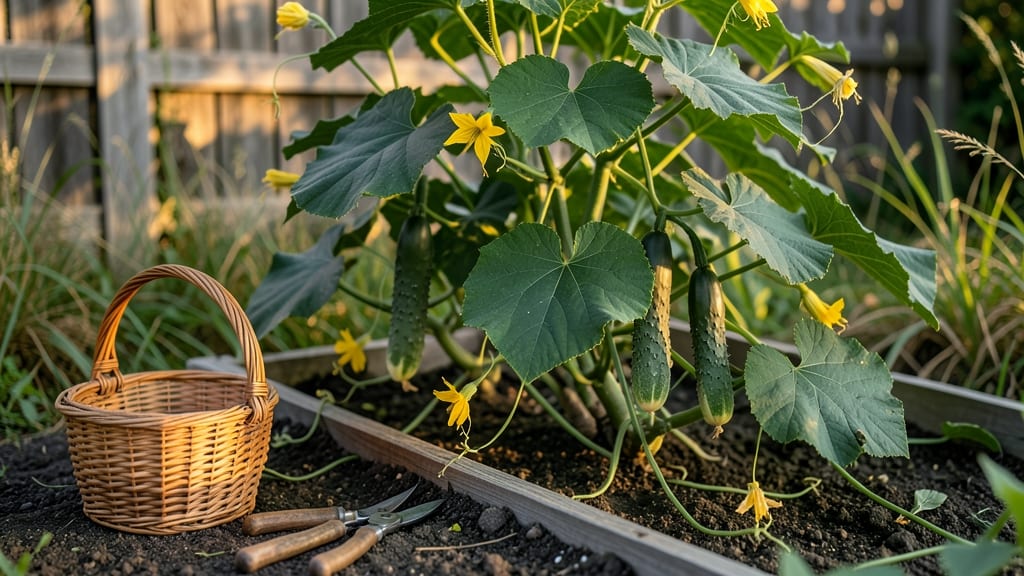
Japanese cucumbers 🥒 should be picked when they're 6-8 inches long and the stem end just starts to yellow—this is the sweet spot for peak flavor and texture.
If you’ve ever bitten into a cucumber that’s gone seedy or bitter, you know timing is everything. These delicate varieties lose their crispness fast, so knowing the exact cues saves you from disappointment—and wasted harvests.
Beyond size, look for deep green skin that’s firm but yields slightly to gentle pressure, and a stem that snaps cleanly when bent. These visual clues tell you the cucumbers are at their prime, ready to be enjoyed fresh or stored for later.
In this guide, I’ll walk you through the 3 foolproof signs of perfect ripeness, plus how to adjust for your climate zone and keep your harvest going all summer long.


3 Visual signs your Japanese cucumbers are perfectly ripe
Japanese cucumbers reach their peak flavor when harvested at the right moment—too early and they're bland, too late and they become bitter or seedy. The key lies in observing three visual cues: size, color, and texture.
These simple checks ensure you enjoy cucumbers with that signature crisp tenderness and mild sweetness. I’ve learned that missing these signs often leads to disappointment, so let’s break down exactly what to look for.
First, pay attention to the cucumber’s length. Most Japanese varieties like 'Suyo Long' or 'Kintoki' are best harvested between 6 to 8 inches. This size guarantees a balance of crispness and tenderness.
If you let them grow longer, the skin toughens and the seeds enlarge, turning the flesh bitter. I once waited too long and ended up with cucumbers that were more like small watermelons—hardly ideal for slicing!
Next, examine the stem end for color changes. A ripe Japanese cucumber will show a slight yellowing at the stem end, indicating it’s ready to pick. This is your clearest ripeness signal because it happens just before the cucumber starts to overmature.
If the stem end remains bright green, the cucumber needs more time. Pro tip: Check cucumbers in the morning when they’re cool and firmest.
Finally, test the skin’s firmness with gentle pressure. A perfectly ripe cucumber should feel firm but slightly yielding when you press your thumb against it. If it’s rock-hard, it’s underripe; if it feels soft or spongy, it’s past its prime.
I use this trick every harvest season—it’s foolproof! The skin should also be deep green and glossy, not dull or blotchy.
📌 When to Pick Japanese Cucumbers: 3 Key Visual Cues
- 📏 Size: Harvest when cucumbers reach 6–8 inches. Shorter than 4 inches? Wait longer. Longer than 10 inches? You’ve missed the boat!
- 🟡 Stem End: Look for yellowing at the stem end. Bright green means not ready; brown or wilted means overripe.
- 🤏 Skin Firmness: Press gently—ripe cucumbers yield slightly but don’t dent. Hard = underripe; soft = past prime.
Pro Tip: Use clean, sharp pruning shears to avoid damaging the vine. Always harvest in the morning for the best flavor!
One common mistake I see is relying solely on cucumber size while ignoring the other cues. For example, a 7-inch cucumber with a bright green stem end isn’t ready—it’s still tough and seedy inside.
Always cross-check all three signs to avoid disappointment. Another trick? Pick cucumbers frequently—every 2–3 days—to encourage your plants to produce more.
Regional climate also plays a role. In hotter zones (8–10), Japanese cucumbers may ripen faster due to accelerated growth. I’ve found they reach harvest size in as little as 50 days in these conditions, compared to 60–75 days in cooler zones.
Adjust your timing based on your local growing season and weather patterns. If you’re in doubt, err on the side of picking earlier—Japanese cucumbers taste best when young!
Overripe cucumbers can still be salvaged, but their texture and flavor suffer. If you miss the window, you can peel and slice them for stir-fries or ferment them into quick-pickle spears. However, the best strategy is prevention: monitor your plants daily and harvest at the first sign of ripeness.
I’ve trained myself to check my vines every morning—it’s become a habit that pays off with a steady supply of crisp, sweet cucumbers all season long.
Remember, the goal is tender, seedless perfection. By mastering these three visual cues—size, stem color, and skin firmness—you’ll never again wonder whether your Japanese cucumbers are ready.
Once you start harvesting at peak ripeness, you’ll wonder how you ever settled for anything less. Happy picking! 🌱
How Japanese cucumber varieties differ in harvest timing
Japanese cucumbers aren't all created equal—each variety has its own ideal harvest window and flavor profile. Knowing when to pick 'Suyo Long', 'Kintoki', or 'Shishito' cucumbers can make the difference between a sweet, tender bite and a bitter, seedy disappointment.
Let's break down the key differences so you can time your harvest perfectly.
The harvest timing for Japanese cucumbers depends on the variety, but most reach peak ripeness between 50-75 days after planting. Some varieties, like 'Shishito', are ready in as little as 45-50 days, while others, like 'Suyo Long', may take up to 70 days.
Understanding these differences ensures you enjoy the best flavor and texture.
Size matters when it comes to Japanese cucumbers. Most varieties should be harvested when they reach 6-8 inches in length, but some, like 'Kintoki', are best picked smaller at 4-6 inches for maximum tenderness. Overlooking these size cues can lead to tougher, less flavorful cucumbers.
Flavor profiles also vary by variety. 'Suyo Long' cucumbers develop a slightly sweet, nutty flavor when harvested at 7-9 inches, while 'Shishito' cucumbers are milder and best enjoyed at 4-5 inches. 'Kintoki', a smaller variety, offers a crisp, refreshing taste when picked young.
| Variety | Ideal Size | Days to Harvest | Flavor Profile | Best For |
|---|---|---|---|---|
| Suyo Long | 7-9 inches | 60-70 days | Sweet, nutty | Salads, pickling |
| Kintoki | 4-6 inches | 50-60 days | Crisp, mild | Fresh eating |
| Shishito | 4-5 inches | 45-50 days | Mild, refreshing | Tempura, stir-fry |
Harvesting at the right time also means paying attention to color and texture. Look for cucumbers with a deep, even green color and a firm but slightly yielding skin.
If the cucumber feels too hard or has yellow spots, it’s likely overripe. For 'Suyo Long', a slight ribbing along the sides is a good sign of readiness.
Don’t forget that frequency matters. Japanese cucumbers produce continuously, so harvesting every 2-3 days encourages more growth. If you miss the window, some varieties, like 'Kintoki', can become seedy and bitter quickly. Regular checks ensure you always have fresh, flavorful cucumbers on hand.
Now that you know the ideal timing for each variety, you’re ready to enjoy the best of your Japanese cucumber harvest. Whether you’re snacking on 'Shishito' or slicing 'Suyo Long' for salads, timing is everything for that perfect bite. Happy harvesting! 🥒