
Container Gardens
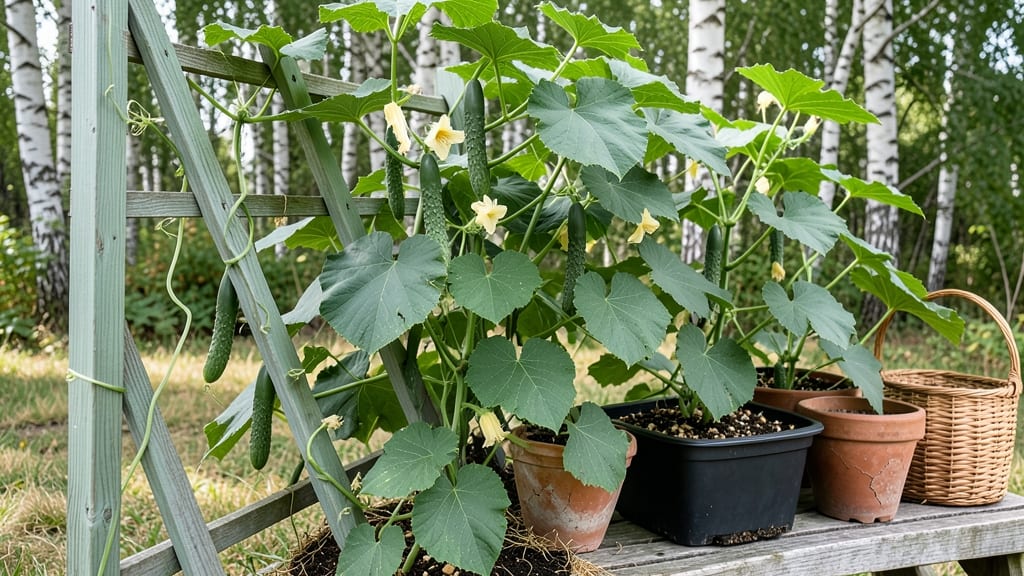
What size pot do cucumbers need to thrive, and how does it differ between bush and vining varieties?
Picking the wrong pot size for your 🥒 can stifle growth, reduce yields, or even kill your plants—so knowing the ideal dimensions is critical for a thriving harvest.
Whether you're growing compact bush varieties or sprawling vining types, container size directly impacts root health, water retention, and how much your plants produce.
Below, I’ll break down the exact pot dimensions for each cucumber type, material recommendations, and how to avoid common mistakes that sabotage growth in small containers.


Minimum pot size requirements for cucumber varieties (bush vs vining types)
Cucumbers thrive in containers, but the wrong pot size can turn your lush vines into stunted, fruitless plants. Root systems need room to spread, and depth directly impacts yield.
Bush varieties stay compact, while vining types sprawl—so their container needs differ dramatically. Let’s break down the essential dimensions to avoid root-bound stress and maximize your harvest.
For bush cucumbers, like 'Bush Champion' or 'Spacemaster,' a 5-gallon pot (12-14 inches deep) is the absolute minimum. These compact varieties grow 2-3 feet tall and don’t need sprawling roots, but they still demand adequate drainage and nutrient retention.
Vining types, such as 'Straight Eight' or 'Marketmore,' require much larger containers—10+ gallons (18+ inches deep)—because their roots can extend 3-5 feet in search of water and nutrients.
Here’s the critical rule: Pot depth must match mature root depth. Cucumbers with shallow roots (bush types) need 12 inches minimum, while deep-rooted vining varieties demand 18+ inches.
Width matters too—12-inch diameter for bush types and 18-inch diameter for vining cucumbers ensures roots spread without circling, which causes stunted growth.
If you’re growing multiple cucumbers in one container, space them 12-18 inches apart to prevent competition.
For example, two bush cucumbers can share a 7-gallon pot (14 inches deep), but vining types need individual 10-gallon pots to avoid overcrowding. Fabric pots or self-watering containers can help manage moisture in larger setups, but they must still meet the depth requirements.
| Cucumber Type | Minimum Pot Size | Root Depth | Width Requirement | Notes |
|---|---|---|---|---|
| Bush Varieties | 5 gallons (12-14" deep) | 12-18" | 12" diameter | Compact growth; ideal for balconies |
| Semi-Dwarf Vining | 7-10 gallons (16-18" deep) | 18-24" | 14-16" diameter | Trellis support recommended |
| Traditional Vining | 10+ gallons (18"+ deep) | 24-36" | 18"+ diameter | Heavy yield; needs sturdy trellis |
| Multiple Bush Plants | 7 gallons (14" deep) | 12-18" | 18" diameter (2 plants) | Space 12" apart; avoid overcrowding |
One of the biggest mistakes I see is underestimating root space. A 5-gallon pot might seem large, but it’s barely enough for one bush cucumber. If you cram two plants in, they’ll compete for nutrients, leading to yellowing leaves and poor fruit set.
For vining types, a 10-gallon pot is the bare minimum—anything smaller, and you’ll struggle with root circling, where roots grow in tight loops, choking the plant.
Material matters too. Plastic pots retain moisture longer, which is great for
How to choose the right pot material and drainage for cucumbers
Once you’ve nailed the pot size for your cucumbers, the next critical decision is choosing the right material and ensuring proper drainage. Each pot type—fabric, plastic, or ceramic—affects moisture retention, root health, and even temperature regulation.
For cucumbers, which thrive in consistently moist but well-draining soil, your choice can make or break your harvest.
Fabric pots, for example, excel at oxygenating roots and preventing overwatering, while plastic pots retain moisture longer but may trap excess water if drainage isn’t ideal. Ceramic pots add aesthetic appeal but can dry out faster, requiring more frequent watering.
Let’s break down the pros and cons to help you pick the perfect pot for your cucumber plants.
Pot Material Comparison for Cucumbers
Fabric Pots
- Pros: Excellent root aeration, prevents overwatering, lightweight
- Cons: Dries out faster, may need staking for support, less durable
Best for: bush varieties or container gardening with frequent watering.
Plastic Pots
- Pros: Retains moisture longer, lightweight, affordable, durable
- Cons: Can overheat in sun, poor drainage if holes are missing
Best for: vining types with drainage holes and shade cloth.
Ceramic Pots
- Pros: Aesthetic appeal, temperature regulation, durable
- Cons: Heavy, dries out quickly, expensive, may crack
Best for: decorative gardens or dry climates with frequent watering.
Regardless of material, drainage holes are non-negotiable for cucumbers. Poor drainage leads to root rot, a silent killer that can wipe out your plants in weeks. If your pot lacks holes, either repot or elevate it on a drip tray with a gravel layer at the bottom.
For fabric pots, ensure they’re fully saturated before planting to prevent drying out too quickly.
Another often-overlooked factor is pot color. Dark-colored pots absorb heat, which can stress cucumber roots, especially in hot climates. Opt for lighter colors like white or terracotta to reflect sunlight and keep roots cooler.
If using dark pots, place them in partial shade during peak afternoon heat to protect your plants.
For vining cucumbers, consider adding a self-watering reservoir to plastic or ceramic pots. This feature helps maintain consistent moisture without overwatering, which is crucial for heavy feeders like cucumbers.
Fabric pots with built-in watering systems are also a game-changer for busy gardeners, ensuring your plants never dry out between waterings.
Finally, always sterilize new pots before planting to avoid introducing diseases like powdery mildew. A quick soak in a 10% bleach solution (1 part bleach to 9 parts water) followed by rinsing will do the trick.
This simple step can save your entire crop from fungal infections that thrive in damp conditions.