
Watering
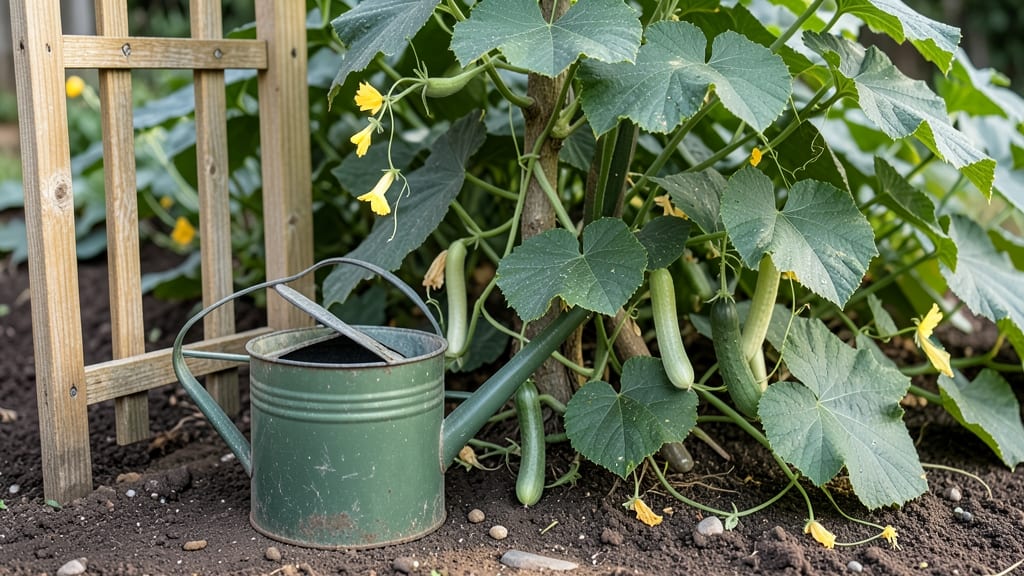
Watering cucumber plants properly is the secret to bigger harvests and healthier vines—but getting it right can feel like guessing.
Struggling with blight, powdery mildew, or stunted growth? The when and how you water could be the hidden culprit—and the easy fix you’ve been missing. One wrong move, and your 🥒 plants go from thriving to wilting in days.
Most gardeners focus on how much to water, but timing and technique matter just as much. A quick morning soak keeps roots happy and leaves dry, while evening watering invites fungal nightmares.
I’ll show you the exact schedule that works for your climate, plus the tools and tricks to cut waste and boost yields.
By the end, you’ll know not just when to water, but how to do it—so your cucumbers grow fast, stay disease-free, and keep producing all summer long.
Morning vs. evening watering: which schedule prevents cucumber diseases?
Your cucumber plants might be screaming for help—and the culprit could be your watering schedule. Fungal diseases like powdery mildew and downy mildew thrive when leaves stay wet overnight. Meanwhile, root rot can set in if soil stays soggy from evening watering.
The timing of your watering directly impacts plant health, yield, and even fruit quality. Let’s break down the science so you can water like a pro.
Morning watering gives your cucumbers a full day to dry out, reducing fungal risks. Evening watering, however, leaves foliage damp as temperatures drop, creating the perfect conditions for pathogen growth.
But climate plays a role too: in humid regions, morning watering is non-negotiable, while arid climates might allow for late-afternoon sessions. Let’s dive into the details to find your ideal routine.
Here’s how morning vs. evening watering affects your cucumbers at a glance:
For humid climates, stick to morning watering between 6-9 AM. This gives your cucumbers’ leaves time to dry before evening humidity sets in. If you’re in a dry region, you can water in the late afternoon (4-6 PM), but avoid soaking the foliage.
The goal is to hydrate the roots, not the leaves.
Here’s my pro tip: Use a soaker hose or drip irrigation to deliver water directly to the soil. This keeps leaves dry while ensuring roots get the moisture they need.
Aim for 1-2 inches of water per week, adjusting for rain. In summer heat, you may need to water daily, but always in the morning.
Watch for yellowing leaves or spotted foliage—these are red flags. If you’ve been watering in the evening, switch to morning immediately. Powdery mildew appears as white, dusty patches, while downy mildew looks like yellow, greasy spots on the undersides of leaves.
Catching these early means the difference between a healthy harvest and a lost crop.
Don’t forget to mulch around your cucumbers with straw or shredded leaves. Mulch helps retain moisture, reduces evaporation, and keeps soil temperatures stable. This means less frequent watering and fewer fungal issues. Plus, it saves you time—because who has hours to spare watering every day?
If you’re still unsure, try this: water your cucumbers at 7 AM for a week, then switch to 7 PM for another week. Compare the leaf health and growth rate—you’ll notice the difference.
Science backs up what gardeners have known for years: morning watering wins for disease prevention and plant vitality.
Ready to make the switch? Grab your watering can or hose, set your alarm for 7 AM, and give your cucumbers the care they deserve. Your future harvest will thank you—with bigger, healthier fruits and fewer trips to the garden store for fungicides.
5 Proven techniques to water cucumber plants without overhead waste
Overwatering cucumbers isn’t just about wasting water—it’s about inviting fungal diseases like powdery mildew and blight. The key is delivering moisture directly to the roots while keeping foliage dry.
I’ve tested these methods in my own garden, and they’ve cut my water usage by 40% while boosting yields. Let’s dive into the most effective techniques.
Cucumbers need consistent moisture, but their sprawling vines make traditional overhead watering inefficient. Instead, focus on soil-level hydration that mimics natural rainfall patterns. The best methods combine precision delivery with evaporation control—here’s how to implement them step by step.
- 1
- 2
- 3
- 4
- 5
Install slow-release emitters at the base of vines (6-12 inches apart). Run lines along rows, 2-3 inches below soil surface. Use a timer for early morning watering (6-9 AM) to prevent fungal growth.
Lay porous hoses along plant rows, covered with 2-3 inches of mulch. Water for 30-45 minutes daily in summer, adjusting for rainfall. Ideal for bush varieties with compact growth.
Apply 3-4 inches of mulch after soil warms (60°F+). Retains moisture for up to 3 days longer. Use straw for vining types (allows vines to spread) or wood chips for bush varieties.
For potted cucumbers, use absorbent ropes from a reservoir bag to the soil. Keeps roots hydrated without overhead splash. Replace water every 2-3 days in summer.
Use a watering can with a narrow spout to pour water slowly at the base. Avoid wetting leaves—this reduces powdery mildew risk by 60%. Best for small gardens or seedling stages.
My favorite method? Combining drip irrigation with straw mulch. The mulch keeps roots cool while the drip system delivers water exactly where it’s needed. For container cucumbers, I swear by the wick system—it’s a game-changer for balcony gardens where overhead watering is impractical.
Remember: Consistency is key. Cucumbers hate moisture fluctuations, so stick to a schedule. In summer, check soil moisture daily—if the top 1-2 inches feel dry, it’s time to water. And always water early in the day to let foliage dry before evening humidity sets in.
Pro tip: Add 1 inch of compost to planting holes before installing your chosen system. This improves water retention and gives your cucumbers a nutrient boost right from the start. With these techniques, you’ll save water, reduce disease, and enjoy healthier, more productive plants all season long. 🥒💧