
Picking
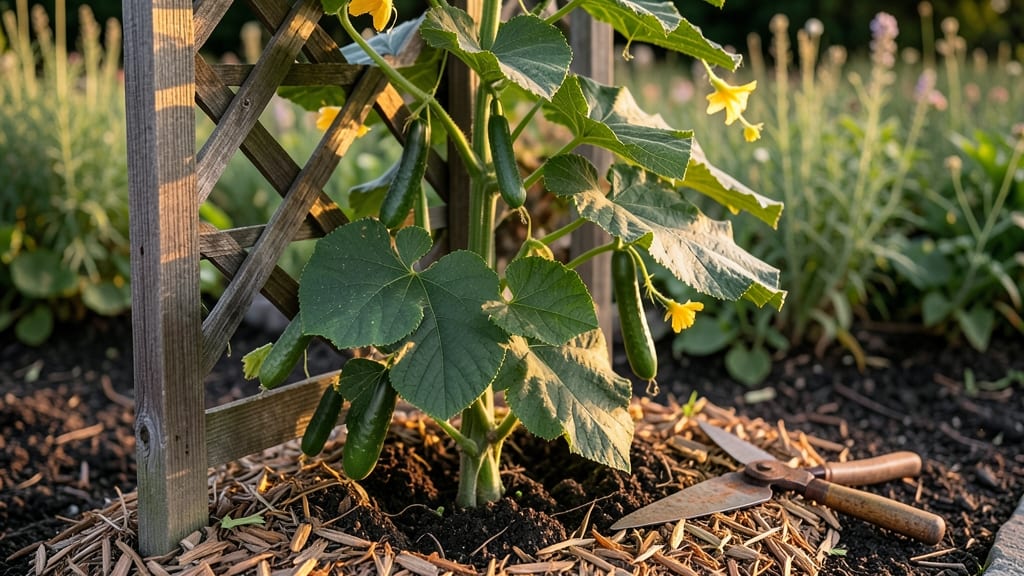
Cucumbers need 36 inches of space in the ground—but that’s before you learn the vertical trick that cuts their footprint in half. 🌱 I used to struggle with my tiny backyard plot until I trained vines up a sturdy trellis, freeing up precious real estate for other crops.
The right setup turns sprawling messes into neat, high-yielding columns that produce more cucumbers in less room.
Start with bush varieties like 'Bush Champion' or 'Spacemaster' if space is ultra-tight, but even standard vining types thrive when given a 6-foot-tall trellis or sturdy fence. Plant seeds 1 inch deep and 2–3 feet apart at the base, spacing rows 3–4 feet apart for airflow.
Companion plants like beans or radishes make great neighbors—they fix nitrogen and deter pests while keeping cucumbers from competing for space.
By mid-summer, you’ll watch vines climb like ladders, their leaves casting dappled shade while fruits dangle within easy reach. Harvest every 2–3 days to encourage more production, and avoid overcrowding by pruning side shoots that form at leaf junctions.
The result? A compact, productive cucumber patch that yields 20–30 pounds per plant—without sacrificing your garden’s layout.
This hack works for containers too: use 5-gallon pots with trellises for balconies, or let vines cascade over fences in small yards. Just ensure full sun (6+ hours daily) and well-draining soil, and you’ll maximize every square inch. Ready to reclaim your garden’s real estate?
📚 In This Guide
- What you need
- Instructions
- Tips and common mistakes
- Wrapping up and next steps
What you need
- ● Vertical Growing Structure: Trellis (6–8 ft tall) – DIY with PVC pipes, wooden stakes, or a pre-made metal trellis
- ● OR Apartment-friendly options: Wall-mounted pocket planter (with 12+ pockets, 12"+ deep)
- ● Hanging fabric grow bags (10–15 gallons each)
- ● Stackable planter towers (with drainage holes)
- ● Growing Medium: Potting mix (sterile, well-draining) – 1–2 cubic feet per plant (e.g., Miracle-Gro Garden Soil or coco coir blend)
- ● Perlite or vermiculite (1 part per 5 parts soil for aeration)
- ● Cucumber Seeds or Seedlings: 3–5 bush-type or compact varieties (e.g., 'Bush Champion,' 'Spacemaster,' or 'Sweet Success')
- ● OR 1–2 vining varieties (if pruning for vertical growth)
- ● Drainage & Support: Drainage tray or saucer (if using containers)
- ● Soft plant ties or Velcro strips (for securing vines)
- ● Slow-release fertilizer (e.g., Osmocote) – 1 tbsp per plant at planting
- ● Organic compost (for nutrient boost)
- ● Self-watering system (drip irrigation or wicking wicks for consistency)
- ● Shade cloth (30–50%) – if growing in hot climates
- ● Pruning shears (for training vines)
How to grow cucumbers vertically in tight spaces
Here's the method I've used to grow 10+ pounds of cucumbers in a 4' x 4' footprint—no sprawling vines, just upward growth.
🪴 Step 1: Choose Your Vertical Support Structure
Start with a sturdy frame that can handle 10-15 pounds of fruit per plant. I recommend either a 6-foot tall trellis (for bush varieties) or a 10-foot tall A-frame (for vining types). Use 1.5-inch PVC pipes or wooden stakes spaced 12 inches apart—this gives vines plenty of purchase points.
For small spaces, a wall-mounted gutter system works perfectly. Install it with ¼-inch mesh hardware cloth to prevent pests from climbing up. The key is ensuring your structure won't topple when cucumbers reach 1-2 pounds each. I always anchor mine with concrete footings or heavy-duty brackets.
🌱 Step 2: Plant at Proper Spacing and Depth
Use container-grown seedlings or direct-sow seeds ½ inch deep when soil reaches 60-65°F. Space plants 12-18 inches apart along the base of your vertical structure—closer spacing works for bush varieties, while vining types need the extra room. I plant mine in 5-gallon fabric pots for easy mobility if needed.
Plant seeds or seedlings 6-8 inches from the trellis so vines have room to reach upward without straining. Press the soil firmly around the base to eliminate air pockets, but don't compact it—you want roots to spread freely. Water immediately after planting to settle the soil and remove any air gaps.
☀️ Step 3: Train Vines Upward and Prune Strategically
As soon as vines reach 6 inches tall, gently tie them to the trellis with soft plant ties or strips of old T-shirt fabric. Never use wire or anything that can cut into the stems—you'll see bruising that invites rot. I train the main vine upward first, then let side shoots develop at every 12 inches.
Prune aggressively to control growth: remove all leaves below 18 inches from the ground—they'll get shaded and diseased. When vines reach the top, pinch off the growing tip to encourage bushier growth lower down. This creates more fruiting zones while preventing the plant from becoming top-heavy.
💧 Step 4: Water and Fertilize for Maximum Vertical Yield
Water at the base deeply every 2-3 days until top 2 inches of soil feel moist. Vertical cucumbers dry out faster because their roots have less soil volume. I use drip irrigation on a timer to maintain consistent moisture—cucumbers hate wet leaves, so avoid overhead watering.
Feed with balanced 10-10-10 fertilizer every 2 weeks once flowers appear. When fruits start forming, switch to low-nitrogen, high-potassium (like 5-10-10) to boost sweetness. Watch for yellowing leaves—they're your signal to reduce water slightly and increase potassium.
✂️ Step 5: Harvest and Maintain Through the Season
Pick cucumbers when they reach 6-8 inches long for maximum flavor and to encourage more production. Use pruning shears to cut stems cleanly, leaving ¼ inch of stem attached. This prevents disease entry points and makes harvesting easier. I check my vertical plants every 2-3 days—overripe cucumbers attract pests and reduce yield.
Through summer, keep pruning aggressive side shoots that form below 2 feet from the ground. Remove any yellow or diseased leaves immediately. By late summer, when growth slows, I let 2-3 vines grow long to produce late-season fruit. The vertical structure keeps everything organized while maximizing your tiny footprint.
Tips & tricks for perfect vertical cucumber growth
These game-changing strategies will help you maximize your compact garden's potential while avoiding common pitfalls.
Structural Stability: When building your vertical support, prioritize weight distribution. The 10-15 pounds per plant estimate accounts for mature cucumbers, so position your 6-foot trellis or 10-foot A-frame with the heaviest fruit-bearing sections at the bottom. I reinforce my structures with diagonal bracing—especially important when using 1.5-inch PVC pipes—to prevent sagging under the weight. For wall-mounted systems, use heavy-duty brackets rated for at least 20 pounds per attachment point.
Soil Temperature Secret: The 60-65°F soil temperature range mentioned is non-negotiable for germination, but here's what I've learned: Use a soil thermometer to verify this range before planting. If your morning temperatures dip below 60°F, consider using black plastic mulch to warm the soil faster. I've found that planting in 5-gallon fabric pots allows for better temperature control—simply move pots to sunnier locations if needed. Pro tip: Warm soil speeds up the entire growth cycle by 3-5 days.
Pruning Precision: That 18-inch leaf removal guideline might seem drastic, but trust me—it's worth it. I've seen gardeners struggle with powdery mildew because they didn't remove those lower leaves. Use pruning shears to make clean cuts just above a leaf node, and always sterilize your tools with rubbing alcohol between cuts. For the every 12 inches side shoot development, think of it as creating "fruit zones"—each new shoot should have 3-5 leaves before it bears fruit. This creates a balanced harvest throughout the season.
Watering Wisdom: The 2-3 day watering schedule is perfect, but timing matters just as much. Water in the early morning to prevent fungal issues from overnight moisture. I've found that vertical cucumbers in 5-gallon pots actually need slightly more frequent watering—check the top 2 inches of soil every 2 days rather than every 3 days. For container-grown plants, I add 1 tablespoon of Epsom salt to each watering every 4 weeks to prevent magnesium deficiency, which shows up as yellowing leaves between veins.
Pro Tips for Space For Cucumbers
- These game-changing strategies will help you maximize your compact garden's potential while avoiding common pitfalls.
- Structural Stability: When building your vertical support, prioritize weight distribution.
- Soil Temperature Secret: The 60-65°F soil temperature range mentioned is non-negotiable for germination, but here's what I've learned: Use a soil thermometer to verify this range before planting.
Frequently asked questions
Got questions about maximizing your cucumber harvest in limited space? You’re not alone! Here are answers to the most common queries about growing cucumbers vertically—because even small gardens can yield big rewards.
How much space do cucumbers really need when grown vertically?
Cucumbers thrive in 3–4 feet of vertical space per plant, with vines sprawling upward instead of outward. For compact varieties (like ‘Bush Champion’), even 2–3 feet works if you prune aggressively. Just ensure 12–18 inches of horizontal clearance for airflow and harvesting ease.
When is the best time to harvest cucumbers from a vertical garden?
Harvest when cucumbers are 6–8 inches long and firm to the touch—before they turn yellow or develop seeds. For vertical setups, check every 2–3 days to prevent overcrowding. Pro tip: Use a small basket or tray beneath vines to catch fallen cucumbers and spot ripening ones faster!
What if my vertical cucumbers aren’t producing? Troubleshooting tips?
Check these fixes:
- Pollination issues: Gently shake vines or hand-pollinate with a paintbrush if bees are scarce.
- Overcrowding: Thin vines to 1–2 main stems per plant for better airflow.
- Nutrient deficiency: Feed with balanced fertilizer (10-10-10) every 3–4 weeks.
- Temperature stress: Cucumbers wilt in heat—provide drip irrigation and shade cloth if temps exceed 90°F.
Can I grow other plants alongside cucumbers in a vertical setup?
Pair cucumbers with companion plants like:
- Radishes or lettuce (shade-tolerant, fast-growing)
- Bush beans (fix nitrogen in the soil)
- Marigolds (deter pests naturally)
What’s the easiest DIY vertical trellis for cucumbers?
Try a 5-gallon bucket trellis:
- Drill holes in the bucket’s sides and attach zip ties or twine to create a spiral.
- Fill with soil and plant 1–2 cucumber seeds.
- As vines grow, guide them upward and secure to the twine.
- Hang the bucket from a fence or railing—no ground space needed!
Wrapping up and next steps
Growing cucumbers vertically isn’t just a clever hack—it’s a game-changer for small spaces! 🌱 With the right setup, you can enjoy fresh, homegrown cucumbers without sacrificing your garden’s real estate.
Whether you’re a city dweller with a balcony or a homesteader maximizing every inch, this method proves that big harvests don’t need big yards.
Ready to dive in? Start small—try a single trellis or wall-mounted planter—and let your green thumb shine! What’s your favorite space-saving gardening tip? Share it in the comments and inspire others to grow more with less. 🌿