
Companion Plants
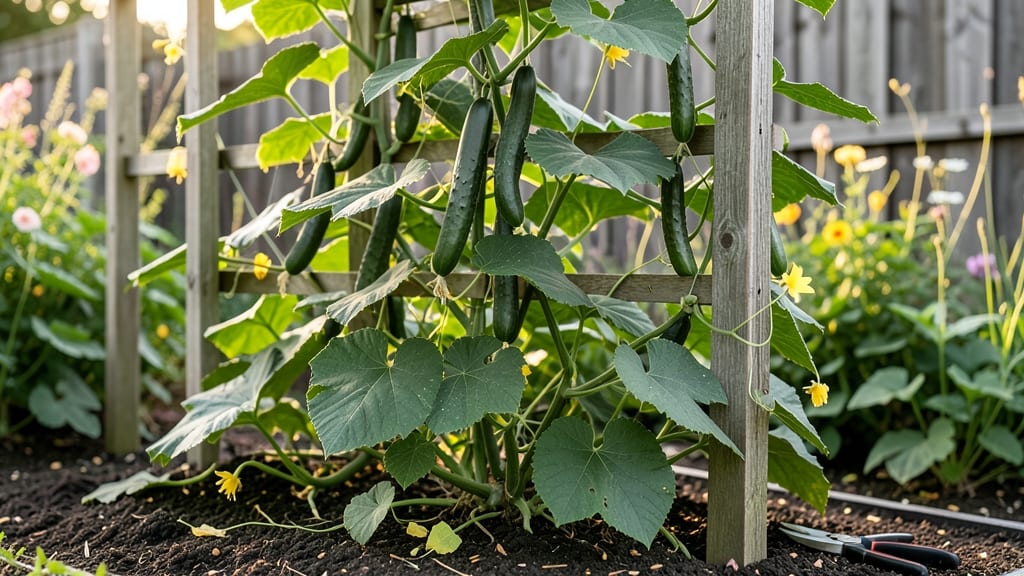
Proper spacing for cucumber plants means giving them 12–24 inches between vines, with bush varieties needing less room than sprawling vining types. Using trellises can halve these gaps while boosting airflow and fruit production. Always verify seed packets for variety-specific spacing to avoid disease and maximize your harvest.
Cucumber plants thrive when given room to spread, but their exact needs vary wildly depending on whether they're compact bush types or rampant vining varieties. 🌱 The right spacing isn't just about preventing competition—it's about creating an environment where plants develop strong roots and resist common diseases like powdery mildew.
I've found that even a few extra inches can make the difference between a modest harvest and a garden overflowing with crisp, disease-free cucumbers.
For example, dwarf varieties like 'Bush Champion' can often be planted just 12 inches apart, while sprawling types like 'Straight Eight' need nearly twice that space.
The key is matching your spacing to both the plant's natural growth habit and your garden's layout—raised beds allow closer planting than open ground, and vertical supports change the game entirely by lifting vines off the soil.
💡 In This Article
- How Cucumber Varieties Affect Spacing Needs
- Optimal Cucumber Plant Spacing by Garden Layout
How cucumber varieties affect spacing needs
The fundamental difference between cucumber varieties comes down to their genetic growth habits. Bush varieties like 'Bush Champion' or 'Diva' are bred to stay compact, typically reaching 3–4 feet tall with vines spreading just 2–3 feet.
This compact growth allows them to thrive in 12–18 inches of space between plants because their root systems stay shallow (12–18 inches deep) and their energy focuses on producing fruit rather than extensive vine growth. 🌱 In contrast, traditional vining types like 'Straight Eight' or 'Marketmore' can sprawl 15–20 feet if unchecked, requiring 24+ inches of space to prevent shading and disease.
This spacing difference stems from how each variety allocates its energy. Bush cucumbers invest more in fruit production and root development, while vining types prioritize vine expansion to maximize sunlight capture. The trade-off?
Vining varieties often produce 20–30% more fruit per plant when given proper space, but only if they have room to develop strong vines.
Overcrowding forces plants to compete for nutrients, leading to weaker stems that snap under fruit weight and increased susceptibility to powdery mildew—a fungal disease that thrives in humid, shaded conditions.
Trellising changes the equation entirely by lifting vines off the ground, which can cut spacing needs by 50%. When cucumbers climb vertically, their leaves receive better airflow and sunlight, reducing disease pressure.
For example, 'Sweet Success' vining cucumbers might need 24 inches apart when sprawling, but only 12 inches when trellised. The key is providing sturdy support (like 5–6 foot tall trellises) and pruning side shoots to direct energy upward.
This vertical approach also makes harvesting easier and reduces soil-borne diseases that plague ground-hugging vines.
Another critical factor is root depth. Bush varieties develop roots that stay within the top 12–18 inches of soil, making them ideal for raised beds or containers.
Vining types, however, send roots deeper (24–36 inches) to access water and nutrients, which is why they struggle in shallow soil conditions.
This deeper root system also explains why vining cucumbers handle drought better than bush types—when properly spaced, they can tap into moisture reserves that shallow-rooted plants can't access. 💧
What most gardeners overlook is how spacing affects fruit quality. Overcrowded cucumbers produce smaller, tougher fruits because the plants divert energy to vine growth rather than fruit development. In contrast, properly spaced plants allocate more resources to fruit production, resulting in larger, sweeter cucumbers with thinner skins.
For instance, 'Lemon Cucumber' varieties need 18–24 inches of space to develop their signature elongated shape and crisp texture—any less, and you'll end up with misshapen, seedy fruits.
For those working with limited space, consider 'Patio Snacker' or 'Spacemaster' hybrids, which are specifically bred for 12-inch spacing while maintaining good yields. These varieties achieve their compact growth through careful breeding that limits vine length without sacrificing fruit production.
The lesson here? Always match your spacing to both the variety's natural growth habit and your garden's specific conditions—whether that's a sunny backyard, a small balcony container, or a crowded community garden plot.