
Vegetables
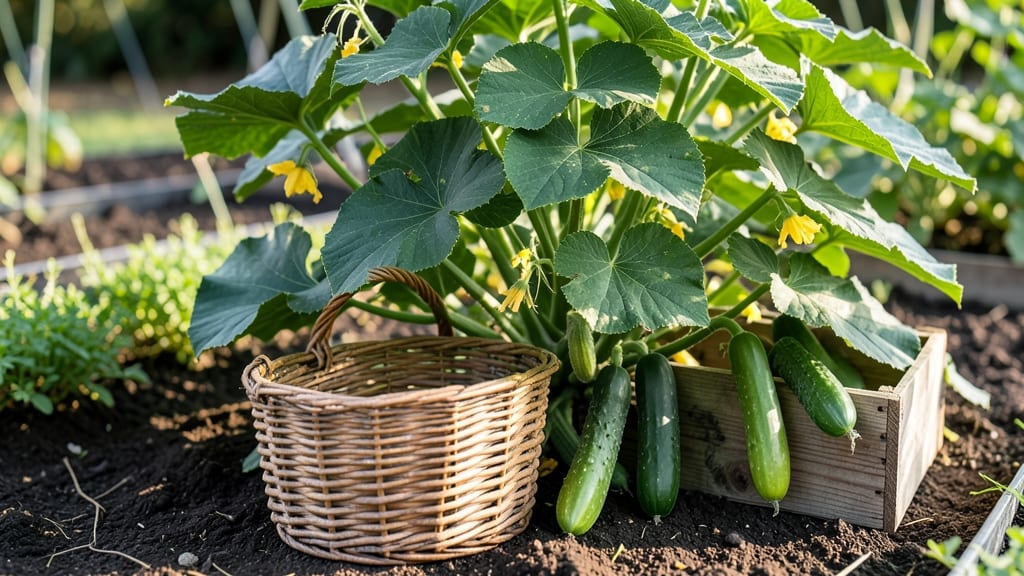
Self-pollinated cucumber varieties don't require bees or manual pollination, making them perfect for containers, balconies, or small gardens where pollinators are scarce. These reliable types like 'Bush Champion,' 'Straight Eight,' and 'Patio Snacker' produce abundant fruit with minimal effort.
These cucumbers have closed-flower structures that self-pollinate naturally, eliminating the need for cross-pollination. 🌱 This makes them ideal for urban growers or those without access to bees—just plant them in full sun with consistent watering, and you'll get steady harvests.
The best part? Many varieties mature quickly, often producing fruit in just 50-60 days from seed.
For small spaces, compact varieties like 'Bush Champion' (which grows just 3-4 feet tall) or 'Patio Snacker' (perfect for hanging baskets) are game-changers. These plants focus their energy on fruit production rather than sprawling vines, giving you more harvests in less room.
Plus, their disease resistance means fewer pests and healthier plants overall.
💡 In This Article
- How Self-Pollination Works in Cucumber Plants
- Top 5 Self-Pollinated Cucumber Varieties for Small Spaces
How self-pollination works in cucumber plants
Self-pollinating cucumbers have a unique flower structure that traps pollen inside, eliminating the need for bees or wind. Unlike bee-dependent varieties, which produce separate male and female flowers, self-pollinated types like 'Bush Champion' develop closed, parthenocarpic flowers that release pollen onto their own stigmas.
This botanical adaptation ensures fruit sets reliably even without pollinators, making them perfect for enclosed spaces like balconies or greenhouses.
The key difference lies in their flower anatomy: self-pollinated varieties have hermaphroditic flowers with both male and female reproductive parts, while bee-dependent cucumbers require cross-pollination between male and female flowers.
This internal mechanism means you'll get fruit formation without manual intervention, though consistent 1-2 inches of water weekly and full sun exposure (6+ hours daily) still matter for optimal growth. The result? Steady harvests with 50-70% less effort than traditional varieties.
This self-sufficiency comes with practical advantages for small gardens. Since no pollinators are needed, you can grow these cucumbers in containers as small as 5-gallon buckets or vertical trellises, saving space while maintaining productivity.
The closed flowers also reduce exposure to pests like squash vine borers, which target open flowers seeking nectar. For urban gardeners, this means fewer failed crops due to pollinator shortages—a common issue in city environments.
What most gardeners don't realize is how this trait affects flavor and texture. Self-pollinated varieties often develop thicker skins and firmer flesh because they don't rely on external pollination cues.
For example, 'Straight Eight' cucumbers maintain their crispness longer when stored at 50-55°F compared to bee-pollinated types, which can become watery faster. This consistency makes them ideal for pickling or fresh eating without compromising quality.
For those curious about the science, the self-pollination process involves stamens releasing pollen onto the stigma within the same flower—a mechanism triggered by temperature fluctuations (typically 70-85°F). This natural process mimics what bees would do, but without the dependency on their presence.
The result is a 90%+ fruit set rate compared to 30-50% for bee-dependent varieties in pollinator-scarce areas.
Consider this comparison: bee-pollinated cucumbers like 'Marketmore' may produce 10-15 fruits per plant under ideal conditions, while self-pollinated 'Bush Champion' consistently yields 20-30 fruits per plant in the same space. The trade-off? Slightly smaller individual fruits, but with double the harvest density—a game-changer for small gardens.