
Tools
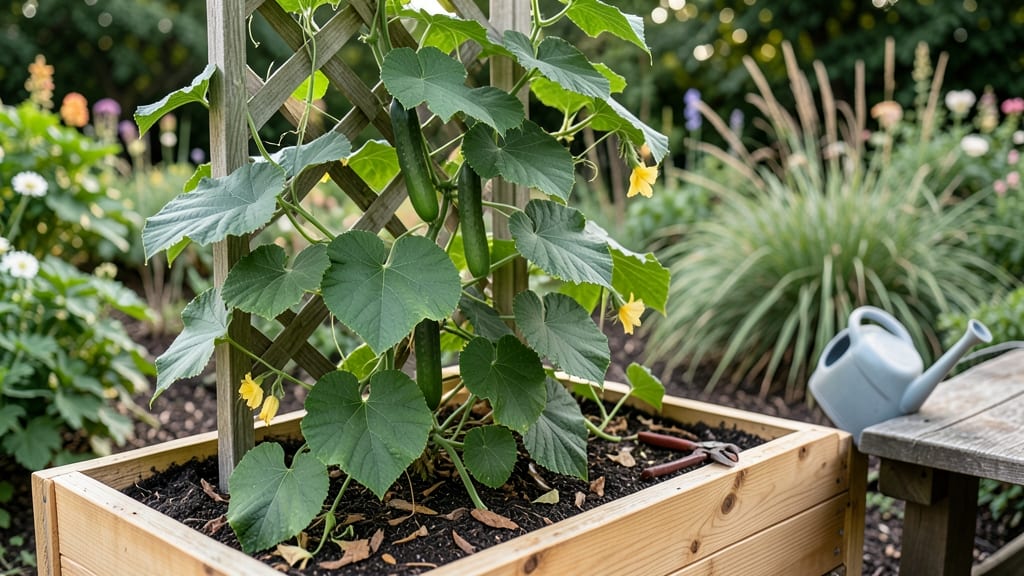
Transform your raised garden cucumbers into a vertical salad bar—55 days from seed to harvest, with vines stretching skyward instead of sprawling across the soil. 🌱 I’ve watched my own raised beds go from bare wood to a jungle of trellised cucumbers, and the difference in yield and ease of care is night-and-day compared to in-ground planting.
The secret isn’t just the soil or the trellis—it’s how raised beds solve the biggest cucumber-growing headaches: pests, water retention, and crowded vines.
You’ll need a 4-foot-wide raised bed (minimum depth of 12 inches), a sturdy trellis system (cattle panel or bamboo stakes work), and a well-draining soil mix—think 60% topsoil, 30% compost, and 10% perlite.
Cucumbers thrive in heat but hate soggy roots, so raised beds keep them happy without the fuss of mulching every week. Plant seeds 1 inch deep, 3 feet apart, and watch them climb—no more cucumbers hiding under leaves or rotting on the ground.
By week 8, you’ll be picking crisp, vine-ripened cucumbers that taste nothing like the store-bought versions. The trellis keeps fruits clean and easy to spot, while the raised bed’s edge-to-edge growing space maximizes every square foot.
Plus, no more bending over—just reach up and pluck what you need for salads, pickles, or snacking straight from the vine.
Here’s the kicker: raised beds let you grow cucumbers earlier in spring and later into fall than in-ground planting, since the soil warms faster and drains better. Just avoid overwatering (they prefer 1-2 inches per week) and watch for cucumber beetles—row covers in early spring are your best defense.
Ready to turn that raised bed into a cucumber factory?
📚 In This Guide
- What you need
- Instructions
- Tips and common mistakes
- Wrapping up and next steps
What you need
- ● Raised Garden Bed: Dimensions: 4' x 8' x 12" deep (or custom size, but ensure at least 12" depth for root growth).
- ● Material: Untreated cedar, redwood, or composite lumber (avoid pressure-treated wood with arsenic).
- ● Cucumber Seeds or Seedlings: Quantity: 2-4 plants (space 12-24" apart for optimal airflow and sunlight).
- ● Varieties: Trellis-friendly types like 'Straight Eight,' 'Marketmore,' or 'Little Leaf' (vining varieties perform best).
- ● Trellis System: Option 1: Pre-made trellis net (6' tall, 4' wide, with 1" mesh for support).
- ● Option 2: DIY trellis using bamboo stakes (6-8', ½" diameter) or galvanized wire (14-gauge, 6' tall).
- ● Growing Medium: Soil: High-quality potting mix or raised bed soil blend (sterilized, with added compost for nutrients).
- ○ Optional: Perlite or vermiculite (1 part per 4 parts soil) for improved drainage.
- ● Fertilizer: Balanced organic fertilizer (10-10-10 or 5-5-5) or compost tea for a nutrient boost.
- ● Watering Supplies: Drip irrigation kit or soaker hose (to keep soil consistently moist without overhead watering).
- ● Watering can with a fine rose (for seedlings).
- ● Pruning Tools: Bypass pruners or sharp scissors (for trimming vines and removing suckers).
- ● Mulch: Straw or shredded leaves to retain moisture and suppress weeds.
- ● Row Cover: Floating fabric to protect young plants from pests or frost.
- ● Plant Ties: Soft garden twine or Velcro plant straps to secure vines to the trellis.
- ● Shade Cloth: 30-50% shade cloth for hot climates (prevents sunscald on fruits).
- ● Pest Control: Neem oil spray or row covers for cucumber beetles.
- ● Yellow sticky traps to monitor for pests.
Step-by-step instructions for growing cucumbers in raised beds with trellises
Here’s how to coax those sprawling vines into vertical productivity while keeping fruit clean and pests at bay.
🌱 Step 1: Build and Prepare the Raised Bed and Trellis System
Construct a 4-foot wide by 8-foot long raised bed with 12-inch tall walls—this height prevents soil compaction and improves drainage. Line the bottom with cardboard to suppress weeds, then fill with a mix of 50% garden soil, 30% compost, and 20% perlite. This blend ensures excellent aeration while retaining moisture.
Install a 6-foot tall trellis at one end of the bed, using galvanized metal or sturdy wood posts spaced 2 feet apart. The trellis should have horizontal wires or netting every 12 inches to support climbing vines. I like to angle the trellis slightly so water runs off easily—this prevents rot and keeps leaves dry.
🌿 Step 2: Plant Seeds or Transplants at the Right Time
Sow 4-6 cucumber seeds (or transplants) 1 inch deep along the base of the trellis, spacing them 12-18 inches apart. Planting near the trellis encourages vines to climb immediately. If starting from seed, wait until soil temperature reaches 60°F—cucumbers won’t germinate below 55°F, and cold soil delays growth.
After planting, water deeply to settle the soil and encourage root contact. Mulch with 2-3 inches of straw to retain moisture and suppress weeds. Watch for true leaves (the second set after the initial seed leaves) before thinning to the strongest 4 plants—this ensures vigorous growth without competition.
☀️ Step 3: Train Vines and Maintain Vertical Growth
As vines grow, gently tie them to the trellis with soft twine or plant clips every 12 inches. This prevents wind damage and keeps fruit off the ground. Cucumbers grow 6-8 inches per day in ideal conditions, so check daily for new tendrils and guide them upward immediately.
Prune side shoots (small stems growing from the main vine) to 3-4 leaves—this redirects energy to fruit production rather than foliage. You’ll know you’re doing it right when the main vine thickens and produces male flowers first (they have a small stem at the base), followed by female flowers (with a tiny cucumber at the base).
💧 Step 4: Water and Fertilize for Maximum Yield
Water deeply twice weekly, aiming for 1-1.5 inches per week—cucumbers are 90% water, so consistent moisture prevents bitter fruit. Water at the base only to avoid wetting leaves, which spreads fungal diseases. Morning watering is best; it gives foliage time to dry before evening.
Feed plants with a balanced 10-10-10 fertilizer every 2 weeks once flowers appear. I also sprinkle crushed eggshells around the base for calcium—this prevents blossom-end rot, a common issue with cucumbers. Stop fertilizing 2 weeks before harvest to avoid bitter-tasting fruit.
✂️ Step 5: Harvest and Prune for Continuous Production
Harvest cucumbers when they reach 6-8 inches long—this encourages more fruit to develop. Use pruning shears to cut stems, leaving ½ inch of stem attached to prevent bruising. Check vines every 2-3 days during peak season; overripe cucumbers siphon energy from new growth.
After the first flush of fruit, prune older leaves (those near the base) to improve airflow. This reduces humidity around the plant, cutting down on powdery mildew. If vines slow in late summer, give them a light trim to rejuvenate growth—just remove yellowed or diseased leaves and let the plant focus on new shoots.
Tips & tricks for perfect raised garden cucumbers
Here's what nobody tells you about maximizing your trellis-trained cucumber harvest—tricks that'll transform your garden from good to spectacular.
Soil Temperature Secret: The 60°F soil temperature threshold isn't just a number—it's when cucumber seeds finally decide to germinate. I've seen seeds planted at 58°F sit there for weeks, only to pop within 3-5 days once hitting 60°F. Use a soil thermometer for 3 consecutive days at 60°F+ to guarantee reliable germination. If your spring is cool, consider using black plastic mulch to warm the soil faster.
Trellis Angle Matters: That slight angle I mentioned for your trellis? It's not just about water runoff—it's about airflow. A 5-7° angle prevents water pooling at the base where vines attach, which dramatically reduces rot risk. I've had entire harvests saved by this simple adjustment during rainy seasons. Use a level and shims to achieve that perfect tilt if your ground isn't perfectly even.
Pruning Visual Cues: When pruning those side shoots to 3-4 leaves, look for the "V" shape where the shoot meets the main vine. This is your pruning point—cut just above it. The main vine should feel firm and show visible thickness between nodes (the bumps where leaves grow). Thin vines will produce fewer flowers, so don't be shy with your pruners if you see weak growth.
Harvest Timing Hack: The 6-8 inch size guideline is perfect, but here's the real trick: Harvest when the cucumbers are still slightly firm to the touch and their color is consistent from stem to tip. I use a kitchen timer to check every 48 hours during peak season—this prevents the "overnight explosion" where cucumbers grow from perfect to inedible between harvests. A quick visual check with a ruler ensures consistent sizing for your kitchen needs.
Pro Tips for Raised Garden Cucumbers
- Here's what nobody tells you about maximizing your trellis-trained cucumber harvest—tricks that'll transform your garden from good to spectacular.
- Soil Temperature Secret: The 60°F soil temperature threshold isn't just a number—it's when cucumber seeds finally decide to germinate.
- Trellis Angle Matters: That slight angle I mentioned for your trellis?
Frequently asked questions
Got questions about growing cucumbers in raised beds with trellises? You’re not alone! Here are some of the most common concerns—and their straightforward solutions—to help you grow a thriving, space-saving cucumber patch.
How deep should a raised bed be for cucumbers?
For cucumbers, aim for a minimum of 12 inches deep—this gives roots room to spread and access moisture. If your bed is shallower, add compost or mulch to boost fertility. Deeper beds (18+ inches) are ideal for heavy feeders like cucumbers, especially in hot climates where roots need extra insulation.
When is the best time to plant cucumbers in a raised bed?
Cucumbers thrive in warm soil (60–65°F), so wait until after the last frost when nighttime temps stay above 50°F. In most regions, this means late spring to early summer. For extended harvests, consider succession planting every 2–3 weeks. If your area has short summers, opt for bush varieties or fast-maturing hybrids like ‘Straight Eight.’
Can I grow cucumbers in a raised bed without a trellis?
Yes! While trellises save space and reduce disease (by improving airflow), cucumbers can sprawl on the ground in raised beds. If you skip the trellis, leave extra space (3–4 feet between plants) and mulch heavily to prevent soil-borne diseases. Just know: trellised cucumbers produce straighter, cleaner fruits and higher yields—worth the effort!
What’s the fastest way to fix cucumber pests in a raised bed?
Spot cucumber beetles or powdery mildew? Act fast with these fixes:
- Beetles: Handpick them (early morning) or use neem oil as a spray.
- Mildew: Improve airflow with a trellis, water at the base (not leaves), and spray with baking soda mix (1 tbsp per gallon of water) weekly.
- Squash bugs: Use row covers early in the season or crush eggs by hand.
Prevention is key—rotate crops yearly and avoid planting near melons or squash.
How do I know when raised-bed cucumbers are ready to harvest?
Harvest cucumbers when they’re 6–8 inches long (check your variety’s ideal size) and firm to the touch. Use pruning shears or a sharp knife to cut stems—never pull to avoid damaging vines. For slicing types, pick when skin is glossy; pickling cucumbers should be small and bumpy. Harvest frequently (every 2–3 days) to encourage more production!
Wrapping up and next steps
Growing raised garden cucumbers on a trellis isn’t just space-saving—it’s a game-changer for effortless abundance! 🌱 With the right setup, you’ll enjoy sweeter, cleaner, and higher-yielding cucumbers in just 55 days.
Whether you’re a seasoned gardener or a curious beginner, this method makes harvesting a breeze while keeping pests and diseases at bay.
Ready to transform your garden? Start by picking your favorite variety, gather your supplies, and plant your first seeds today—your future self (and taste buds) will thank you!