
Plants
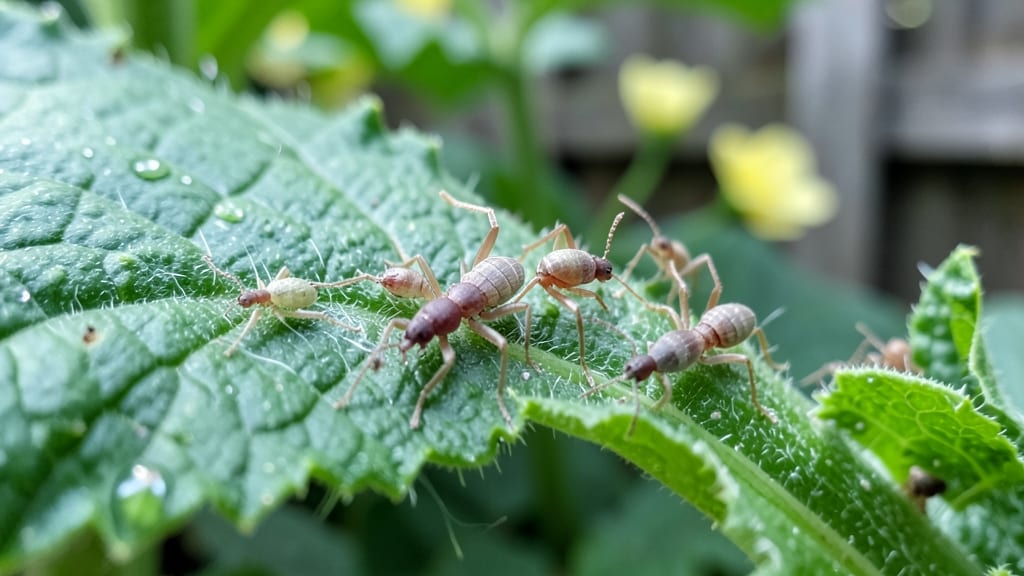
Mites on cucumber plants turn vibrant green leaves into dusty, speckled messes in days. 🌿 I’ve seen healthy vines go from lush to lifeless in a week when spider mites take hold—those tiny red dots and fine webbing are a dead giveaway.
The good news? You can stop them fast with simple, organic sprays that work without harming your harvest.
These pests thrive in dry, dusty conditions, so they’re often a sign your plants need more humidity or a good shower. I’ve used a mix of neem oil and soapy water to knock them out in 2-3 treatments, and it’s saved my cucumbers every time.
The key is acting before the mites spin enough webbing to suffocate your plants.
Once you spray, check back in 3-5 days—you’ll see the mites disappear and leaves regain their shine. For severe cases, a garlic spray (blended garlic + water) adds extra punch. The best part? These solutions are safe for edible crops and won’t leave chemical residue.
Prevention is easier than treatment: water deeply weekly, prune crowded vines, and release ladybugs near your plants. Mites hate moisture and natural predators, so a little upkeep keeps them away for good.
Root Causes of Tiny Leaf Invaders
Understanding why mites target your cucumber plants is the first step to stopping them in their tracks. These microscopic pests don’t just appear out of nowhere—they’re drawn by specific conditions that make your garden a five-star buffet.
Let’s break down the science behind their behavior and how your plants might be sending out an unwelcome "all-you-can-eat" sign.
Mites thrive where plants are weak, and stress is their favorite invitation. When cucumber plants are overcrowded, airflow is restricted, creating a humid microclimate that mites adore. Poor circulation also slows down the plant’s natural defenses, making it easier for pests to latch on.
- Why it happens:
- Competition for resources (water, nutrients, sunlight) weakens plants, reducing their ability to produce protective compounds like triterpenoids (natural insect repellents).
- Root-bound stress from overcrowded roots triggers the plant to release volatile organic compounds (VOCs), which can attract mites as a secondary signal.
- Nutrient deficiencies (especially phosphorus or potassium) make leaves less resilient, giving mites an easier time piercing the epidermis.
- Actionable fix:
- Thin out plants to 12–18 inches apart to improve airflow.
- Monitor soil moisture—consistent hydration (not soggy soil) reduces stress signals.
- Use compost tea or fish emulsion to boost nutrient uptake organically.
Mites are warm-weather opportunists. Two-spotted spider mites, the most common cucumber pest, double their reproduction rate when temperatures rise above 80°F (27°C) and humidity drops below 40%. Your cucumbers might look healthy, but the conditions are perfect for a mite explosion.
- Why it happens:
- Rapid evaporation from leaves increases sugar concentration, making them more attractive to mites (like a candy store for pests).
- Dry air reduces the effectiveness of natural predators (like predatory mites or ladybugs), leaving your plants vulnerable.
- Heat stress causes cucumbers to wilt slightly, making them easier targets for mites’ needle-like mouthparts.
- Actionable fix:
- Shade cloth (30–50%) can lower leaf temperatures by 10–15°F without blocking sunlight.
- Mist leaves early morning to raise humidity temporarily (avoid evening misting to prevent fungal issues).
- Reflective mulch (like aluminum foil) around plants can deflect excess heat.
Mites don’t just appear—they’re often part of a delicate ecosystem. When their predators vanish, their populations skyrocket. Common predators like lacewings, ladybugs, and predatory mites (e.g., Phytoseiulus persimilis) keep mite numbers in check. But if you’ve used broad-spectrum pesticides (even synthetic ones), you’ve likely wiped them out.
- Why it happens:
- Chemical pesticides kill both pests and predators, creating a pesticide-induced outbreak.
- Monoculture gardening (growing only cucumbers) reduces biodiversity, eliminating alternate food sources for predators.
- Seasonal die-offs (e.g., ladybugs migrating in winter) can leave mites unchecked until spring.
- Actionable fix:
- Introduce beneficial insects—release predatory mites or lacewing larvae (available at garden centers).
- Plant companion flowers (like marigolds or dill) to attract predator populations.
- Avoid neonicotinoids—opt for soapy water sprays or neem oil instead.
Mites hitchhike on wind, tools, and even your clothes. If your garden has old plant debris, weeds, or unwashed pots, you’re providing a highway and hideout for these pests. Overwintering mites can survive in dried leaves or mulch, then reinfest your cucumbers when they sprout.
- Why it happens:
- Dried plant material retains moisture, creating a safe harbor for mite eggs.
- Weeds (especially malvaceous weeds like lambsquarters) are alternate hosts for mites.
- Reused containers can harbor mite eggs between plantings.
- Actionable fix:
- Remove all plant debris from the garden bed after harvest (compost only if heated to 140°F+).
- Solarize soil in late summer by covering it with clear plastic for 4–6 weeks to kill overwintering pests.
- Disinfect tools with rubbing alcohol (70%+) between uses.
Quick Fixes for Spider Mites
Now that you know why those pesky mites are attacking your cucumber plants, let’s tackle them head-on with effective, organic solutions that restore your garden’s health. Below, we’ve matched common causes to targeted fixes—plus prevention tips to keep mites from crashing your harvest again.
If your cucumbers are packed too tightly or struggling from drought, mites see them as easy prey. Step 1: Revitalize your plants before battling the pests.
How to Fix It:
- 🌱 Prune & Space Out: Thin crowded vines to improve airflow. Aim for 12–18 inches between plants and 6–8 inches between rows. Use sharp scissors (disinfected with rubbing alcohol) to snip away damaged leaves.
- 💧 Hydrate Deeply: Water early in the morning (avoid evenings to prevent fungal issues). Focus on the soil, not the leaves, to encourage strong roots. Aim for 1–1.5 inches of water per week, including rainfall.
- 🍃 Feed with Compost Tea: Mix 1 cup worm castings or compost in a gallon of water, steep for 24 hours, and strain. Use this weekly as a foliar spray or soil drench to boost plant immunity.
💡 Pro Tip: Mulch with straw or grass clippings to retain moisture and deter mites by reducing stress.
If mites have already taken hold, natural sprays can smother them without harming your cucumbers (or pollinators). Act fast—mites multiply quickly!
🔪 DIY Neem Oil Spray (Best for Heavy Infestations)
Neem oil disrupts mites’ life cycle and deters new eggs. Use it at dusk or dawn to avoid harming bees.
Ingredients:
- 1 tbsp cold-pressed neem oil
- 1 tsp mild liquid soap (like Castile soap)
- 1 quart water
- 1 tsp honey or sugar (optional, to attract beneficial insects)
Steps:
- Mix gently in a spray bottle (neem oil separates).
- Shake before each use and spray both sides of leaves until glistening.
- Reapply every 5–7 days for 2–3 weeks, even if mites seem gone (eggs may hatch).
⚠️ Warning: Avoid spraying directly on flowers if bees are active.
🥘 Homemade Soap Spray (Fast Knockdown)
A harsh soap solution can kill mites on contact. Test on a small leaf first—some plants are sensitive.
Ingredients:
- 1 tbsp unscented, natural soap (like Dr. Bronner’s)
- 1 quart water
Steps:
- Mix thoroughly and spray until leaves are wet.
- Reapply every 3–4 days for 1–2 weeks.
- Best for: Severe infestations when you need immediate results.
💡 Pro Tip: Add 1 tsp garlic juice to the soap spray for extra antifungal properties.
🌡️ Hot Pepper Wax Spray (Repels Mites Naturally)
Spicy peppers contain capsaicin, which mites despise. This spray lingers on leaves for weeks.
Ingredients:
- 1 hot pepper (like jalapeño or cayenne)
- 1 cup water
- 1 tbsp vegetable oil or neem oil
- 1 tsp soap
Steps:
- Blend pepper + water, strain, and mix with oil/soap.
- Spray on leaves (avoid flowers).
- Reapply every 2 weeks or after rain.
Prevent future outbreaks by encouraging nature’s pest control. These predators love mites and will keep populations in check.
| Predator | How to Attract | When to Release |
|---|---|---|
| Ladybugs | Plant dill, fennel, or marigolds nearby. | Morning or evening (they’re slow in heat). |
| Lacewings | Use yellow sticky traps or plant cosmos. | Release larvae near infested areas. |
| Predatory Mites | Buy Phytoseiulus persimilis online. | Release at dusk when mites are active. |
💡 Pro Tip: Avoid broad-spectrum pesticides (like synthetic pyrethroids)—they kill beneficial insects too!
Once you’ve kicked mites out, lock them out with these habits:
- 🌿 Rotate Crops: Don’t plant cucumbers in the same spot two years in a row.
- 🌡️ Monitor with a Magnifying Glass: Check undersides of leaves weekly for early signs (tiny webs, speckled leaves).
- 🚿 Rinse Plants: Occasionally hose down leaves with water to wash away mites and eggs.
- 🌱 Interplant with Herbs: Basil, thyme, and oregano repel mites with their strong scents.
- 🌱 Use Reflective Mulch: Aluminum foil or silver plastic mulch confuses mites and reduces infestations by up to 50%.
Final Note: Consistency is key! Mites can rebound if you stop treatments early. Stick with your plan for at least 3 weeks, and your cucumber plants will bounce back stronger than ever. 🚀
Frequently asked questions
What do mites on cucumber leaves actually look like?
Mites are tiny—about 1/50th of an inch long—so you’ll need a magnifying glass (or a smartphone with 10x zoom) to spot them. Look for tiny red, yellow, or green dots moving along leaf veins or webbing. Their waste creates a bronze or gray speckling on leaves, and heavy infestations leave fine white webbing between leaves.
Will my cucumbers still be safe to eat if mites are present?
Yes, but only if you wash them thoroughly! Mites don’t burrow into fruit—they feed on leaves. To be safe, scrub cucumbers with a vegetable brush under cool running water, then soak in a 1% vinegar solution for 5 minutes before eating. The real risk is yield loss from defoliation, not contamination.
How long does it take for homemade sprays to work?
Most natural sprays (like neem oil or soap solutions) show results in 3-5 days, but you’ll need 2-3 weeks of consistent treatment to fully eliminate mites. The key is reapplying every 5-7 days—mites lay 50-100 eggs daily, so spot treatments won’t work. Check undersides of leaves for new activity.
Can I use store-bought pesticides safely on cucumber plants?
Only organic-approved pesticides like pyrethrin-based sprays (derived from chrysanthemums) are safe for edible crops. Avoid synthetic pyrethroids or neonicotinoids—they leave harmful residues and kill beneficial insects. For severe cases, kaolin clay creates a protective barrier that repels mites without chemicals. Always follow label instructions!
Why do mites keep coming back even after treatment?
Mites rebound most often because eggs survive treatments or new ones hitchhike from nearby plants. To break the cycle:
- Isolate infested plants,
- Treat all nearby vegetation, and
- Introduce predators (like ladybugs). Also check weeds and garden tools—mites hide in cracks and spread easily. Consistency is critical!