
Tools
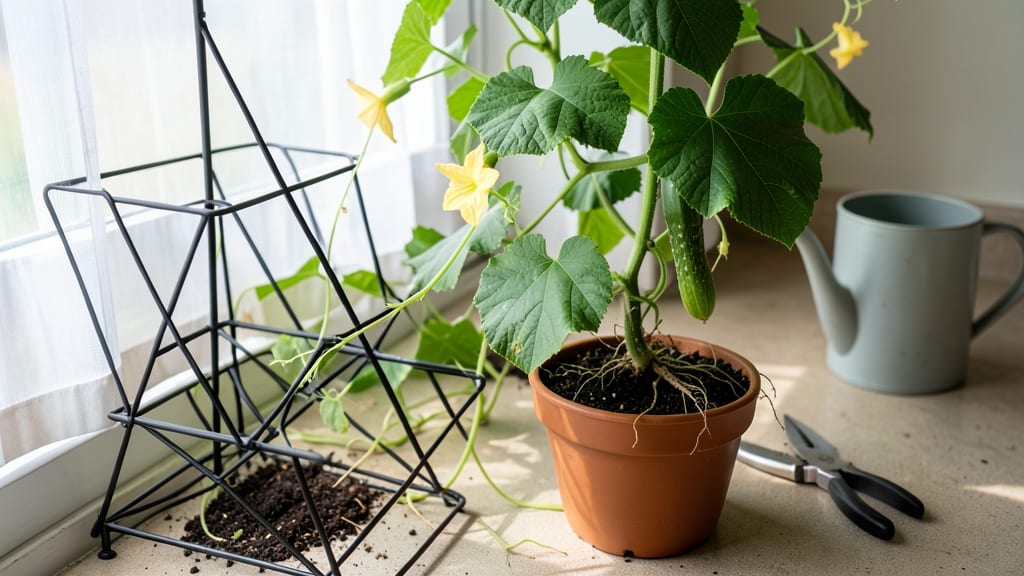
Transform your small space into a thriving cucumber jungle with an indoor trellis—no yard required. 🌱 I used to think cucumbers needed acres, but after my first indoor harvest, I never looked back.
The key is choosing the right trellis and training those vines upward before they sprawl across your counter. You’ll need a lightweight 5-foot trellis (bamboo or metal works best), sturdy hooks or clips, and a compact cucumber variety like 'Bush Champion' or 'Spacemaster'.
Position it near a south-facing window or under grow lights—cucumbers crave 6-8 hours of direct light daily. The vines will climb within days, saving floor space and keeping leaves off the floor. Prune regularly to encourage bushier growth and better airflow, which prevents mildew.
Pinch off side shoots after the 5th leaf to focus energy on fruit production. With proper training, you’ll harvest crisp cucumbers all season long—12-15 inches long and perfect for slicing. This method works for any sunny room, balcony, or even a sunny basement. The only real challenge?
Keeping the trellis stable when vines get heavy. Trust me, the payoff is worth it—fresh cucumbers anytime, anywhere.
📚 In This Guide
- What you need
- Instructions
- Tips and common mistakes
- Wrapping up and next steps
What you need
- ● Trellis or support structure: 1x freestanding indoor trellis (4–6 ft tall, adjustable height preferred) OR
- ● 1x DIY trellis made from PVC pipes (½" diameter), wooden dowels (½" thick), or metal cage (galvanized wire, 12–18" diameter)
- ● Growing container: 1x large pot or fabric grow bag (12–15" diameter, 12" deep) with drainage holes
- ○ Optional: Self-watering planter for convenience
- ● Potting mix: 1 bag (1–2 cu. ft.) of lightweight, well-draining potting soil (add perlite or vermiculite for aeration)
- ● Cucumber seeds or seedlings: 1–2 bush or vining cucumber varieties (e.g., 'Bush Champion' or 'Straight Eight')
- ● Fertilizer: 1 container of balanced liquid fertilizer (5-5-5 or 10-10-10 NPK ratio) OR slow-release granules
- ● Basic tools: 1x trowel or small shovel for planting
- ● 1x spray bottle (for misting seedlings)
- ● 1x pruners or scissors (for trimming vines)
- ○ Optional upgrades: 1x grow lights (LED, full-spectrum, 12–16 hrs/day if natural light is limited)
- ● 1x plant ties or soft twine (to secure vines to trellis)
- ● 1x humidity tray (for tropical cucumber love!)
- ● 🌱 Sunlight: 6–8 hours of direct sunlight daily (south-facing window or grow lights)
- ● 💧 Watering routine: Keep soil consistently moist (not soggy!)—aim for 1" of water per week
- ● 🌡️ Temperature: Ideal range: 65–75°F (18–24°C) (cucumbers are heat-loving but hate frost!)
- ● 🧹 Space: Ensure your trellis has 12–18" of clearance on all sides for airflow
Step-by-Step guide to building an indoor cucumber trellis
Here's how I create sturdy, space-saving trellises that turn sprawling cucumbers into lush vertical gardens.
🪴 Step 1: Select and Prepare Your Trellis Structure
For a 4-plant setup, I use either a 6-foot tall wooden dowel trellis (4 dowels spaced 12 inches apart) or a freestanding metal A-frame (like those designed for indoor herbs). The key is vertical stability—any wobble will snap delicate vines. If using dowels, secure them to a 12-inch wide base with zip ties or screws to prevent toppling.
For a soilless option, I've had success with coconut fiber coir mats (3 feet tall) wrapped around a PVC frame. These require less maintenance and prevent mold buildup. Whatever you choose, position it within 12 inches of your grow light—cucumbers need 14-16 hours of light daily to vine properly. If using natural light, place it south-facing where it gets 6+ hours of direct sun.
🌱 Step 2: Plant Cucumbers with Proper Spacing and Support
Start with 4 healthy cucumber seedlings (or sow seeds ½ inch deep in 6-inch pots). When transplanting, bury the stem up to the first true leaves—this encourages stronger root growth. Immediately after planting, tie the main stem to the trellis using soft plant ties (never wire or anything that can cut into the vine).
I like to space plants 6 inches apart in a square formation if using a freestanding trellis. This creates even air circulation and prevents fungal issues. For dowel trellises, plant one seedling per dowel. Water deeply after planting—this helps settle roots and prevents transplant shock. You'll know it's right when the soil feels damp 2 inches down but not soggy.
☀️ Step 3: Train Vines and Manage Growth Weekly
Once vines reach 12 inches tall, it's time to guide them upward. Gently wrap the main stem around the trellis support, securing it with a new tie every 6 inches. Here's the thing—never let vines grow more than 12 inches between supports. You'll see leggy growth if they stretch too far between ties, and those sections weaken easily.
Every 7-10 days, check for side shoots (small shoots growing from the stem). For bush cucumbers, pinch these off to direct energy upward. For vining types, let one strong side shoot develop per node. Prune with clean, sharp scissors—never tear growth. This ensures bushier vines and more fruit production. Watch for yellowing leaves—this usually means overwatering or nutrient deficiency. Adjust water to every 2-3 days when the top inch feels dry.
💧 Step 4: Maintain Light, Water, and Fertility
Cucumbers are heavy feeders, so I fertilize weekly with a balanced liquid fertilizer (10-10-10) diluted to half strength. The secret is consistency—skip a week, and you'll see stunted growth or bitter fruit. Pair this with deep watering (1 cup per plant) every morning. You'll know your routine is right when leaves stay deep green and vines grow 6-8 inches weekly.
If your grow light is too far away, you'll notice pale, elongated stems—move it within 4 inches of the plant. For natural light, rotate the trellis ¼ turn weekly so all vines get even exposure. This prevents lopsided growth and ensures uniform fruit production. Harvest every 2-3 days to encourage more blooms—overripe cucumbers stop the plant from producing.
✂️ Step 5: Prune and Harvest for Maximum Yield
The final step is strategic pruning. When vines reach the top of the trellis, cut the main stem just above a leaf with 3-4 nodes. This triggers bushier side growth and more fruit clusters. You'll see new shoots emerge within 5-7 days—these become your secondary vines. Tie these to the trellis as they grow, following the same 12-inch spacing rule.
Harvest cucumbers when they're 6-8 inches long (check your variety's ideal size). Use clean pruners to cut stems—never pull fruit, or you'll damage vines. After harvest, water immediately and fertilize lightly. This 2-step routine keeps production steady. By mid-season, your 4-plant trellis should yield 20-30 cucumbers weekly—enough for fresh eating and pickling!
Tips & tricks for perfect indoor cucumber trellis growth
Transforming sprawling cucumbers into a lush vertical garden takes more than just a sturdy structure—it's about the details that make all the difference.
Light Positioning: The 14-16 hours of daily light requirement is non-negotiable, but placement matters just as much. Position your trellis so the grow light is 4 inches away at its closest point—this creates the ideal light gradient. I've found that adjustable LED grow lights with full-spectrum settings work best for indoor cucumbers. If using natural light, rotate your trellis ¼ turn weekly to prevent lopsided growth, which I learned the hard way after watching one vine stretch toward the window while others lagged behind.
Tie-Tight Timing: When you reach Step 3 and start training vines upward, here's what I've discovered: tie every 6 inches as soon as the vine reaches that length, not when it's convenient. Waiting too long creates weak points that snap easily. I keep a small bag of soft plant ties (the Velcro-style ones) clipped to my gardening apron—this saves me from scrambling later. The key is to gently wrap the vine around the support before securing, never forcing it, which can damage the stem.
Pruning Precision: The strategic pruning in Step 5 is where you'll see the biggest yield differences. When cutting the main stem at the top, always leave 3-4 nodes below your cut—this ensures new shoots emerge within 5-7 days. I use clean, sharp pruners (not scissors) to make precise cuts just above a leaf node. For bush cucumbers, pinch off all side shoots to direct energy upward, while vining types benefit from letting one strong side shoot per node develop. This simple distinction can double your harvest.
Fertilizer Consistency: The weekly fertilization schedule in Step 4 is crucial, but timing matters as much as frequency. Always fertilize in the morning when plants are actively growing, and water deeply before applying fertilizer. This prevents root burn. I've found that fish emulsion works wonders for cucumbers—it's rich in nitrogen for leafy growth while providing trace minerals. The diluted 10-10-10 ratio gives balanced nutrition without overwhelming the plants, which is especially important in indoor growing where nutrients can accumulate faster.
Pro Tips for Indoor Cucumber Trellis
- Transforming sprawling cucumbers into a lush vertical garden takes more than just a sturdy structure—it's about the details that make all the difference.
- Light Positioning: The 14-16 hours of daily light requirement is non-negotiable, but placement matters just as much.
- Tie-Tight Timing: When you reach Step 3 and start training vines upward, here's what I've discovered: tie every 6 inches as soon as the vine reaches that length, not when it's convenient.
Frequently asked questions
Got questions about growing cucumbers vertically indoors? You’re not alone! Here are some of the most common concerns—and their solutions—to help you trellis like a pro.
What’s the best time of year to start an indoor cucumber trellis?
Since you’re growing indoors, you can plant cucumbers anytime—just ensure they get 6–8 hours of sunlight daily (or supplement with grow lights). Spring and summer are ideal for outdoor light exposure, but winter growers can use LED bulbs. Start seeds 2–3 weeks before transplanting to your trellis for a head start!
How tall should my indoor cucumber trellis be?
Aim for 6–8 feet tall to give vines room to sprawl without overcrowding. If space is tight, a 4–5 foot trellis works for compact varieties like ‘Bush Champion.’ Just ensure it’s sturdy—cucumbers can get heavy! Use PVC pipes, wooden stakes, or metal frames for support.
Why are my cucumber leaves turning yellow on the trellis?
Yellowing leaves often signal overwatering, nutrient deficiency, or poor airflow. Check soil moisture (top inch should dry between waterings), fertilize with a balanced 10-10-10 mix, and prune leaves touching the floor to improve circulation. If yellowing persists, test for pests like spider mites or fungal issues.
Can I use a trellis for other veggies besides cucumbers?
Trellises work great for beans, peas, tomatoes, and even melons. Just match the trellis height to the plant’s growth habit—pole beans need 5–6 feet, while cherry tomatoes thrive on 4-foot structures. Repurpose your setup to maximize space year-round!
What’s the quickest way to train cucumbers up a trellis?
Gently tie vines to the trellis with soft plant ties or old T-shirts every 2–3 feet as they grow. Prune side shoots (suckers) to encourage upward growth, and rotate the trellis occasionally for even sunlight exposure. With patience, you’ll see vines climb in 2–3 weeks!
Wrapping up and next steps
Growing cucumbers indoors with a vertical trellis isn’t just clever—it’s a game-changer for small spaces and big harvests! 🌱 With the right setup, you’ll save room, boost yields, and enjoy fresh, homegrown veggies year-round. Whether you’re a beginner or a seasoned gardener, this hack makes urban farming accessible and rewarding.
Ready to green thumb up your space? Start by gathering your materials, follow the steps, and watch your cucumbers thrive. Next up: Share your trellis setup with us or experiment with other vertical gardening ideas—your indoor jungle awaits! 🌿