
Picking
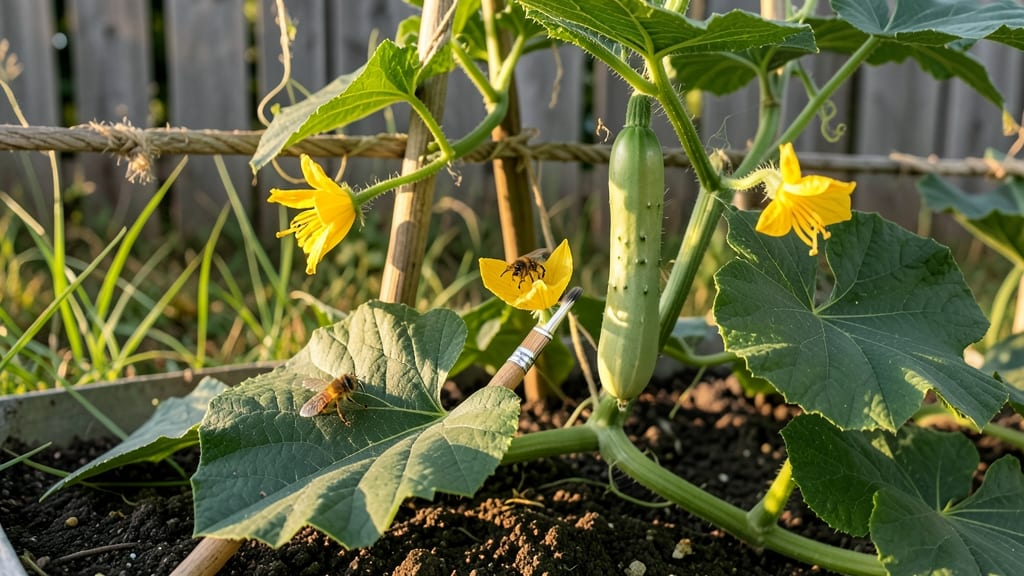
Pollinating cucumbers by hand turns tiny flowers into foot-long monsters—and it’s easier than you think. ✨ I’ve gone from a handful of sad, stunted cucumbers to a vine so productive my neighbors ask for seeds every year. The secret? Mimicking bees with a simple tool and a little timing.
You only need two things: a small paintbrush (or cotton swab) and the right moment—morning, when flowers are fresh and sticky with pollen. Skip this step, and your cucumbers stay small, misshapen, or never form at all.
Even in greenhouses or indoor setups, hand-pollination guarantees results without relying on bees.
By the end of 10 minutes, you’ll have a vine covered in blooms that turn into crisp, straight cucumbers. The process is so simple, even my black-thumb cousin nailed it first try. Plus, you’ll avoid the heartbreak of watching flowers drop without setting fruit.
Works for all cucumber varieties—whether you’re growing slicers, pickles, or heirlooms—and saves you from store-bought disappointment. Let’s get those vines producing like crazy.
📚 In This Guide
- What you need
- Instructions
- Tips and common mistakes
- Wrapping up and next steps
What you need
- ● Cucumber plants – Healthy, flowering varieties (e.g., slicing, pickling, or heirloom types). Aim for at least 3-5 mature plants for cross-pollination.
- ● Paintbrush or cotton swab – A soft-bristled brush (like a makeup brush) or sterile cotton swab to transfer pollen. Avoid cheap, scratchy brushes!
- ○ Magnifying glass (optional but helpful) – For spotting tiny male and female flowers (male flowers have long stems; female flowers have tiny cucumbers at their base).
- ● Morning hours (6–10 AM) – Pollen is freshest and most effective when flowers are fully open.
- ● Dry, sunny conditions – Avoid pollinating after rain or in high humidity (pollen clumps and sticks poorly).
- ● Warmth (above 60°F/15°C) – Cucumbers pollinate best in mild to warm temperatures.
- ● Label your plants – If growing multiple varieties, mark them to avoid accidental cross-pollination (which can mix flavors or sizes!).
- ● Keep tools clean – Wipe your brush/swab with rubbing alcohol between plants to prevent disease transfer.
- ● Patience is key – Pollinate every 2–3 days during peak flowering for consistent fruit production.
Step-by-step instructions for hand-pollinating cucumbers
Here’s how I boost my cucumber yields—no bees required. These tricks work for both greenhouse and outdoor plants.
🌱 Step 1: Identify Female Flowers for Pollination
Female cucumber flowers are your targets—they’re the ones that will produce fruit. Look for a tiny cucumber (the ovary) at the base of the blossom. Male flowers, by contrast, have no ovary and grow on long stems. I check plants every morning after dew dries—cooler temps make flowers more receptive to pollination.
Gently shake the plant first, though. Sometimes wind or vibration alone releases pollen from nearby male flowers. If no fruit forms after a few days, that’s your cue to step in. Wear gloves—cucumber pollen can irritate skin, and you’ll want to avoid transferring oils from your hands.
☀️ Step 2: Collect Pollen From Male Flowers
Find a male flower (no ovary at base) and use a small paintbrush or cotton swab to gently scrape pollen from the anthers—the yellow powdery bits in the flower’s center. I like using a makeup brush because it’s soft enough to avoid damaging delicate petals. Collect pollen onto the brush tip, then hold it near the female flower’s stigma (the fuzzy center).
If no male flowers are available, save pollen from earlier in the day by storing it in a dry, airtight container (like a small jar with a lid) in a cool, dark place. Pollen stays viable for up to 24 hours this way, but fresh is always better. Never use water to "wash" pollen—it clumps and loses effectiveness.
💧 Step 3: Transfer Pollen to Female Flowers
Hold the female flower steady with one hand while using the pollen-loaded brush to stroke the stigma in gentle, circular motions. You’ll see pollen grains cling to the fuzzy surface—this is what triggers fertilization. Do this for 3-5 female flowers per plant to maximize fruit set. I time it for mid-morning when flowers are fully open and humidity is moderate.
For stubborn flowers, try a second application the following day. Some varieties (like parthenocarpic cucumbers) don’t need pollination, but most standard types rely on this step. Watch for the ovary to swell slightly within 48 hours—that’s your confirmation the process worked.
⏰ Step 4: Repeat and Monitor for Results
Pollinate again every 2-3 days until female flowers stop appearing. Cucumber plants produce flowers in waves, so consistency is key. I keep a small notebook by my garden to track which plants need attention—some varieties are prolific, others need extra help. After pollination, reduce watering slightly to prevent blossom-end rot in developing fruits.
If fruits start but then drop off, you may have over-pollinated. Too many flowers competing for resources can cause the plant to abort some. In that case, thin back to 1-2 fruits per node, leaving the largest ones. Within 7-10 days, you’ll see pollinated flowers develop into cucumbers—watch for the telltale bump at the blossom end.
Tips & tricks for perfect cucumber pollination
Here's what I learned after years of boosting cucumber harvests—these details make all the difference between a few sad cucumbers and a bountiful vine.
Timing Secret: The 24-hour pollen storage rule is your friend when male flowers are scarce. I keep a small glass jar with a tight lid in my garden shed—it preserves pollen viability perfectly. But remember, fresh pollen works best, so always prioritize direct collection from male flowers in the morning when humidity is low and flowers are fully open.
Technique Tip: In Step 3, when transferring pollen, focus on coating the entire stigma surface. I make it a habit to rotate the brush 360 degrees around the fuzzy center—this ensures even fertilization. For stubborn flowers that resist, try a second application the following day, but only if you see no ovary swelling within the 48-hour window mentioned in the instructions.
Monitoring Strategy: Keep that notebook handy! I track pollination dates alongside flower counts—this helps me predict when new flowers will appear. The 2-3 day pollination interval is crucial, but some prolific varieties may need daily attention during peak blooming. Watch for the telltale bump at the blossom end within 7-10 days as your confirmation marker.
Resource Management: When over-pollination causes fruit drop, I thin aggressively—keeping only 1-2 fruits per node gives remaining cucumbers room to grow. This prevents the plant from diverting energy to too many small fruits. The key is balance: enough flowers for pollination, but not so many that the plant gets overwhelmed.
Pro Tips for Pollinate Cucumbers
- Here's what I learned after years of boosting cucumber harvests—these details make all the difference between a few sad cucumbers and a bountiful vine.
- Timing Secret: The 24-hour pollen storage rule is your friend when male flowers are scarce.
- Technique Tip: In Step 3, when transferring pollen, focus on coating the entire stigma surface.
Frequently asked questions
Got questions about pollinating cucumbers? You’re not alone! Here are some of the most common concerns—and straightforward answers—to help you grow a thriving harvest.
How do I know if my cucumbers need hand-pollination?
If your cucumbers are female flowers (they have tiny cucumbers forming at the base) but aren’t producing fruit, they may need help. Male flowers (no cucumbers) have long stems and release pollen—hand-pollination ensures female flowers get it when bees or wind aren’t enough.
When is the best time to pollinate cucumbers?
Pollinate on mild, dry mornings after the dew dries (around 8–10 AM). Avoid midday heat or rain—pollen clumps and won’t transfer well. Consistency is key: check flowers every 2–3 days during blooming season for best results.
Can I use a paintbrush instead of a cotton swab?
A small, soft paintbrush works great—just dip it in pollen from male flowers and gently brush female stigmas (the fuzzy center). Sterilize the brush with rubbing alcohol between plants to prevent disease spread. Pro tip: Label your brushes if pollinating multiple varieties!
Why aren’t my cucumbers growing after pollination?
Check for these issues:
- Pollen failure: Ensure you’re transferring fresh pollen from open male flowers (not buds).
- Environmental stress: Extreme heat, drought, or overwatering can halt fruit development.
- Pests/disease: Squash vine borers or powdery mildew may damage flowers. Inspect leaves and stems.
- Variety quirks: Some cucumbers (like parthenocarpic types) don’t need pollination—check seed packets!
What’s the easiest way to attract pollinators naturally?
Plant companion flowers like marigolds, nasturtiums, or borage near your cucumbers to lure bees. Avoid pesticides, and water in the early morning so flowers stay dry for pollinators. Even a small bee hotel or shallow dish of water with pebbles can help!
Wrapping up and next steps
Pollinating cucumbers doesn’t have to be a mystery—with the right tools and techniques, you can boost your harvest like a pro! 🌱 Whether you’re hand-pollinating or attracting bees, the key is consistency and patience. Start small, track your progress, and soon you’ll be enjoying juicy, homegrown cucumbers in no time.
Ready to take the next step? Experiment with different methods—like trying companion plants or adjusting your timing—and watch your garden thrive. Happy growing! 🌿