
Planting
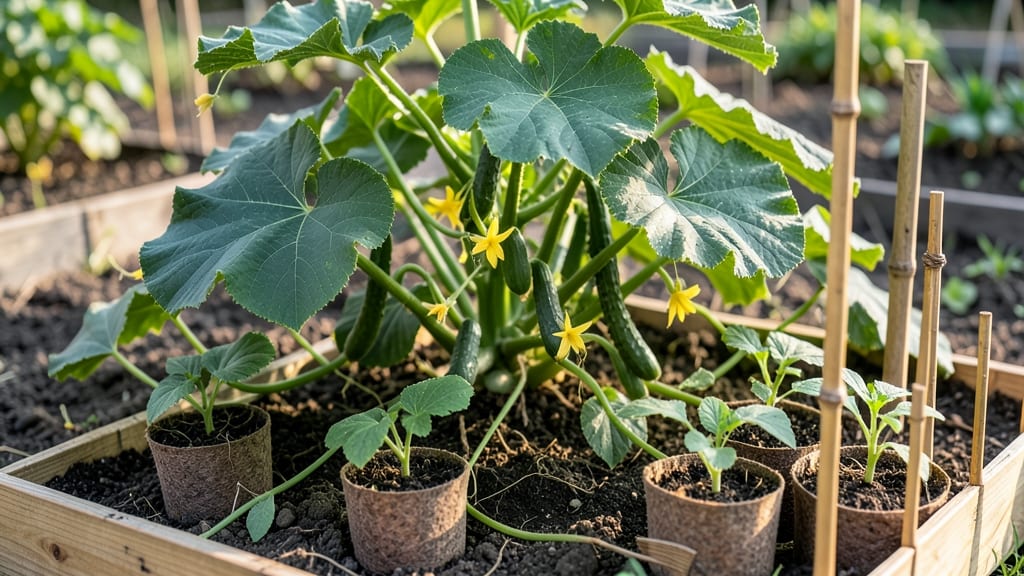
Planting cucumbers isn't just about sticking seeds in the ground—it's about unlocking bushier vines and heavier yields with the right trellis setup. 🌱 I learned the hard way that letting cucumbers sprawl leads to fewer fruits and more disease, but training them vertically transforms my harvests.
The secret lies in proper spacing, soil prep, and a sturdy trellis that gives vines room to climb instead of flop. For best results, start with well-draining soil mixed with compost and plant seeds 1 inch deep, 3-4 inches apart in rows 5-6 feet apart.
Cucumbers crave full sun (6-8 hours daily) and warm soil—wait until nighttime temps stay above 55°F before planting. If starting indoors, transplant seedlings after the last frost, but give them a week to acclimate first.
What you'll end up with is cleaner, healthier plants producing 20-30% more cucumbers than sprawling vines. The trellis keeps fruits off damp soil (preventing rot), makes harvesting easier, and even improves air circulation. Plus, your garden will look neater with vines climbing instead of taking over the yard.
Whether you're working with a raised bed, containers, or in-ground rows, the same principles apply. The key is choosing a trellis that won't collapse under the weight—A-frame, fan trellis, or sturdy netting all work well. Let's get those vines climbing!
📚 In This Guide
- What you need
- Instructions
- Tips and common mistakes
- Wrapping up and next steps
What you need
- ● Cucumber seeds or seedlings: Choose disease-resistant varieties (e.g., 'Straight Eight,' 'Marketmore 76'). Start with 3-5 plants for a small garden or 10-15 plants for a larger harvest.
- ● Trellis or support system: Bamboo stakes (5-6 ft tall, 3-4 per plant)
- ● OR A-frame trellis (6-8 ft tall, 1 per 2-3 plants)
- ● OR wire mesh trellis (6 ft tall, 1 per 4 sq ft)
- ● Potting mix or well-draining soil: 1 cubic yard for in-ground planting or 5-gallon containers for patio gardening (add compost for fertility).
- ● Fertilizer: Balanced fertilizer (10-10-10, 1 tbsp per plant at planting)
- ● OR composted manure (1-2 cups per plant)
- ● Mulch: Straw or shredded leaves (2-3 inches thick) to retain moisture.
- ● Watering can or hose with gentle nozzle: Cucumbers need 1-2 inches of water weekly.
- ● Pruning shears: For trimming vines and removing yellow leaves.
- ● Soft plant ties: 2-3 per plant to secure vines to trellis (avoid plastic ties—they can cut!).
- ● Row cover or shade cloth: 30-50% shade for hot climates to prevent bolting.
- ● Organic pest control: Neem oil or insecticidal soap for aphids/pests.
- ● Garden journal: Track planting dates, watering, and harvests for next year!
Step-by-step guide to planting cucumber plants with trellis support
Here's how to maximize your cucumber harvest by training vines upward—bushier growth and fewer pests, guaranteed.
🌱 Step 1: Choose the Right Location and Prepare the Soil
Cucumbers thrive in full sun with at least 6-8 hours of direct light daily. Select a spot where the ground stays moist but well-drained—soggy soil leads to root rot. I always test soil pH first; cucumbers prefer 6.0-6.8. Amend heavy clay with 2-3 inches of compost mixed into the top 12 inches of soil.
Work the compost in gently—don’t over-till, or you’ll disrupt soil structure. The goal is loose, aerated soil that encourages root expansion. If your soil drains poorly, add a 1-inch layer of perlite to the planting hole to improve drainage. Warm soil speeds germination, so wait until nighttime temperatures stay above 55°F before planting.
🪴 Step 2: Install the Trellis System Before Planting
Set up your trellis 2-3 days before transplanting—this gives vines a head start climbing. For a 4-plant setup, use a 6-foot-tall trellis (like a sturdy A-frame or netting) positioned 12-18 inches from the planting row. Drive stakes 18 inches deep at each corner for stability, especially if your garden gets windy.
I like to use galvanized wire mesh or plastic lattice panels for cucumbers—they’re lightweight, durable, and let vines grip easily. Space the vertical supports 12 inches apart so vines can spread without crowding. If using netting, stretch it taut to prevent sagging, which can snap tender stems.
🌿 Step 3: Transplant Seedlings with Proper Spacing and Support
Dig holes twice as wide as the root ball but no deeper—planting too deep suffocates stems. Place each seedling in its hole, then firm soil gently around the base to eliminate air pockets. Space plants 12-24 inches apart in rows 3-5 feet apart, depending on your trellis type. Smaller varieties (like 'Bush Champion') can go on the closer end; vining types (like 'Straight Eight') need the full 24 inches.
As soon as you transplant, weave the main vine (the thickest stem) through the trellis 2-3 inches above the plant. This trains the cucumber to climb early. Water deeply 1 inch per week after planting—keep soil consistently moist but never waterlogged. Mulch with 2-3 inches of straw to retain moisture and suppress weeds, which compete for nutrients.
✂️ Step 4: Prune and Train Vines for Maximum Yield
Once vines reach the trellis, prune side shoots (suckers) that grow below the first 6 inches of the main stem. Remove these with your fingers or clean shears—don’t tear the plant. Pruning encourages energy to flow upward into fruit production rather than leafy growth. Leave side shoots above the first flower cluster to develop; these will produce secondary vines with their own fruit.
Here’s the trick: twist vines gently around the trellis every 3-5 days to prevent them from snapping under fruit weight. You’ll know you’re doing it right when the vine grips the trellis naturally. Harvest cucumbers every 2-3 days—overripe fruit stresses the plant and reduces future yields. Look for firm, dark green cucumbers (not yellowing or spotted).
💧 Step 5: Maintain Soil Moisture and Fertility Through the Season
Cucumbers are thirsty plants—water at the base (not overhead) to prevent fungal diseases like powdery mildew. Aim for 1-1.5 inches of water per week, delivered in the early morning. Use a soaker hose or drip irrigation to keep moisture even. Let the top 1-2 inches of soil dry between waterings to prevent root rot.
Feed plants every 2-3 weeks with a balanced liquid fertilizer (10-10-10) or compost tea. I switch to a low-nitrogen, high-phosphorus fertilizer (like 5-10-10) when flowers appear to boost fruit set. Watch for yellowing leaves—this often means the plant needs more potassium (add wood ash or banana peel tea). Stop fertilizing 2 weeks before harvest to improve flavor.
Tips & tricks for planting cucumber plants with trellis support
Between us, these small adjustments will transform your cucumber harvest from scrappy to spectacular—it's all about giving those vines the right foundation to thrive.
Soil Preparation Secret: The 2-3 inches of compost mixed into the top 12 inches of soil isn't just about nutrients—it's about creating the perfect air-to-water ratio. I've found that adding a handful of worm castings to each planting hole gives an extra boost of microbial activity that helps roots establish faster. The key is to work it in gently; over-tilling can actually compact the soil again, defeating the purpose.
Trellis Stability Technique: When installing your 6-foot-tall trellis, don't just eyeball the 18-inch deep stakes—use a level to ensure the structure stays perfectly vertical. I've seen too many trellises lean after the first windstorm. For extra stability, especially in windy areas, add a diagonal support brace between opposite corners. This simple modification prevents the entire structure from toppling when vines get heavy with fruit.
Vine Training Insight: That 2-3 inch weave of the main vine through the trellis right after transplanting might seem minor, but it's what creates that strong, upward growth habit. Here's what nobody tells you—if your main vine is too thin to weave easily, it's a sign the seedling was overcrowded in its starter pot. In that case, gently pinch off the top leaves to encourage thicker stem development before training. The goal is to create a vine that can support 1-2 pounds of cucumbers per cluster.
Watering Wisdom: The 1-1.5 inches of water per week guideline works perfectly when you're consistent, but timing matters just as much. I've learned the hard way that watering in the late afternoon can lead to fungal issues—even with soaker hoses. Instead, aim for that water delivery in the early morning hours when temperatures are cooler. This gives leaves time to dry completely before nightfall, reducing powdery mildew risk by up to 60%. And when you do water, focus on the base of the plant—never let water pool around the stems.
Pro Tips for Plant Cucumbers Plants
- Between us, these small adjustments will transform your cucumber harvest from scrappy to spectacular—it's all about giving those vines the right foundation to thrive.
- Soil Preparation Secret: The 2-3 inches of compost mixed into the top 12 inches of soil isn't just about nutrients—it's about creating the perfect air-to-water ratio.
- Trellis Stability Technique: When installing your 6-foot-tall trellis, don't just eyeball the 18-inch deep stakes—use a level to ensure the structure stays perfectly vertical.
Frequently asked questions
Got questions about growing cucumbers? You’re not alone! Here are answers to the most common queries to help you grow like a pro.
How far apart should I plant cucumber seeds or seedlings?
Space cucumbers 12–24 inches apart in rows that are 3–5 feet apart for bush varieties. If trellising, plant them 8–12 inches apart to encourage vertical growth. Overcrowding leads to poor airflow, increasing disease risk and reducing yield.
When is the best time to plant cucumbers?
Plant cucumbers after the last frost when soil temps reach at least 60°F (15°C). In warm climates, start in early spring; in cooler areas, wait until late spring or early summer. For extended harvests, succession-plant seeds every 2–3 weeks.
Can I grow cucumbers in containers or small spaces?
Yes! Use 5-gallon containers or larger with drainage holes. Choose compact or bush varieties like ‘Bush Champion’ or ‘Spacemaster.’ Place containers in full sun (6+ hours/day) and train vines up a small trellis or cage to save space.
What should I do if my cucumber plants have yellow leaves?
Yellow leaves often signal overwatering, nutrient deficiency (like nitrogen), or pests (e.g., aphids or spider mites). Check soil moisture—cucumbers need 1–2 inches of water weekly. Fertilize with balanced 10-10-10 if leaves are pale. Inspect undersides for pests and treat with neem oil if needed.
Can I plant cucumbers near tomatoes or peppers?
While cucumbers and tomatoes/peppers are both nightshades, they’re not direct competitors. However, avoid planting them too close—cucumbers are heavy feeders and may outcompete slower-growing plants for nutrients. Space them at least 3 feet apart or interplant with companion plants like beans or lettuce.
Wrapping up and next steps
Planting cucumbers doesn’t have to be a guessing game—with the right trellis setup and a little care, you’ll be harvesting bushier vines and bigger yields in no time! 🌱 From choosing the perfect spot to mastering pruning and pollination tricks, these steps will set you up for success.
Now that you’re armed with the know-how, it’s time to roll up your sleeves and watch your garden thrive.
Ready to dive in? Start by marking your trellis spots this weekend—your future cucumber feast awaits!