
Planting
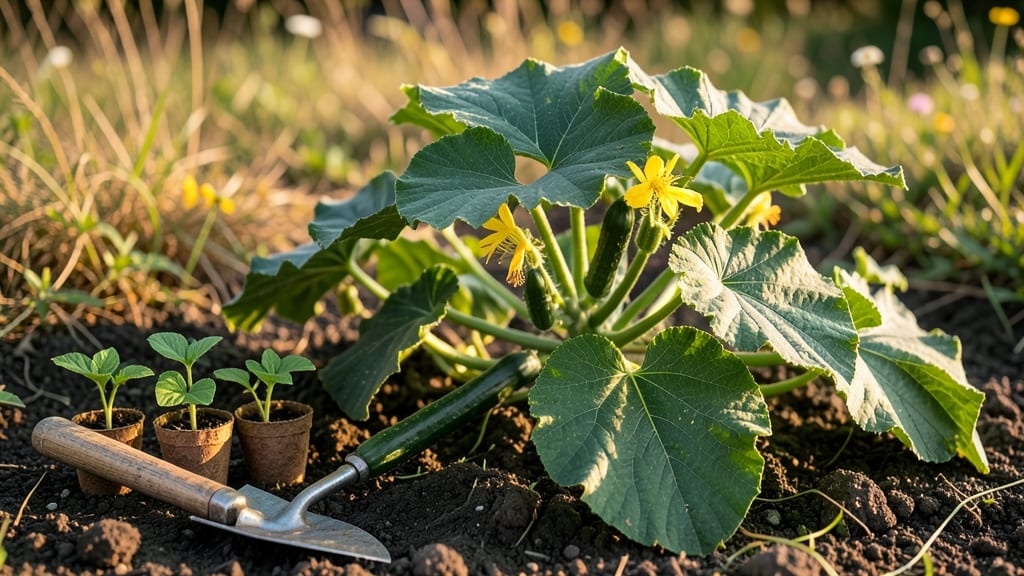
Planting cucumbers in the ground means bigger harvests when you nail the spacing and soil prep. 🌱 I learned the hard way—crowding plants leads to powdery mildew and tiny, bitter fruits. The secret is giving them room to sprawl (or climb) while keeping the soil loose and warm.
Start with well-draining soil mixed with compost, then plant seeds 1 inch deep, 3–4 inches apart. If using a trellis, space rows 3–4 feet apart—this prevents disease and makes harvesting easier. Cucumbers love full sun (6+ hours daily) and consistent moisture, so mulch heavily to retain water.
By midseason, you’ll see vines stretching 6+ feet and cucumbers appearing within 50–60 days. The key is patience—don’t rush watering or fertilizing, or you’ll get leafy growth instead of fruit. A sturdy trellis also keeps cucumbers clean and reduces pests.
Works for both bush and vining varieties, and the same spacing rules apply whether you’re in a small garden or large plot. Let’s get those seeds in the ground!
📚 In This Guide
- What you need
- Instructions
- Tips and common mistakes
- Wrapping up and next steps
What you need
- ● Cucumber seeds or seedlings: Choose trellis-friendly varieties like 'Straight Eight,' 'Marketmore,' or 'Little Leaf.' Aim for 2–3 plants per trellis (or 1 plant per 12–18 inches of trellis space).
- ● Trellis or support system: Bamboo stakes (5–6 ft tall) or metal cages (4–5 ft diameter)—1 per 2–3 plants.
- ● String or twine (for DIY trellises, 1–2 spools to secure vines).
- ○ Plastic or wooden lattice panels (optional but great for heavy varieties).
- ● Garden soil: Well-draining, rich in compost (mix in 2–3 inches of compost per planting hole).
- ● Fertilizer: Balanced fertilizer (10-10-10) (1 tbsp per plant at planting).
- ● Organic options: Fish emulsion or worm castings (follow package rates).
- ● Mulch: Straw or shredded leaves (2–3 inches thick) to retain moisture.
- ● Watering can or hose: With a gentle spray nozzle (cucumbers hate soggy roots!).
- ● Row covers: Lightweight fabric to protect seedlings from pests (remove when flowers appear).
- ● Pruning shears: For trimming excess vines (keep 1–2 main stems per plant for trellises).
- ● Soil pH test kit: Ideal pH for cucumbers is 6.0–6.8 (adjust with lime or sulfur if needed).
- ● Plant markers: Label varieties to avoid mix-ups in your garden!
- ● Sunlight: Full sun (6–8+ hours daily)—cucumbers are sun-worshippers! 🌞
- ● Warm soil: Wait until soil temps reach 60°F+ (use a soil thermometer if unsure).
- ● Spacious plot: At least 3–4 feet between trellises for airflow and easy harvesting.
Step-by-step guide to planting cucumbers in the ground
Here’s how to plant cucumbers for bushy vines, fewer diseases, and easy harvests—no guesswork involved.
🌱 Step 1: Choose the Right Location and Prepare the Soil
Cucumbers thrive in full sun—select a spot that gets at least 6-8 hours of direct sunlight daily. Avoid low-lying areas where cold air settles, as cucumbers are frost-sensitive. Test the soil pH before planting; cucumbers prefer 6.0-6.8. If your soil is heavy clay or sandy, mix in 2-3 inches of compost to improve drainage and fertility.
I like to work the soil 12-18 inches deep with a garden fork to loosen roots and break up compaction. This encourages deeper root growth, which helps vines withstand heat stress. If you’re planting near last year’s cucurbits (like squash or melons), move at least 10 feet away to prevent soil-borne diseases like powdery mildew.
☀️ Step 2: Install Trellises or Supports Before Planting
For maximum yields and cleaner fruit, cucumbers need vertical support. Install 5-6 foot tall trellises or strong fencing (at least 4 feet wide) before planting. I use powder-coated metal trellises because they last years and resist rust. Space supports 3-4 feet apart in rows, allowing 2-3 feet of walkway space between them for easy maintenance.
If you’re growing bush varieties, a 3-foot tall cage works, but vining types (like ‘Straight Eight’ or ‘Marketmore’) will sprawl wildly without support. Train the main vine upward early—this prevents tangled vines and makes harvesting easier. Pro tip: Use soft twine or old tights to gently tie vines to the trellis; harsh ties can damage stems.
🌱 Step 3: Plant Seeds or Transplants at the Correct Depth and Spacing
For direct-sown seeds, plant 1 inch deep, 3-4 seeds per hill, spaced 12-18 inches apart in rows 5-6 feet apart. Thin to the strongest seedling per hill once they have 2 true leaves—this prevents overcrowding and reduces competition for nutrients. If using transplants, dig holes slightly wider than the root ball and place plants 12-18 inches apart in rows.
I always soak seeds overnight before planting to jumpstart germination. After planting, water deeply to settle the soil around roots. Avoid disturbing the soil surface afterward—cucumber roots are shallow and sensitive. If your soil is very warm (above 80°F), wait until evening to plant; seeds may dry out before germinating.
💧 Step 4: Water and Mulch for Healthy Growth
Cucumbers need consistent moisture—1-1.5 inches per week—but hate soggy roots. Water deeply at the base in the morning to reduce fungal risks. Use a soaker hose or drip irrigation to avoid wetting leaves, which spreads mildew. Once vines start climbing, apply 3-4 inches of organic mulch (straw or shredded leaves) to retain moisture and suppress weeds.
Here’s the thing—uneven watering causes bitter fruit. If the soil dries out, cucumbers develop a tough skin and poor flavor. Check moisture by sticking your finger 1 inch deep; if it’s dry, water immediately. Mulch also keeps soil temps stable, which is critical in hot climates where vines can overheat.
✂️ Step 5: Prune and Maintain for Best Yields
Once vines reach the trellis, prune side shoots (those growing from the main stem) to encourage stronger fruit production. Leave 1-2 main vines per plant and remove any that grow toward the ground—these won’t produce well. Pinch off yellowing or diseased leaves immediately to prevent spread. If you notice powdery mildew (white powder on leaves), spray with a baking soda solution (1 tbsp baking soda + 1 quart water + a drop of dish soap) every 7-10 days.
Harvest regularly—pick cucumbers when they’re 6-8 inches long for the sweetest flavor. Overripe cucumbers drain energy from the plant and reduce future yields. I check vines every 2-3 days in peak season; missed cucumbers turn seedy and bitter fast. If you’re growing for pickling, harvest smaller (2-3 inch) fruits for the best crunch.
Tips & tricks for planting cucumbers with perfect trellis support
Took me years to figure out these little details that make all the difference between a sprawling mess and a productive, trellis-friendly cucumber patch.
Sunlight Strategy: The 6-8 hours of sunlight requirement is non-negotiable, but here's what I learned about positioning: plant your trellises running north-south rather than east-west. This ensures vines get consistent sun exposure throughout the day without casting long shadows that create uneven growth. I also space my rows 5-6 feet apart to prevent shading between plants, which can reduce yields by up to 30% in dense plantings.
Soil Preparation Secret: When working that 12-18 inches deep with your garden fork, focus on breaking up the hardpan layer at the bottom. I use a broadfork to avoid bringing up weeds from lower soil layers. For clay soils, add compost in the bottom third of your planting area—this creates a moisture reservoir that helps vines survive dry spells. The deep loosening also prevents roots from circling, which leads to stunted plants.
Trellis Training Technique: The key to successful trellising happens right after planting. As soon as your seedlings reach 6 inches tall, gently weave the main vine through the trellis wires using your fingers (no tools!). This early training prevents the plant from developing a strong horizontal habit that's hard to correct later. I also recommend installing a lower wire at about 12 inches to support the first few fruits—they'll be heavy and need extra support.
Watering Wisdom: That 1-1.5 inches per week guideline works, but timing matters just as much. I water my cucumbers using a soaker hose set to deliver 1 inch in 20 minutes—this gives me precise control. The critical detail is watering at the base while keeping leaves dry, which prevents powdery mildew. I also water in the early morning so the foliage has all day to dry completely before evening humidity sets in.
Pro Tips for Plant Cucumbers In The Ground
- Took me years to figure out these little details that make all the difference between a sprawling mess and a productive, trellis-friendly cucumber patch.
- Sunlight Strategy: The 6-8 hours of sunlight requirement is non-negotiable, but here's what I learned about positioning: plant your trellises running north-south rather than east-west.
- Soil Preparation Secret: When working that 12-18 inches deep with your garden fork, focus on breaking up the hardpan layer at the bottom.
Frequently asked questions
Got questions about planting cucumbers? You’re not alone! Here are answers to the most common queries to help you grow a thriving, trellis-friendly cucumber patch with confidence.
When is the best time to plant cucumbers in the ground?
Plant cucumbers after the last frost when soil temperatures reach at least 60°F (15°C). For most regions, this means late spring to early summer. If you’re in a warm climate, you can even start as early as March or April. Pro tip: Use a soil thermometer to check—cool soil slows germination!
How far apart should I space cucumber plants on a trellis?
For trellis-grown cucumbers, space plants 12–24 inches apart in rows that are 3–5 feet apart. This ensures airflow, reduces disease risk, and makes harvesting easier. Vining varieties (like ‘Straight Eight’) need more space (24 inches), while bush types (like ‘Bush Champion’) can thrive at 12 inches.
What should I do if my cucumber plants get pests like squash bugs or aphids?
Start with prevention: Row covers deter pests early, and neem oil or insecticidal soap can treat mild infestations. For squash bugs, handpick eggs (tiny yellow clusters) from leaves. Diatomaceous earth works too—just reapply after rain. Pro tip: Plant nasturtiums nearby to repel aphids naturally!
Can I plant cucumbers in the same spot as last year?
It’s best to rotate crops every 2–3 years to prevent soil-borne diseases and nutrient depletion. Cucumbers are heavy feeders, so follow them with legumes (beans, peas) or alliums (onions, garlic) to replenish nitrogen. If you must replant in the same spot, amend the soil with compost and avoid planting in the same family (Cucurbitaceae).
Will cucumbers survive a light frost?
Cucumbers are frost-sensitive—even a light frost (32°F/0°C) can damage leaves and stunt growth. If frost is forecast, cover plants with frost cloth or row covers. For early starts, grow them in containers that can be moved indoors or to a greenhouse. Pro tip: Harvest before temps drop below 50°F (10°C) to protect tender fruits!
Bonus: Can I grow cucumbers in containers instead of the ground?
Use a 5-gallon container or larger with drainage holes and a trellis or cage for vining types. Fill with well-draining potting mix and fertilize weekly with liquid fertilizer. Dwarf varieties like ‘Spacemaster’ are perfect for containers. Just ensure the pot gets 6+ hours of sun and water consistently.
Wrapping up and next steps
Planting cucumbers in the ground with a trellis isn’t just possible—it’s a game-changer for maximizing space and yields! 🌱 By choosing the right spacing, soil prep, and support, you’ll enjoy healthier plants, fewer pests, and easier harvesting.
Whether you’re a seasoned gardener or a beginner, these steps make growing cucumbers simple and rewarding.
Now that you’re ready to plant, grab those seeds, mark your trellis spots, and get growing! Next up: Watch your cucumbers climb, thrive, and produce a bounty you’ll love. Happy gardening! 🌿