
Picking
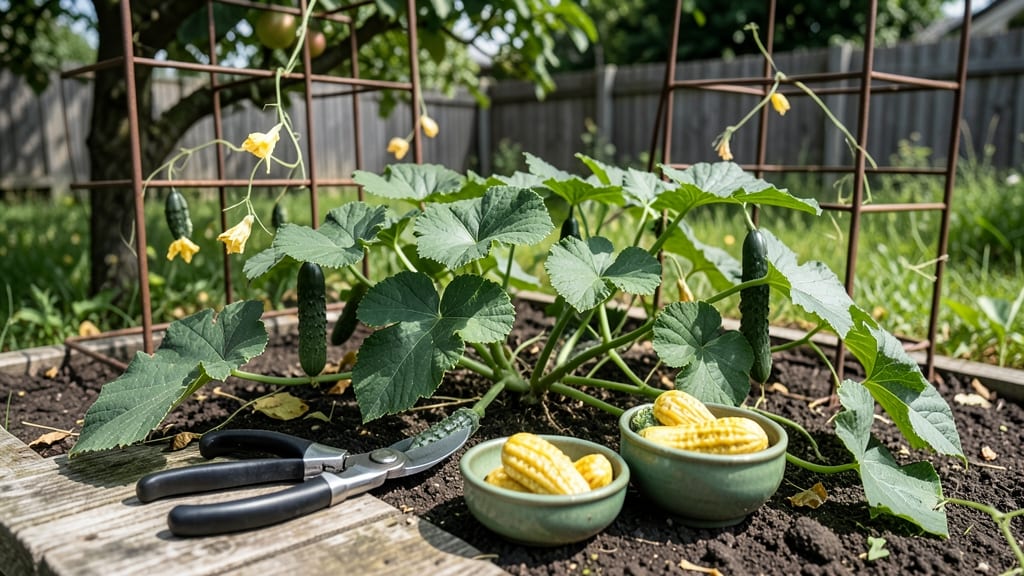
To identify bitter cucumbers, look for thick, dark green skin, small size, and uneven ripening—these are clear warning signs. Bitterness typically develops when cucumbers overripen or face stress from extreme heat or drought, so picking them at the right time is essential for the best taste.
Bitter cucumbers contain higher levels of cucurbitacins, natural compounds plants produce as a defense mechanism against pests. 🌱 When cucumbers experience stress—like inconsistent watering or scorching temperatures—they ramp up production of these compounds, turning their flesh bitter.
This is why gardeners in hot climates often struggle with this issue, even with healthy-looking plants.
If you're growing your own cucumbers, choosing varieties known for sweetness—like 'Straight Eight' or 'Lemon'—can make a big difference.
These types are bred to resist bitterness better than heirloom varieties. 💫 I also recommend harvesting cucumbers when they're firm but still young, as they become more prone to bitterness the longer they stay on the vine.
💡 In This Article
- Why Do Cucumbers Turn Bitter?
- Preventing and Selecting Sweet Cucumbers
Why do cucumbers turn bitter?
Bitter cucumbers contain elevated levels of cucurbitacins, a group of bitter-tasting compounds that act as natural pesticides for the plant. When cucumbers experience stress—like prolonged exposure to temperatures above 90°F or inconsistent watering—they produce more of these compounds as a defense mechanism.
This chemical response is similar to how some plants release toxins when damaged by pests or disease. 🌱 The bitterness becomes noticeable when cucurbitacin levels exceed 10 parts per million in the flesh.
Heat stress plays a particularly critical role in bitterness development. During extreme heat waves, cucumber plants struggle to maintain proper metabolic functions, leading to uneven ripening. The plant prioritizes survival over fruit quality, redirecting resources to root and leaf growth rather than flavor development.
This is why cucumbers grown in arid climates with irregular rainfall often develop bitter flavors—even when they appear healthy on the outside. 🔥
The genetic makeup of certain cucumber varieties also influences bitterness risk. Heirloom and some open-pollinated types tend to produce higher cucurbitacin levels than modern hybrid varieties bred specifically for sweetness.
For example, varieties like 'Armenian' or 'Bosnian' cucumbers are more prone to bitterness compared to 'Straight Eight' or 'Marketmore', which have been selectively bred to minimize these compounds. This genetic variation explains why some gardeners consistently get bitter cucumbers while others never experience the issue.
Another critical factor is the plant's maturity stage. Young cucumbers (3-5 inches long) contain minimal cucurbitacins, but as they age on the vine, these compounds accumulate. The plant's natural defense system activates more aggressively in older fruits, particularly when they experience fluctuating temperature swings between day and night.
This is why harvesting cucumbers at their peak ripeness—when they're firm and bright green—is essential for preventing bitterness development. 💫
Interestingly, the bitterness isn't just about taste—it's also about texture. Bitter cucumbers often develop a mealy or fibrous interior as the plant redirects starch production to survival functions rather than flesh quality.
This texture change occurs alongside the chemical bitterness, creating a double sensory warning that the cucumber has passed its prime. The combination of these factors makes bitterness both a chemical and physical indicator of plant stress.
Understanding this process helps explain why some gardeners get consistently bitter cucumbers while others never encounter the problem. The key lies in both environmental control and variety selection—two factors that work together to either prevent or encourage cucurbitacin production.
By recognizing these triggers, you can take proactive steps to grow sweeter cucumbers in your garden. ✨