
Watering
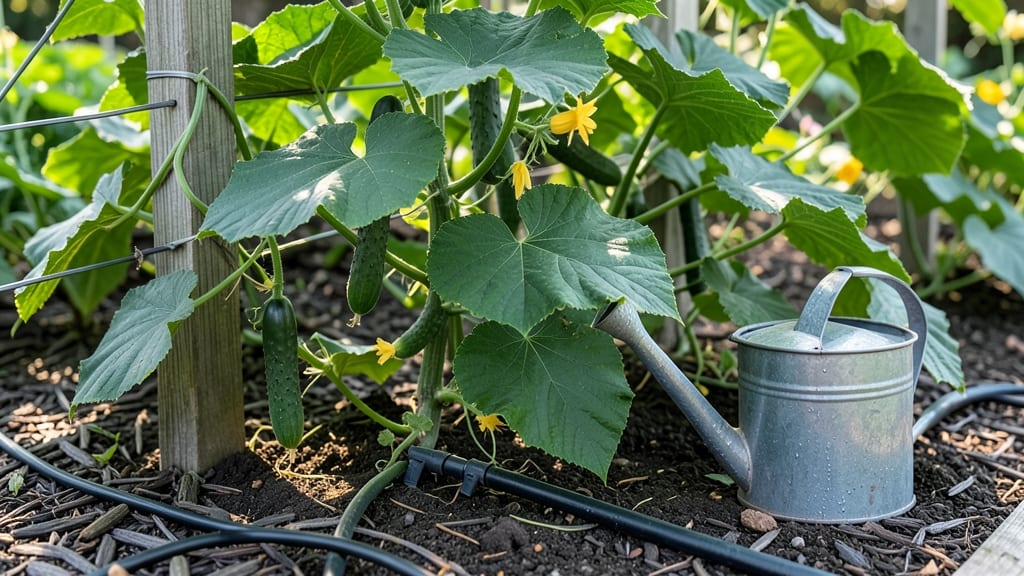
Cucumbers need 1 to 2 inches of water weekly to grow strong vines and crisp fruit, but the real secret is how you deliver it—because uneven moisture is the fastest way to kill your harvest before it starts.
Picture this: your 🥒 plants are wilting by noon, the soil cracks when you prod it, and suddenly you’re staring at bitter, shriveled cucumbers instead of the juicy ones you planted for.
That’s what happens when you water too little—or worse, too much. The fix isn’t just about the amount; it’s about timing, soil, and even the type of pot you’re using.
In Zone 6, where spring turns to summer in a flash, your watering schedule can’t stay static. A drip system or soaker hose keeps roots happy without drowning leaves, while mulch acts like a moisture blanket to lock in what you’ve given.
But here’s the kicker: container cucumbers dry out faster than in-ground plants, and heatwaves? They turn your 1-inch rule into a daily soak overnight.
Below, I’ll break down exactly how to measure soil moisture, spot the signs of over- or under-watering, and tweak your routine for containers, droughts, and rain—so you’re never left guessing whether your cucumbers are thirsty or just sulking.
Weekly water requirements for cucumbers: the 1-2 inch rule explained
Cucumbers thrive on consistent moisture, and the 1-2 inch rule is your best guide. This means your soil should receive 1 to 2 inches of water per week, whether from rainfall or irrigation.
Think of it as keeping the root zone—typically the top 6 to 12 inches—evenly damp, not soggy or bone-dry. Skipping this can lead to bitter fruit or stunted vines, while overdoing it risks root rot.
Why this rule works? Cucumbers have shallow, sprawling roots that spread horizontally rather than deep. When you water deeply but infrequently, you encourage roots to grow wider, making plants more resilient.
Shallow watering, like a quick sprinkle, only wets the surface and stresses the plant. Aim for slow, deep watering to saturate the soil properly.
Here’s the golden rule: Measure your watering depth. Use a screwdriver or trowel to check soil moisture. Push it into the ground—if the soil clings to the tool up to 2 inches deep, you’ve hit the sweet spot.
If it’s dry at that depth, it’s time to water again. This method beats guessing and ensures your cucumbers get the hydration they crave.
| Stage | Water Depth | Frequency | Soil Check |
|---|---|---|---|
| Seedlings | 1 inch | Every 2 days | Top 1 inch dry |
| Vining | 1.5-2 inches | Every 1-2 days | Top 2 inches dry |
| Fruiting | 2 inches | Daily (hot weather) | Top 3 inches dry |
| Container Grown | 1 inch | Daily | Top 1 inch dry |
💧 Pro Tip: Use a rain gauge or tipping bucket to track weekly rainfall and adjust irrigation accordingly.
Morning watering is non-negotiable for cucumbers. Why? Wet leaves at night create the perfect conditions for powdery mildew, a fungal disease that turns leaves yellow and crispy. Watering in the early morning (before 10 AM) gives foliage time to dry, reducing disease risk.
If you must water in the evening, avoid overhead sprinklers—opt for drip irrigation or soaker hoses to deliver water directly to the soil.
Container cucumbers need more frequent watering than in-ground plants because pots dry out faster. Check the soil daily—if the top inch feels dry, it’s time to water. Containers also benefit from self-watering systems or saucers filled with water to maintain moisture.
Pro tip: Use well-draining potting mix with added perlite to prevent root rot while keeping roots hydrated.
Don’t ignore the soil type—it dramatically affects water needs. Sandy soil drains quickly, so you may need to water twice daily in hot weather. Clay soil holds moisture longer, reducing frequency but increasing the risk of overwatering.
Amend heavy clay with compost or sand to improve drainage, and mulch all soil types with straw or wood chips to retain moisture and regulate temperature.
Consistency is key—cucumbers hate fluctuations in moisture. If you water deeply one day and skip the next, roots struggle to establish. Use a moisture meter or your finger to monitor soil conditions.
Aim for soil that’s damp but not soggy. Overwatering causes yellow leaves and wilting, while underwatering leads to small, bitter cucumbers and blossom-end rot.
Adjust your watering based on growth stage. Seedlings need gentle, frequent watering to avoid washing away tender roots. Once vines start spreading, increase depth and spacing between waterings. During fruiting, prioritize steady hydration—this is when cucumbers demand the most water to grow juicy and tender.
Watch for visual cues like wilting leaves or dry soil cracks, which signal it’s time to water. Conversely, yellowing leaves or mushy stems mean you’re overdoing it. Balance is everything—your goal is healthy vines with plump, flavorful cucumbers, not stressed plants or waterlogged soil.
With the right approach, you’ll harvest a bounty of crisp, sweet cucumbers all season long.
Adjusting water for heatwaves, droughts, and rainy seasons: expert tips
When summer temperatures climb above 90°F (32°C), cucumbers can wilt within hours if not properly hydrated. The 1-2 inch weekly rule becomes a daily deep-watering routine during heatwaves, while bush varieties handle drought slightly better than vining types.
Adjusting your approach prevents blossom-end rot and fruit cracking—two common issues tied to inconsistent moisture.
Rainy seasons, on the other hand, demand vigilance. Too much water leads to root rot and fungal diseases like powdery mildew, while drought stress causes bitter-tasting fruit and stunted vines. The key is mulching with straw or wood chips to retain moisture and regulate soil temperature.
I’ve found that 3-4 inches of mulch keeps roots cool during heatwaves and reduces evaporation by up to 30%.
Watering Cucumbers: Pros & Cons by Climate
🌡️ Heatwave (90°F+)
- Pro: Daily deep watering (1-2 gallons per plant)
- Pro: Morning watering reduces evaporation
- Con: Overhead watering causes leaf burn
🌧️ Rainy Season
- Pro: Natural hydration reduces labor
- Con: Poor drainage risks root rot
- Con: Fungal spores thrive in damp leaves
🌵 Drought Conditions
- Pro: Drought-resistant varieties (e.g., 'Armenian') survive better
- Con: Bitter fruit develops from stress
- Con: Yield drops by 50% without adjustments
Tip: Use a moisture meter to check soil depth—1-2 inches dry signals it’s time to water.
For vining cucumbers like 'Straight Eight,' consistent moisture is critical—their long roots demand deep, infrequent watering to reach nutrients. In contrast, bush varieties such as 'Bush Champion' have shallower roots and tolerate slightly drier conditions.
During droughts, I prioritize watering at the base using a soaker hose to avoid wetting leaves, which cuts down on disease pressure.
Watch for yellowing leaves or wilted vines—these are red flags for underwatering. Overwatering, however, shows up as yellowing lower leaves and mushy stems. To test soil moisture, stick your finger 2 inches deep; if it feels dry, it’s time to water.
In containers, cucumbers need watering every 1-2 days because pots dry out faster than in-ground soil.
During heavy rains, pause watering entirely and ensure containers have drainage holes. If rain is forecasted, prune lower leaves to improve airflow and reduce fungal risks.
For drought-resistant strategies, I’ve had success with drip irrigation on timers, which delivers water slowly at the roots while keeping foliage dry. This method saves up to 40% more water than overhead sprinklers.
Pro tip: Group cucumbers with thirsty companions like beans or peas to create a microclimate that retains moisture. Avoid planting them near water-hogging plants like corn, which compete for resources. With these adjustments, even extreme weather won’t derail your harvest.