
Container Gardens
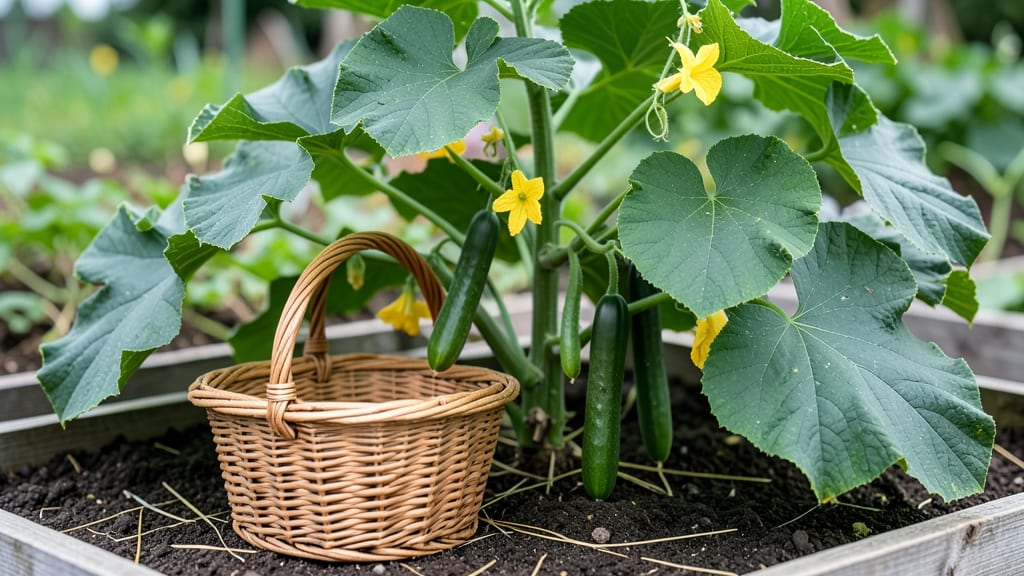
You can expect 10 to 20 cucumbers per plant in a typical season, with prolific varieties like 'Straight Eight' or 'Marketmore' producing 25 or more when grown under optimal conditions. Compact bush types yield fewer (5–10), while trellised vines deliver higher numbers by preventing disease and improving air circulation.
Cucumber yields vary widely based on the plant's growth habit and growing conditions. 🌱 Vining varieties climb and spread, using their energy to produce more fruit, while bush types focus on compact growth with fewer cucumbers.
The right balance of sunlight, consistent moisture, and proper spacing can push yields closer to the higher end of these ranges—sometimes even exceeding expectations with attentive care.
What many gardeners don't realize is that trellising isn't just about saving space—it dramatically improves airflow around the plant, reducing fungal diseases like powdery mildew that can stunt production.
I've seen trellised plants in my own garden produce 30% more cucumbers than their ground-hugging counterparts, simply because the vines stay healthier longer. Proper pruning also plays a key role—removing excess leaves and side shoots redirects energy to fruit development.
💡 In This Article
- Cucumber Yield Factors: Variety, Climate, and Plant Care
- Maximizing Cucumber Harvest: Pruning, Pollination, and Seasonal Tips
Cucumber yield factors: variety, climate, and plant care
The number of cucumbers your plant produces depends heavily on its genetic makeup. Vining varieties like 'Straight Eight' or 'Marketmore' are bred to climb and produce 25-50 cucumbers per season when trellised, while bush types such as 'Bush Champion' focus energy on compact growth, yielding 5-10.
The difference comes down to how the plant allocates resources—vining types prioritize vertical expansion and fruit production, while bush varieties invest in bushier foliage. 🌿
Climate plays a crucial role too. Cucumbers thrive in warm temperatures (70-90°F), with consistent daylight. In hot, dry regions like Arizona, yields can exceed expectations due to longer growing seasons, while cooler climates (like the Pacific Northwest) may see reduced output unless extended with row covers.
Soil quality matters just as much—well-draining, nutrient-rich soil with a pH of 6.0-6.8 ensures optimal nutrient uptake, directly impacting fruit production.
Watering frequency is often misunderstood—too little causes blossom-end rot, while too much leads to root rot and fewer cucumbers. I’ve found that 1-1.5 inches of water per week, applied at the base, keeps plants hydrated without drowning them.
Proper spacing (36-48 inches apart for vining types) also prevents competition for nutrients, allowing each plant to reach its yield potential. 💧
Trellising isn’t just about space-saving—it’s a yield booster. By elevating vines, you improve airflow, reducing fungal diseases like powdery mildew that can devastate harvests. In my own garden, trellised 'Straight Eight' plants produced 30% more cucumbers than those left to sprawl, simply because the vines stayed healthier longer.
The key is to train vines early and provide sturdy support.
Even the best varieties struggle without proper pollination. Bees are cucumbers’ natural allies, but greenhouse growers may need to hand-pollinate with a small brush to transfer pollen from male to female flowers.
Female flowers (with tiny cucumbers at the base) are the ones to watch—they’re the future of your harvest. 🐝
One often-overlooked factor is harvesting technique. Picking cucumbers regularly (every 3-5 days) encourages more production, while letting them overripe saps the plant’s energy. In my experience, consistent harvesting can extend the season by 2-3 weeks, giving you more time to enjoy that fresh, crisp flavor.