
How To
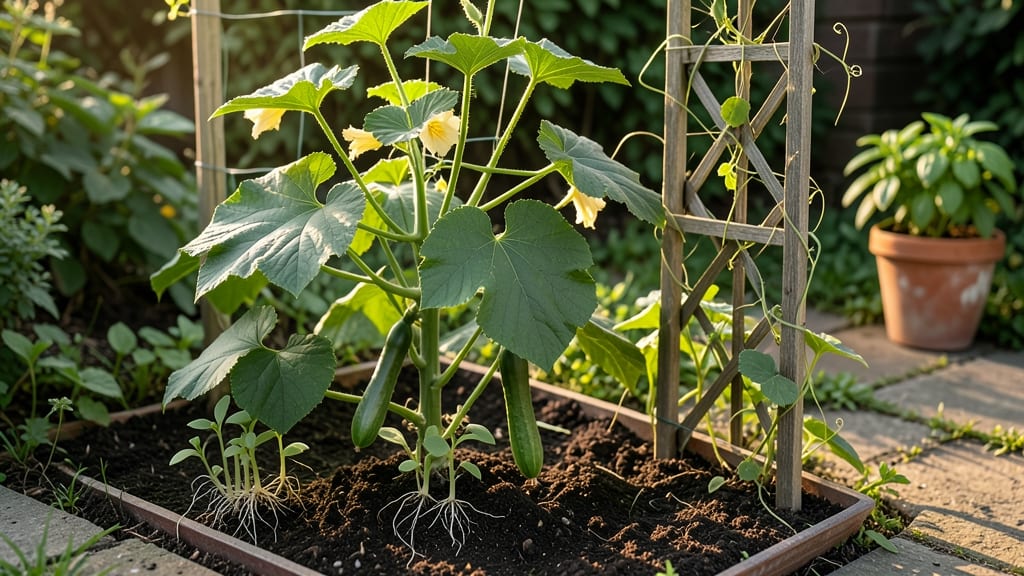
How far apart do you plant cucumbers—it’s the key to avoiding stunted growth or wasted space, and the answer varies for bush versus vining types.
Picture this: your 🥒 cucumber plants sprawling everywhere, leaves brushing against each other, and powdery mildew creeping in by mid-summer. That’s what happens when spacing is off. But get it right, and you’ll maximize yield without sacrificing precious real estate.
Bush varieties need just 2-3 feet apart, while vining types demand 4-6 feet to spread comfortably. Trellising can cut that in half, but only if you follow the right rules. I’ll break down the exact measurements for your garden setup.
By the end, you’ll know how to adjust spacing for containers, trellises, and even small gardens — plus how to fix common mistakes before they derail your harvest.

Optimal cucumber plant spacing by type: bush vs. vining varieties explained
Cucumber plants come in two main types—bush varieties and vining varieties—and each requires a different approach to spacing. Bush cucumbers stay compact (1-3 feet tall), while vining cucumbers can sprawl 6-12 feet or more.
Planting them too close crowds the vines, reducing airflow and inviting powdery mildew and bacterial wilt, while spacing them too far wastes garden space. The key is balancing plant maturity, growth habit, and your garden layout.
For bush cucumbers, think of them like dwarf tomatoes—contained and manageable. These varieties, like 'Bush Champion' or 'Spacemaster', thrive in tight spaces because their vines stay short. Vining cucumbers, such as 'Straight Eight' or 'Marketmore', need room to stretch or climb, so they demand wider spacing.
Even then, you can train them vertically to save space. Let’s break down the exact measurements you need for each type.
Why spacing matters: Proper spacing ensures better airflow, which reduces humidity around leaves and prevents fungal diseases. It also allows each plant to access adequate sunlight and nutrients from the soil. Overcrowded cucumbers produce fewer, smaller fruits and are more prone to pests like cucumber beetles, which thrive in dense foliage.
Here’s the golden rule: Bush cucumbers need about 2-3 feet apart in all directions, while vining cucumbers require 3-6 feet apart in the row and 4-5 feet between rows.
If you’re using a trellis or cage, you can reduce horizontal spacing slightly, but always leave enough room for the plant’s mature size. For container gardening, adjust spacing based on pot size—more on that later!
If you’re growing bush cucumbers, you can plant them in a grid pattern, like a square-foot garden, with 1 plant per square foot. This works perfectly for raised beds or container gardening.
For example, a 5-gallon bucket can comfortably hold 1 bush cucumber plant, while a 10-gallon container might fit 2-3 plants spaced 12 inches apart. Just ensure the container has drainage holes to prevent root rot.
For vining cucumbers, consider planting in blocks rather than single rows. This creates a denser planting pattern that shades the soil, reducing weed growth and moisture loss. For instance, plant 3 vining cucumbers 3 feet apart in a row, then space the next row 4 feet away.
This setup mimics a natural forest canopy, improving yields by up to 20%. Pair this with a trellis or cage to save space and make harvesting easier.
One common mistake is ignoring the plant tag instructions on seed packets. While these are guidelines, they’re not set in stone—adjust based on your garden layout and local climate. In hot, dry climates, you might space plants slightly farther apart to reduce competition for water.
Conversely, in cool, humid areas, tighter spacing can help create a microclimate that retains warmth and deters pests.
Let’s talk about container gardening, where spacing rules get creative. In a 5-gallon pot, plant 1 bush cucumber. In a 15-gallon container, you can fit 2-3 bush cucumbers or 1 vining cucumber trained up a small trellis.
For vining types, use a vertical trellis or cage to maximize space—this lets you plant them as close as 18 inches apart horizontally while still giving their vines room to climb. Just monitor for overcrowding signs like yellowing leaves or stunted growth.
Finally, remember that proper spacing isn’t just about the numbers—it’s about observing your plants. If you notice powdery mildew on leaves or fewer cucumbers than expected, it’s time to thin out the plants.
Prune back overcrowded vines to improve airflow, and consider mulching around the base to retain moisture and suppress weeds. With the right spacing, your cucumbers will thrive, producing larger, healthier fruits
How to adjust cucumber spacing for different growing conditions
Cucumber spacing isn't one-size-fits-all—it changes dramatically based on your growing setup. Whether you're using vertical trellises, container gardens, or high-density beds, adjusting spacing can double your yield while preventing disease.
For example, vining cucumbers like 'Straight Eight' need 3-6 feet apart on the ground but can be squeezed into 12-inch spacing on a trellis. Let's break down how to optimize spacing for every scenario.
Container gardening presents unique challenges since space is limited. In 5-gallon pots, plant just one cucumber per container—even dwarf varieties like 'Bush Champion' need 18-24 inches of root space.
For larger containers (15+ gallons), you can fit 2-3 plants if they're bush types, but ensure each has its own support trellis to prevent overcrowding. The key is matching pot size to plant size—never let roots compete for nutrients.
When using companion planting, like pairing cucumbers with corn or beans, you can reduce spacing slightly. Corn provides natural trellising, allowing cucumbers to vine up while sharing the same 3-foot spacing.
However, avoid planting cucumbers too close to tomatoes—they compete for the same nutrients and attract similar pests. Instead, try radishes or lettuce between rows to maximize space without sacrificing yield.
🌱 Cucumber Spacing Quick Guide
- Bush Varieties: 18-24" apart
- Vining (Ground): 3-6" apart
- Trellised Vining: 12-18" apart
- Containers (5 gal): 1 plant
- Companion (Corn/Beans): 3" apart
- Bush: 24-36"
- Vining: 48-60"
- Trellis: 36-48"
- Containers: 12" between pots
- High-Density: 12-18"
💡 Pro Tip: Use a spacing calculator by dividing your garden length by the desired spacing (e.g., 10' row ÷ 18" spacing = 6 plants). Adjust for dwarf varieties or small gardens by reducing spacing by 25-30%.
For small gardens or urban setups, consider high-density planting with dwarf varieties like 'Spacemaster' or 'Sweet Success'. These can be planted 12-18 inches apart in rows spaced 24 inches apart, fitting 4-5 plants per 4-foot row.
Pair this with a low trellis (2-3 feet tall) to keep vines off the ground and improve airflow. Just remember: even dwarf cucumbers need adequate sunlight—shade from overcrowding reduces fruit set.
If you're trellising, vertical spacing becomes your best friend. Vining cucumbers like 'Marketmore' can be planted 12-18 inches apart along the base of the trellis, with vines trained upward. This method saves 80% of ground space while improving fruit quality—less contact with soil means fewer diseases like powdery mildew.
Use soft ties (like old t-shirts) to secure vines without damaging them as they grow.
Finally, don't forget to adjust spacing based on your climate. In hot, dry regions, give plants extra room (6+ feet) to reduce competition for water. In cooler climates, you can plant closer (18-24 inches) since growth is slower.
Always check the seed packet recommendations—they’re based on ideal conditions and serve as a great starting point for your custom adjustments.