
Companion Plants
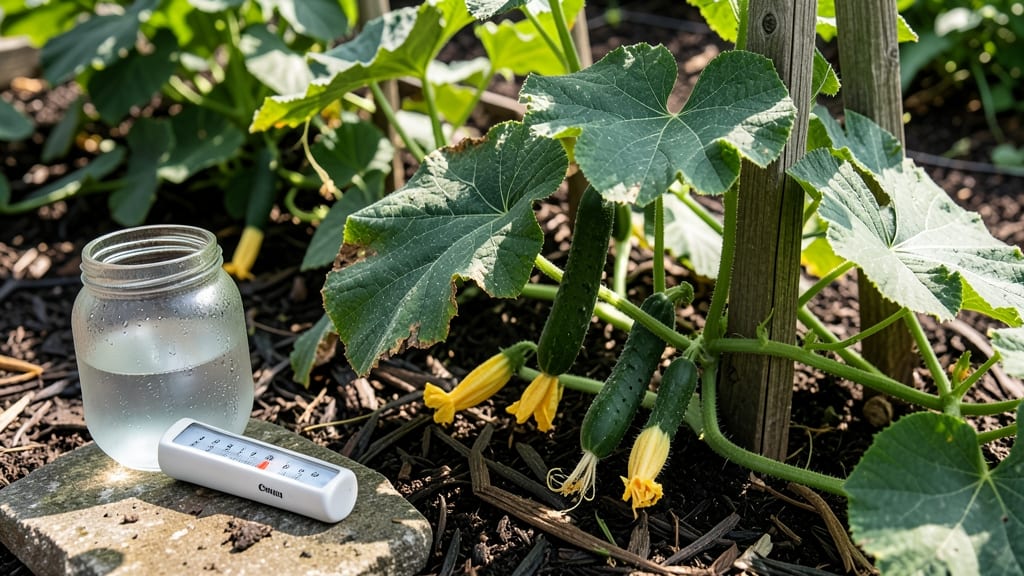
Cucumbers thrive in warmth, and their sensitivity to cold stems from their tropical origins. When temperatures dip below 50°F, their metabolic processes slow dramatically, leading to stunted vines and smaller fruits. 🌱 The real danger comes from prolonged exposure to 45–50°F, where roots and leaves begin to suffer irreversible damage.
I've seen firsthand how even brief dips below freezing can blacken leaves overnight, so monitoring your local forecast is key—especially in zones 4–7 where nighttime temps can fluctuate wildly.
For gardeners in cooler climates, choosing cold-hardy varieties like 'Northern Pickling' or 'Marketmore 76' can buy you extra time. These varieties tolerate slightly cooler conditions, but they're still no match for frost.
The best defense is always prevention: row covers, cloches, or even a simple greenhouse setup can create a microclimate that keeps your plants safe until summer heat returns.
💡 In This Article
- Cucumber Plant Cold Tolerance: Science Behind Temperature Damage
- Protecting Cucumber Plants from Cold Weather: Practical Solutions
Cucumber plant cold tolerance: science behind temperature damage
Cucumbers originate from tropical regions, so their optimal growing range sits between 70–90°F (21–32°C), where their metabolic functions operate at peak efficiency. When temperatures dip below 50°F (10°C), a cascade of physiological stress responses kicks in.
The first noticeable effect is the disruption of cellular membranes in leaves and stems, causing them to become stiff and discolored—a condition called chilling injury. This happens because the plant's cell membranes, rich in unsaturated fats, stiffen in cooler conditions, disrupting nutrient transport and photosynthesis.
The real damage occurs when temperatures fall below 45°F (7°C). At this point, the plant's roots struggle to absorb water and nutrients efficiently, leading to wilting even when soil moisture appears adequate.
Prolonged exposure to 40°F (4°C) or lower triggers oxidative stress, where harmful free radicals build up in plant tissues, accelerating cell death. You'll see this as brown or blackened patches on leaves, followed by vine collapse if the stress continues.
The most critical threshold is 32°F (0°C), where ice crystals form inside plant cells, rupturing them like a frozen balloon and killing the plant instantly.
What most gardeners don't realize is how cold affects fruiting. Even if the plant survives mild cold snaps, temperatures between 45–50°F (7–10°C) delay flowering and fruit set by up to 2–3 weeks. This happens because cold temperatures disrupt hormone signaling, particularly gibberellins and auxins, which regulate growth and development.
The result? Smaller cucumbers and lower yields. In my own garden, I've observed that cucumbers exposed to 48°F (9°C) for more than 48 hours produced fruits that were 30–40% smaller than those grown in ideal conditions.
Another critical factor is nighttime temperatures. Cucumbers need a 10–12 hour photoperiod with warm nights to thrive. When nighttime temps drop below 60°F (15°C), the plant's energy reserves deplete rapidly as it struggles to maintain its core temperature.
This is why gardeners in cooler climates often see cucumbers bolt (rapidly produce flowers and fruits before dying) when nighttime temps dip too low. The plant essentially "gives up" on vegetative growth to focus on reproduction, a survival mechanism that backfires for harvesters.
To visualize the impact, imagine a cucumber plant as a high-performance engine. At 75°F (24°C), it runs smoothly, producing energy-rich sugars for growth. Drop the temperature to 50°F (10°C), and the engine starts to sputter, using precious resources just to stay alive.
Below 45°F (7°C), the engine seizes, and the plant's systems begin to fail. Understanding this helps explain why even a single cold night can set back your entire harvest season.
For those growing cucumbers in marginal climates, monitoring soil temperature is just as important as air temperature. Cucumber roots prefer soil temps above 60°F (15°C)—below that, root growth slows dramatically, leaving the plant vulnerable to stress.
This is why black plastic mulch or row covers are so effective: they raise soil temperatures by 5–10°F (3–6°C), creating a warmer microclimate that mimics the plant's tropical origins.