
Vegetables
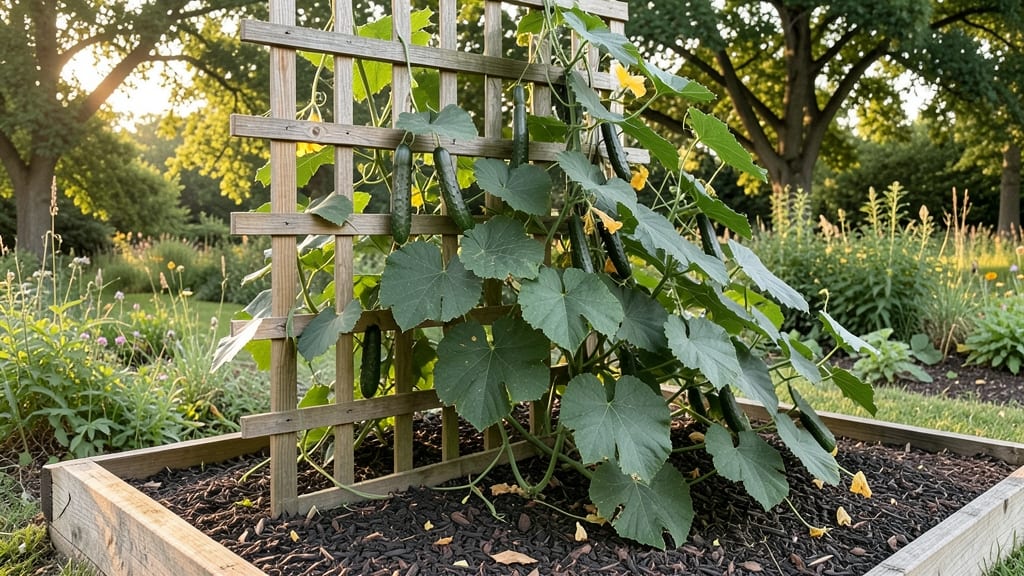
Growing Giant Russian cucumbers means foot-long monsters instead of dinner-plate slices. 🌿 These heirlooms aren't just big—they're prolific, sweet, and perfect for pickling or fresh eating, but they demand a few tricks to reach their full potential.
My first harvest had me questioning whether I'd actually grown a cucumber or a small log, and now I'm sharing the exact methods that turn vines into productive powerhouses.
The secret starts with pole training—these cucumbers climb like mad but need sturdy support to channel energy into fruit, not sprawling vines. Plant in well-draining soil rich with compost, and space vines 12-18 inches apart on a 6-foot trellis.
They thrive in warm climates (zones 4-10) but need consistent moisture—dry spells mean bitter fruit or cracked skins. I swear by mulching to keep roots cool and water retention steady.
By day 55, you'll be harvesting 2-3 cucumbers weekly if you stay on top of pollination (hand-pollinate if bees are scarce) and fertilization (balanced feed every 2 weeks).
The real magic happens when you prune side shoots to direct energy upward—my vines now produce three times more than my first attempt. Just watch for powdery mildew (spray neem oil preventatively) and cucumber beetles (row covers early on).
These aren't just cucumbers—they're a statement piece for your garden. Once you master them, you'll never buy store-bought again. The key is patience and precision—skip either, and you'll end up with a jungle instead of a harvest. Let's get those vines climbing!
📚 In This Guide
- What you need
- Instructions
- Tips and common mistakes
- Wrapping up and next steps
What you need
- ● Giant Russian cucumber seeds: 10–15 seeds (var. ‘Russian Giant’ or ‘Russian Sausage’—look for heirloom or hybrid options like ‘Marketer’ or ‘Mammoth’).
- ● Containers or garden bed: Option 1: 5-gallon fabric pots (3–5) or large grow bags (12–18" deep).
- ● Option 2: Raised bed (4’x8’ minimum) with well-draining soil.
- ● Pole trellis system: Bamboo stakes (6–8 ft tall) or metal T-posts (1 per plant).
- ● Twine or soft garden twine (50 ft roll) for tying vines.
- ● Soil mix: 50% high-quality potting soil + 50% compost (or store-bought veggie mix with added perlite for drainage).
- ● Fertilizer: Balanced organic fertilizer (5-5-5 or 10-10-10, 1 tbsp per plant at planting).
- ● Liquid seaweed or fish emulsion (for foliar feeding every 2 weeks).
- ● Watering supplies: Drip irrigation kit or hose with a gentle spray nozzle (avoid wetting leaves).
- ● Mulch: Straw or black plastic mulch (to retain moisture and suppress weeds).
- ● Row covers (frost protection for early planting).
- ● Pruning shears (for managing excess vines).
- ● pH test kit (ideal soil pH: 6.0–6.8).
- ● Cucumber support clips (no-tie alternatives for trellises).
- ● Shade cloth (30–50% coverage for hot climates).
Step-by-step instructions for growing Giant Russian cucumbers
Here's how I grow these massive, sweet cucumbers—pole-trained for maximum yield in tight spaces.
🪴 Step 1: Select and Prepare the Growing Site
Choose a location with full sun exposure (6-8 hours daily) and well-draining soil. Giant Russian cucumbers thrive in rich, slightly acidic soil with a pH between 6.0-6.8. I always amend my garden beds with 2-3 inches of compost mixed into the top 6 inches of soil before planting.
If growing in containers, use a 5-gallon pot or larger—these cucumbers need deep root space. Place pots in a sunny spot where they won’t be disturbed by wind. Avoid areas with poor air circulation, as this invites powdery mildew, a common enemy of cucumbers.
☀️ Step 2: Install Trellis or Pole System Early
Set up your trellis or pole system 2-3 weeks before planting. I use 8-foot bamboo stakes driven 6 inches deep into the ground, spaced 3 feet apart. For a stronger structure, I weave jute twine horizontally between stakes every 12 inches to create a lattice for vines to climb.
This early setup prevents root disturbance later. Giant Russian cucumbers produce heavy fruits, so a sturdy trellis is non-negotiable. If using a wire trellis, space wires 12 inches apart—this gives vines plenty of room to sprawl without tangling. Watch for vines reaching the top; they’ll start curling around the supports within 2-3 weeks of planting.
🌱 Step 3: Plant Seeds or Transplants at the Right Time
Sow seeds 1 inch deep after the last frost when soil temperatures reach 60°F or warmer. Giant Russian cucumbers are sensitive to cold—planting too early results in slow germination or stunted growth. If using transplants, harden them off for 7-10 days before moving them to the garden.
Space plants 3-4 feet apart in rows 5 feet apart to allow for proper air circulation. I plant 4 seeds per hill and thin to the strongest seedling after 2 weeks, when first true leaves appear. Avoid overcrowding—competition for nutrients leads to smaller fruits and more disease pressure.
💧 Step 4: Water Deeply and Maintain Consistent Moisture
Water deeply 1-2 times per week, aiming for 1-1.5 inches of water per session. Giant Russian cucumbers need consistent moisture to develop their signature size and sweetness. I water at the base of the plant in the early morning to reduce evaporation and fungal risks.
Let the top 1-2 inches of soil dry out between waterings—this prevents root rot while keeping the soil evenly moist. Mulch with 2-3 inches of straw to retain moisture and suppress weeds. You’ll know your watering is right when leaves stay deep green and crisp, not wilting or yellowing.
✂️ Step 5: Prune and Train Vines for Maximum Yield
Prune side shoots (suckers) that grow in the leaf axils—these compete with the main vine for energy. Remove them when they’re 2-3 inches long to redirect the plant’s focus to fruit production. I leave 1-2 main vines per plant to climb the trellis, as these bear the largest cucumbers.
Train the main vine along the trellis by gently tying it with soft plant ties every 12 inches. This prevents breakage from heavy fruit loads. Harvest cucumbers when they reach 12-18 inches long—waiting too long turns them bitter. You’ll see smooth, dark green skins and a firm texture at peak ripeness.
Tips & tricks for growing Giant Russian cucumbers
These game-changing insights will help you coax those legendary 20-inch cucumbers from your plants—without the common pitfalls.
Soil Preparation Secret: The 6.0-6.8 pH range isn't just a suggestion—test your soil first! I use a simple home test kit to verify before adding compost. For containers, mix 1 part compost with 2 parts potting soil to ensure proper drainage while maintaining nutrient density. The deep root system of Giant Russian cucumbers demands this rich foundation right from planting day.
Trellis Stability Tip: When installing your 8-foot bamboo stakes, drive them 6 inches deep and space them 3 feet apart—this creates the perfect tension triangle for supporting heavy vines. I reinforce the base with 2 stakes per plant at a slight angle for extra wind resistance. The 12-inch horizontal spacing between twine wires is crucial; any tighter and vines will tangle before reaching the top.
Planting Timing Strategy: The 60°F soil temperature threshold is non-negotiable for these cold-sensitive plants. I monitor soil temps with a simple thermometer probe—waiting until 65°F for 3 consecutive days gives me the confidence to plant. For transplants, that 7-10 day hardening off period is where most beginners fail; I gradually move them from shade to full sun over 5 days to prevent transplant shock.
Watering Wisdom: The 1-1.5 inches per watering rule isn't about volume—it's about saturation. I check moisture by pushing my finger 2 inches deep into soil; if it feels dry, that's when I water. Morning irrigation is key because it gives leaves time to dry before evening, dramatically reducing powdery mildew risk. The 2-3 inches of straw mulch works double duty by keeping roots cool while preventing evaporation.
Pro Tips for Giant Russian Cucumber
- These game-changing insights will help you coax those legendary 20-inch cucumbers from your plants—without the common pitfalls.
- Soil Preparation Secret: The 6.0-6.8 pH range isn't just a suggestion—test your soil first!
- Trellis Stability Tip: When installing your 8-foot bamboo stakes, drive them 6 inches deep and space them 3 feet apart—this creates the perfect tension triangle for supporting heavy vines.
Frequently asked questions
How long do giant Russian cucumbers take to mature?
These speedy growers typically reach maturity in 55–60 days from seed, depending on your climate. In warm regions, you might see cucumbers as early as 45 days if conditions are ideal. Keep an eye on vines—once flowers appear, count backward to plan your harvest!
What’s the best temperature range for growing them?
Giant Russian cucumbers thrive in 70–90°F (21–32°C) during the day and 60–70°F (15–21°C) at night. They hate frost (<32°F/0°C) and slow down below 55°F (13°C). Use row covers or a greenhouse if your spring/fall temps dip—these cucumbers won’t wait around!
Why are my cucumbers small or bitter?
Bitter cucumbers usually mean overripe or heat stress. Harvest when they’re 6–12 inches long (depending on variety) and firm—don’t let them yellow or turn seedy. For sweetness, ensure consistent watering (1–2 inches per week) and shade during extreme heat. Pro tip: Pick female flowers (tiny cucumbers behind them) to boost fruit size!
Can I grow giant Russian cucumbers in containers?
These vining cucumbers do well in 5-gallon+ containers with a trellis or cage. Choose a deep pot (18+ inches) and use a lightweight potting mix with compost. Just be ready to water daily in containers—they dry out fast. Bonus: Container growing keeps pests like squash bugs away!
What can I do if my vines wilt or die back?
Wilting often signals underwatering, root rot, or powdery mildew. First, check soil moisture—cucumbers need 1–2 inches of water weekly. If roots are mushy (rot), improve drainage. For mildew (white powder on leaves), spray with baking soda mix (1 tbsp soda + 1 quart water + a drop of soap) or neem oil. Prevent it by spacing plants 12–24 inches apart for airflow!
Are there alternatives if giant Russian cucumbers fail?
Try these fast-growing, pole-friendly cucumber varieties for similar results:
- ‘Diva’ – 55-day, parthenocarpic (no pollinators needed), 10–12” cucumbers.
- ‘Marketmore 76’ – Classic slicing cucumber, 58 days, heat-tolerant.
- ‘Sweet Success’ – Disease-resistant, 52 days, great for containers.
Wrapping up and next steps
Growing giant Russian cucumbers is a rewarding adventure that delivers massive harvests in just 55 days—perfect for urban gardeners, small spaces, or anyone craving a bountiful yield! 🌱 With the right pole-training technique, you’ll turn limited space into a high-output garden, all while enjoying crisp, flavorful cucumbers straight from your backyard.
Whether you’re a beginner or a seasoned gardener, this method makes it simple and fun.
Ready to dive in? Start by gathering your supplies and sketch out your trellis plan—then watch your tiny seeds transform into a jungle of productivity! 🌿 Jump back to the materials list or check out our FAQs for extra tips before planting.