
Planting
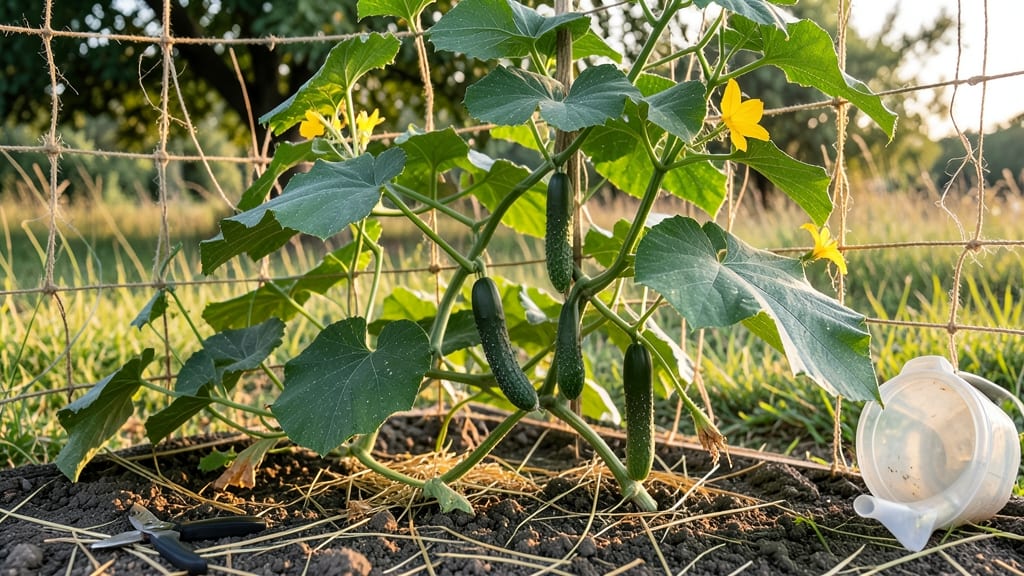
English cucumbers deliver those crisp, sweet slices straight from your garden in just 55 days—no greenhouse needed. 🌱 I learned the hard way that these bushy plants demand patience (and perfect timing), but when they succeed, the harvest feels like a victory.
The secret starts with soil that drains well but holds moisture, paired with a sunny spot where vines can sprawl without fighting for space.
You'll need 4-6 weeks of warm soil before your last frost to get seeds started, whether you direct-sow or start indoors. English cucumbers thrive in full sun (6+ hours daily) and need 1-2 inches of water weekly, but never let them sit soggy—root rot is their kryptonite.
A 5-foot trellis saves space and keeps fruits cleaner, though bush varieties can handle ground planting too.
By day 55, you'll be harvesting 6-8 inch cucumbers with that signature crunch—just watch for powdery mildew by keeping leaves dry. The first harvest triggers a 3-4 week continuous yield, so plan for daily checks.
Prune leggy vines early to focus energy on fruit production, and save seeds from your best performers for next year.
Works for containers (10+ gallon pots) or in-ground beds, and even shorter seasons (try cold frames). The key? Start early, stay consistent with water, and resist the urge to harvest too small—bigger cucumbers mean sweeter flavor. Ready to grow yours?
📚 In This Guide
- What you need
- Instructions
- Tips and common mistakes
- Wrapping up and next steps
What you need
- ● English cucumber seeds (varieties like 'Marketer' or 'Socrates'—choose parthenocarpic for no-pollination needed!): 5-10 seeds (or 1-2 plants if starting with seedlings).
- ● Containers or garden bed: Containers: 5-gallon pots or larger (at least 12 inches deep and 18 inches wide per plant). Use drainage holes!
- ● Garden bed: Full sun (6+ hours/day) and well-draining soil. Raised beds are ideal!
- ● High-quality potting mix or garden soil amended with: Compost (1 part compost to 3 parts soil).
- ● Perlite or vermiculite (for aeration, 10-20% of mix).
- ● Slow-release fertilizer (balanced 10-10-10 or organic options like fish emulsion).
- ● Trellis or cage (5-6 ft tall, metal or sturdy plastic—cucumbers love to climb!).
- ● Watering can or hose with a gentle nozzle (avoid wetting leaves to prevent disease).
- ● Pruning shears (for trimming vines and removing yellow leaves).
- ● Mulch (straw or shredded leaves to retain moisture and suppress weeds).
- ● Row covers (lightweight fabric to protect from pests or cold snaps).
- ● pH test kit (ideal soil pH: 6.0-6.8).
- ● Organic neem oil (for pest control if aphids or powdery mildew appear).
- ● Grow lights (if starting indoors before the last frost).
Step-by-Step guide to growing English cucumber plants
Here’s how to cultivate vigorous, productive English cucumber vines that deliver sweet, crisp fruit in just 55 days—no sprawling trellises required.
🌱 Step 1: Select and Prepare the Right Variety and Soil
English cucumbers thrive as bush varieties, so choose a compact, disease-resistant cultivar like 'Bush Champion' or 'Sweet Success'. These types grow 4-6 feet tall but stay contained without staking, making them perfect for containers or small gardens. I always start with sterile seed-starting mix—never garden soil—because it’s lighter and free of pathogens that can rot tender roots.
Test your soil’s pH before planting. English cucumbers prefer a slightly acidic to neutral range of 6.0-6.8. If your soil runs heavy clay or sand, amend it with 2-3 inches of compost mixed into the top 12 inches of soil. This improves drainage while retaining moisture, which is critical since cucumbers have shallow roots. Work the compost in a week before planting to let it integrate fully.
☀️ Step 2: Plant in Warm Soil and Full Sun
Wait until the soil reaches at least 65°F before planting—cold soil delays germination and invites rot. English cucumbers need full sun (6-8 hours daily), so pick a spot with unobstructed southern or western exposure. If you’re planting in containers, use 5-gallon pots with drainage holes and fill them with well-draining potting mix. I like to add a handful of perlite to the mix to prevent compaction.
Plant seeds 1 inch deep and 4 inches apart in rows spaced 3-4 feet apart (or follow container spacing). If starting indoors, sow seeds 2 weeks before the last frost date in biodegradable pots to avoid root disturbance. Once seedlings develop 2-3 true leaves, transplant them outdoors after dark to reduce shock. Water deeply right after planting to settle the soil around roots.
💧 Step 3: Water Deeply and Maintain Consistent Moisture
English cucumbers have shallow root systems, so they rely on even moisture. Water at the base of plants (not overhead) to prevent fungal diseases like powdery mildew. Aim for 1-1.5 inches of water per week, adjusting for rain. You’ll know you’ve got it right when the top inch of soil feels damp but not soggy. Mulch with 2-3 inches of straw or shredded leaves to retain moisture and suppress weeds—this is a game-changer for hot, dry climates.
Here’s the thing—inconsistent watering causes bitter fruit. If plants wilt during the day but perk up at night, they’re thirsty. Drip irrigation or soaker hoses work best, delivering water slowly at the roots. Avoid wetting foliage, especially in the evening, to prevent disease. I set up my irrigation system to run in the early morning so leaves dry quickly.
✂️ Step 4: Prune and Train for Bushier Growth
Unlike vining cucumbers, English varieties benefit from light pruning to encourage bushier habits. Once plants reach 12-18 inches tall, pinch off the main stem’s growing tip just above a leaf node. This redirects energy to lateral branches, producing more fruit-bearing vines. I also remove any yellowing or diseased leaves immediately—don’t wait, or the problem spreads fast.
If your plants start to sprawl despite being bush types, use small stakes (2-3 feet tall) or a low trellis to guide vines upward. This improves air circulation and makes harvesting easier. Avoid over-pruning, though—English cucumbers produce fruit along the stem, so keep at least 3-4 main branches per plant. You’ll see thicker, more productive vines within 2-3 weeks of pruning.
🌿 Step 5: Fertilize and Harvest for Continuous Production
Feed plants with a balanced, water-soluble fertilizer (10-10-10) when they flower, then switch to a low-nitrogen, high-potassium formula (5-10-10) once fruit sets. I mix fertilizer into water and apply it every 2-3 weeks during the growing season. Over-fertilizing leads to leafy growth at the expense of fruit, so follow label rates precisely. Organic growers can use compost tea or fish emulsion for a gentle boost.
Harvest cucumbers when they’re 6-8 inches long and still firm to the touch—waiting too long makes them seedy and bitter. Use pruning shears or a sharp knife to cut fruit from the vine, leaving a small stem attached. This encourages more production. I harvest every 2-3 days in peak season to keep plants focused on new growth. With proper care, a single bush can yield 20-30 cucumbers over 55 days—that’s a lot of crunchy, sweet slices!
Tips & tricks for perfect English cucumber growth
Between us, these small adjustments can make the difference between a decent harvest and a bumper crop of sweet, crisp cucumbers in just 55 days.
Soil Preparation Secret: The week-long compost integration in Step 1 is non-negotiable for English cucumbers. I've learned this the hard way—skipping this step leads to poor drainage and root rot. For even better results, mix in a handful of worm castings with your compost. This adds beneficial microbes that boost early root development, helping seedlings establish faster. The goal is a soil texture that crumbles easily between your fingers—like a cake mix—when moist.
Timing Your Transplant: When you're ready to move those 2-3 true leaf seedlings outdoors in Step 2, do it after sunset. The cooler temperatures reduce transplant shock dramatically. I've found that hardening off seedlings (gradually exposing them to outdoor conditions over 5-7 days) before the final move makes an even bigger difference. Start with just 1 hour of afternoon sun on day one, then increase by 1 hour daily until they're ready for full sun exposure.
Watering Wisdom: That 1-1.5 inches per week guideline in Step 3 is perfect, but here's what nobody tells you—morning watering isn't just about timing, it's about technique. Use a rain gauge to track your watering. I place mine near my cucumber patch and fill it daily to monitor accumulation. For containers, water until you see moisture running from the drainage holes—this ensures the entire root zone gets hydrated. The top inch damp test is your best friend, but don't rely solely on it during heatwaves when evaporation happens faster.
Pruning Precision: When you reach that 12-18 inch height in Step 4 for pinching, look for the first leaf node where three leaves meet. This is your target spot—pinching just above it encourages branching. I use clean, sharp scissors to make clean cuts, which prevents disease entry points. For the small stakes or low trellis, position them at a slight angle rather than straight up. This creates more surface area for vines to cling to, supporting heavier fruit loads without toppling.
Pro Tips for English Cucumber Plant
- Between us, these small adjustments can make the difference between a decent harvest and a bumper crop of sweet, crisp cucumbers in just 55 days.
- Soil Preparation Secret: The week-long compost integration in Step 1 is non-negotiable for English cucumbers.
- Timing Your Transplant: When you're ready to move those 2-3 true leaf seedlings outdoors in Step 2, do it after sunset.
Frequently asked questions
Got questions about growing English cucumber plants? You’re not alone!
Here are the most common queries—plus quick, actionable answers to help you cultivate a thriving harvest.
How long do English cucumbers take to mature?
English cucumbers are fast growers—typically ready for harvest in 50–55 days from planting. Start seeds indoors 3–4 weeks before the last frost, then transplant seedlings after soil warms to at least 60°F (15°C). Patience pays off: vines produce crisp, tender fruit within weeks!
Do English cucumbers need full sun?
English cucumbers thrive in full sun (6–8+ hours daily). While they tolerate partial shade, lower yields and smaller fruit result. Choose a south-facing spot or use reflective mulch to maximize light. Pro tip: A trellis boosts airflow and sun exposure, reducing disease risk!
Why aren’t my English cucumber flowers producing fruit?
Lack of pollination or poor conditions often cause this. English cucumbers are self-pollinating, but hand-pollinate with a soft brush if needed. Check for:
- Warm soil (below 55°F/13°C stunts growth).
- Consistent watering (drought stress = dropped flowers).
- Balanced fertilizer (too much nitrogen = leafy vines, few flowers).
Can I grow English cucumbers in containers?
Yes! Use a 5-gallon+ container with drainage holes and fill with well-draining potting mix. Choose compact varieties like ‘Burpee Bush Champion’ or ‘Little Leaf.’ Place pots near a south-facing wall or use a trellis to save space. Key tip: Water frequently—containers dry out faster!
What pests threaten English cucumber plants?
Common culprits include:
- Aphids: Spray with soapy water or introduce ladybugs.
- Cucumber beetles: Handpick or use row covers early.
- Squash bugs: Crush eggs on leaves weekly.
Wrapping up and next steps
Growing an English cucumber plant is a rewarding journey that brings fresh, crisp harvests to your table in just 55 days! With the right soil, sunlight, and care, you’ll enjoy the satisfaction of homegrown produce—perfect for salads, snacks, or pickling.
Whether you’re a beginner or a seasoned gardener, these bushy vines are a fun and productive addition to any garden.
Ready to dive in? Start by gathering your supplies, then plant with confidence! Soon, you’ll be savoring the sweet taste of success—one crunchy cucumber at a time. 🌱✨