
Vegetables
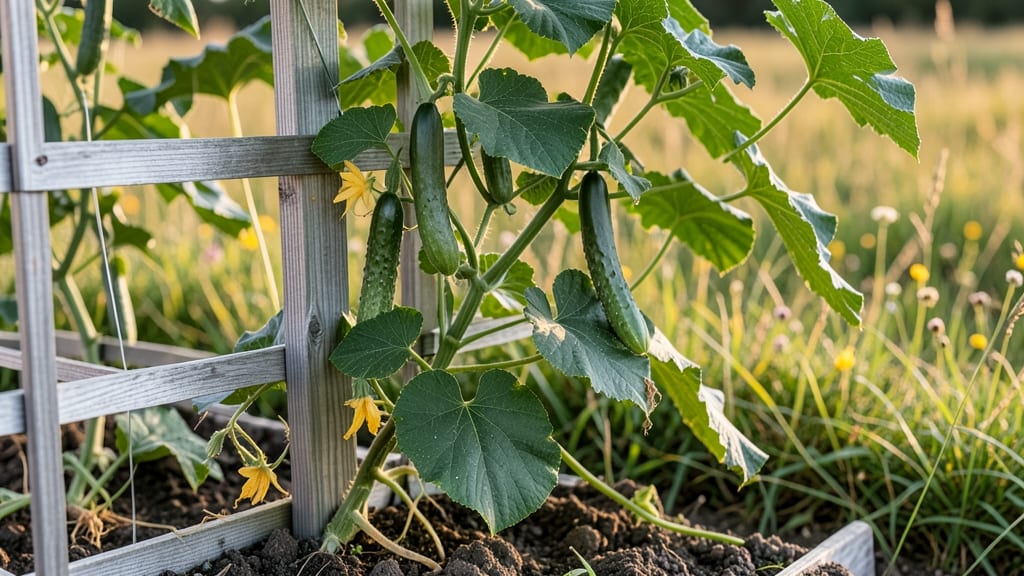
Cucumbers need cages or trellises to thrive—especially in Zone 6a—because their sprawling vines can smother plants and invite rot.
Straining under the weight of sprawling vines or watching your cucumbers 🥒 rot on the ground? Caging isn’t just a gardening trend—it’s a game-changer for yield and plant health.
Without support, cucumbers sprawl up to 10 feet, stealing space from neighbors and leaving fruit vulnerable to soil-borne diseases. A simple trellis lifts vines off the ground, boosting air circulation and keeping cucumbers cleaner.
Below, I’ll break down three best trellis types, when to skip cages, and how to set up support for bigger, healthier harvests—no matter your garden size.
Why cucumber trellising boosts yield and prevents disease
If you’ve ever grown cucumbers without support, you’ve likely seen the struggle: sprawling vines taking over garden beds, fruit rotting on the ground, or pests hiding in dense foliage. Trellising cucumbers isn’t optional—it’s a game-changer for both yield and plant health.
Research shows cucumbers grown vertically produce 20-30% more fruit while staying cleaner and healthier. The science behind this is simple: better air circulation and reduced soil contact create an environment where cucumbers thrive.
One of the biggest myths is that cucumbers can thrive sprawled on the ground. In reality, ground-grown cucumbers face higher risks of disease (like powdery mildew) and pest infestations (such as squash bugs). When vines touch the soil, they introduce fungal spores and bacterial pathogens directly to your harvest.
Trellising lifts cucumbers off the ground, minimizing contamination and making harvests easier and cleaner. Plus, vertical growth saves space—perfect for small gardens or container growing.
Let’s break down the key benefits of trellising cucumbers in this summary table:
| Benefit | Why It Matters | Science Behind It |
|---|---|---|
| Increased Yield | 20-30% more cucumbers | Vertical growth directs energy to fruit production instead of sprawling vines. |
| Disease Prevention | Reduces fungal/bacterial risks | Lifts vines 6+ inches off soil, blocking spores and pests. |
| Cleaner Harvests | No dirt or rot on fruit | Prevents soil-borne contamination during growth and harvest. |
| Space Efficiency | Saves 70%+ garden space | Vertical growth uses 3-4 ft height instead of sprawling 6+ ft wide. |
| Pest Control | Fewer squash bugs | Elevated vines are harder for ground-dwelling pests to reach. |
Beyond the numbers, trellising also improves fruit quality. Cucumbers grown vertically ripen more evenly, develop fewer blemishes, and stay crisp longer after harvest. This is because airflow around the vines reduces humidity, a key factor in mold and rot.
For example, bush cucumber varieties (like ‘Bush Champion’) benefit from even modest support, while vining types (like ‘Straight Eight’) thrive with taller trellises.
Another often-overlooked advantage is easier maintenance. Weeding, pruning, and harvesting are all simpler when cucumbers aren’t tangled in the soil. I’ve seen firsthand how much quicker I can pick ripe cucumbers when they’re hanging on a trellis instead of buried under vines.
Plus, vertical growth makes it easier to spot pests early, like aphids or spider mites, before they become a problem.
For small-space gardens, trellising is a must. A single 6-foot trellis can support multiple cucumber plants, freeing up ground space for other vegetables. Even in container gardens, using a small cage or A-frame trellis keeps cucumbers contained and productive.
If you’ve ever struggled with cucumbers taking over your garden, you’ll appreciate how trellising regains control over your growing area.
Let’s address a common concern: “Will trellising stunt my cucumbers?” The answer is no—if done correctly. Cucumbers are vining plants by nature, and their growth habit isn’t harmed by support. In fact, proper trellising encourages stronger stems because the plant invests energy into climbing rather than sprawling.
Just avoid over-pruning the main vine, as this can reduce yield. Instead, focus on training vines upward and removing only weak or crossing growth.
If you’re still skeptical, try this experiment: Plant two cucumber seeds side by side—one with a trellis and one without. By mid-summer, you’ll likely see 2-3 times more fruit on the trellised plant, with fewer diseases and cleaner cucumbers. That’s the power of vertical gardening in action
3 Best trellis types for cucumbers (cost vs. effectiveness)
Choosing the right trellis for your cucumbers can transform your harvest from a tangled mess to a high-yielding, disease-free bounty. Not all cucumbers need cages—it depends on your variety, space, and climate—but when they do, picking the wrong support can lead to broken vines or wasted effort.
Let’s break down the three best trellis types to maximize your cucumber game.
First, consider your garden layout. If you’re short on space, a vertical trellis or A-frame structure can save square footage while improving air circulation. For larger gardens, cucumber cages offer simplicity and durability. Each option has trade-offs between cost, setup time, and effectiveness—so let’s compare them head-to-head.
| Type | Materials | Setup Difficulty | Space Needs | Best For | Cost |
|---|---|---|---|---|---|
| Cucumber Cage | Galvanized wire, plastic, or bamboo | Easy (pre-made or DIY) | Moderate (3-4 ft diameter) | Bush and vining varieties | $10-$30 |
| Trellis (Vertical) | Wood, PVC, or metal lattice | Moderate (requires staking) | Low (6-8 ft tall, 1-2 ft wide) | Long vining varieties | $15-$40 |
| A-Frame Trellis | Wooden stakes + twine | Easy (DIY-friendly) | Low (4-6 ft tall, 2-3 ft wide) | Bush and compact vining | $5-$20 |
Cucumber cages are the go-to for beginners because they’re low-maintenance and versatile. Made from galvanized wire or plastic, they encircle the plant, preventing vines from sprawling. They’re ideal for bush varieties like 'Bush Champion' or compact vining types like 'Spacemaster.' The downside? They take up more ground space and can trap moisture, increasing disease risk if not spaced properly.
For space-saving gardens, a vertical trellis is a game-changer. These structures—often made of wood or PVC—let vines climb upward, freeing up ground space for other crops. They’re perfect for long vining varieties like 'Straight Eight' or 'Marketmore.'
The trade-off is slightly more setup effort, as you’ll need to train vines regularly. Use soft twine to gently guide the vines without damaging them.
If you’re working with limited space or budget, an A-frame trellis is a DIY-friendly solution. Built from two wooden stakes and twine, it’s lightweight and cost-effective. This setup works well for bush varieties or small gardens, but it may not support heavy vining types.
For best results, pair it with dwarf or semi-dwarf cucumbers like 'Patio Snacker' or 'Sweet Success.'
Pro tip: Combine methods for heavy producers. Use a trellis for