
Tools
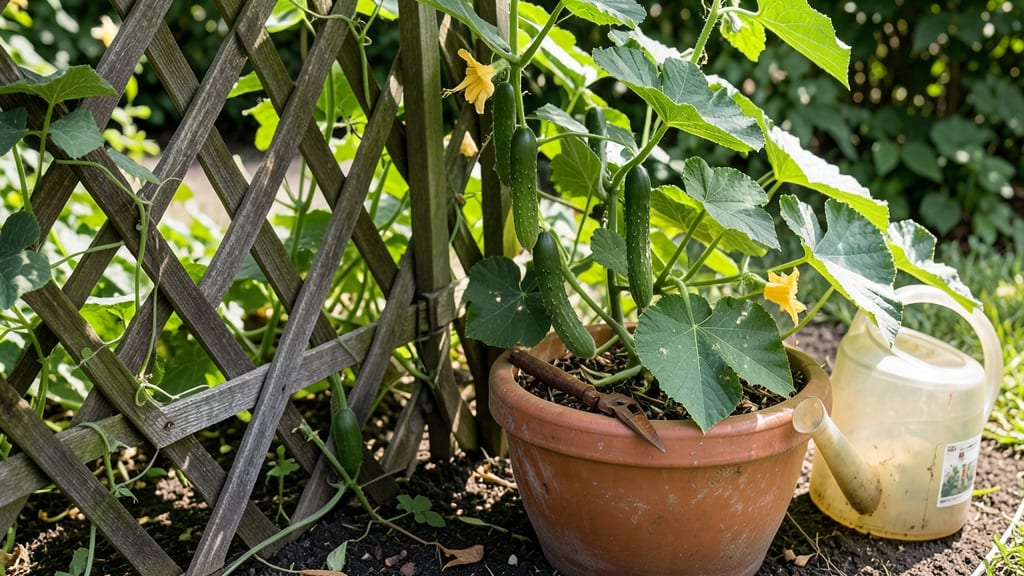
Growing cucumbers in planters turns your balcony into a vine-covered paradise. 🌱 I used to think cucumbers needed sprawling rows, but last summer's 5-gallon containers produced more fruit than my in-ground patch ever did—while staying tidy and pest-free.
The secret is vertical space: a sturdy trellis or cage lets vines climb instead of sprawl, saving room and improving air circulation. You'll need well-draining potting mix, consistent watering, and at least 6 hours of sun daily—but the payoff is crisp, homegrown cukes without the garden mess.
Start with one or two bush varieties like 'Bush Champion' for foolproof results. By midsummer, you'll be harvesting 8-inch cucumbers every few days, and the vertical display makes your patio the envy of the neighborhood. Works for apartments, rooftops, or small yards.
Here's how to set it up without the usual cucumber growing headaches!
📚 In This Guide
- What you need
- Instructions
- Tips and common mistakes
- Wrapping up and next steps
What you need
- ● Planters: At least 1 large container (5+ gallons) per cucumber plant (or a vertical trellis planter for multiple vines). Ensure they have drainage holes.
- ● Cucumber seeds or seedlings: Choose bush or compact varieties like ‘Bush Champion’ or ‘Spacemaster’ (avoid vining types unless using a trellis).
- ● High-quality potting mix: A well-draining, nutrient-rich blend (avoid garden soil—it compacts in containers).
- ● Compost or organic fertilizer: 1 cup per plant mixed into the soil for extra nutrients.
- ○ Slow-release fertilizer (optional): Granular or pellet form (e.g., 10-10-10 NPK ratio) for steady growth.
- ● Trowel or small shovel: For planting and soil amendments.
- ● Watering can or hose with a gentle nozzle: Planters dry out fast—aim for 1–2 inches of water per week.
- ● Trellis or stakes: 4–6 ft tall for vining varieties (use soft twine or garden ties to secure vines).
- ○ Mulch (optional): Straw or shredded leaves to retain moisture and suppress weeds.
- ○ Pruning shears (optional): For trimming excess leaves or dead vines to improve airflow.
Step-by-step instructions for growing cucumbers vertically in planters
Here's how I transform even the smallest balcony into a high-yield cucumber garden using vertical space.
🪴 Step 1: Select the Right Planter and Trellis System
Choose a 5-gallon container minimum per plant—cucumbers need room for roots to spread. I use fabric grow bags because they prevent root circling and allow excess water to evaporate. The trellis must support 10+ pounds per plant at maturity, so opt for metal or thick wooden frames rather than flimsy plastic.
Position the trellis directly behind the planter so vines can climb immediately. A 5-foot vertical frame gives you enough growing space for bush varieties, while 8-foot frames work better for vining types. I anchor mine to the wall with heavy-duty zip ties—this prevents tipping when vines get heavy with fruit.
🌱 Step 2: Prepare Soil and Plant with Proper Spacing
Fill your container with a lightweight potting mix blended with 20% compost and a slow-release fertilizer (I use 1 tablespoon per gallon of soil). Cucumbers hate soggy roots, so add perlite or vermiculite to improve drainage. Mix everything thoroughly—you should see air pockets when you squeeze a handful.
Plant 1-2 seeds per container (just in case), burying them 1 inch deep. Space seeds 6 inches apart if planting multiple in one large container. Once seedlings emerge, thin to the strongest one—crowding leads to weak vines and poor fruit production. I always label my containers to track varieties, especially when growing both slicing and pickling types.
☀️ Step 3: Train Vines and Manage Light Exposure
When vines reach 6 inches tall, gently weave them through the trellis using soft plant ties or old pantyhose strips. Never wrap the ties tightly—they should hold loosely enough to allow the stem to grow. I check my ties weekly because cucumber vines grow 1-2 feet daily during peak season.
Cucumbers need full sun (6+ hours daily) for best production. If your balcony gets afternoon shade, rotate the planter every 2-3 days so all sides get even light. You'll notice yellowing leaves on shaded sides first—this is your cue to adjust position immediately. A reflective surface (like white paint on the wall behind) can boost light intensity by 10-15% in low-light situations.
💧 Step 4: Water and Fertilize for Maximum Yield
Keep soil consistently moist but never soggy—cucumbers wilt fast when thirsty but also rot if overwatered. I water deeply every morning, aiming for 1-2 gallons per plant depending on container size. The top 2 inches of soil should feel dry before watering again. Use a soaker hose or drip irrigation to keep foliage dry, which prevents powdery mildew.
Feed plants every 2 weeks with a balanced liquid fertilizer (10-10-10 ratio). I mix it at half-strength to avoid burning roots—too much nitrogen gives you leaves but no fruit. Watch for yellowing between veins (magnesium deficiency) and treat with Epsom salt solution (1 tablespoon per gallon of water) if needed.
✂️ Step 5: Prune and Harvest for Continuous Production
Pinch off the first few flowers that appear—this redirects energy to establishing stronger vines. Once the plant is well-established, let it flower freely. I harvest every 2-3 days to encourage more production—overripe cucumbers turn bitter and stop the plant from setting new fruit.
Use sharp pruning shears to trim any yellow or diseased leaves immediately. Remove suckers (the small shoots that grow in the leaf axils) to focus the plant's energy on fruit production. A well-maintained vertical cucumber plant can produce 50+ pounds in a single season—just keep up with the harvesting!
Tips & tricks for vertical cucumber planters
These game-changing strategies will help you maximize your small-space harvest without common pitfalls.
Container Selection: Fabric grow bags are my go-to because they allow excess water to evaporate, preventing root rot that can plague rigid plastic containers. If you're working with limited space, consider stacking containers vertically with sturdy shelves—just ensure each plant has its own dedicated 5-gallon container. The key is avoiding overcrowding, which leads to competition for nutrients and stunted growth.
Soil Mix Strategy: The secret to thriving cucumbers in containers lies in that perfect soil blend. I always mix my lightweight potting soil with 20% compost and perlite—this creates ideal drainage while retaining enough moisture. For extra insurance, add a handful of worm castings to the mix; they introduce beneficial microbes that help prevent disease and boost plant immunity. Don't skip the air pockets test—your soil should feel light and crumbly when squeezed.
Light Management: Watch for those first signs of yellowing leaves on shaded sides—they're your plant's SOS signal. I've found that rotating containers every 2-3 days can make a dramatic difference in production, especially on partial-sun balconies. For true low-light situations, consider adding a small LED grow light for 4-6 hours daily during peak growing months. The reflective surface trick with white-painted walls works surprisingly well too—it's like giving your plants a natural boost without extra equipment.
Harvest Timing: The 2-3 day harvest window is critical—don't let those cucumbers linger on the vine! I've learned this the hard way after watching perfectly good cucumbers turn bitter and tough. Use a sharp pair of pruning shears to cut rather than twist, which prevents damage to the vine. For continuous production, I always harvest the largest cucumbers first, which encourages the plant to focus on setting new fruit. This simple habit can double your yield over the season.
Pro Tips for Cucumbers In Planters
- These game-changing strategies will help you maximize your small-space harvest without common pitfalls.
- Container Selection: Fabric grow bags are my go-to because they allow excess water to evaporate, preventing root rot that can plague rigid plastic containers.
- Soil Mix Strategy: The secret to thriving cucumbers in containers lies in that perfect soil blend.
Frequently asked questions
Can I grow cucumbers in any type of planter?
Most cucumbers thrive in 5-gallon or larger containers with drainage holes. Smaller pots (under 3 gallons) may work for bush varieties but limit growth. Opt for lightweight, durable materials like fabric grow bags or plastic containers—just ensure they’re at least 12 inches deep to accommodate roots.
How long does it take for cucumbers to grow in planters?
With proper care, cucumbers can produce fruit in 50–70 days from transplanting. Bush varieties mature faster (45–55 days), while vining types may take longer. Use a fast-growing variety like ‘Bush Champion’ for quicker harvests in compact spaces.
What if my cucumbers aren’t growing well in planters?
Check these common issues:
- Poor soil: Use a lightweight potting mix with compost.
- Lack of sunlight: Cucumbers need 6–8 hours of sun daily.
- Overcrowding: Thin seedlings to 1–2 per planter (or 1 per 12" of space).
- Underwatering: Keep soil consistently moist (not soggy).
Can I reuse the same planter for cucumbers next year?
Yes! Clean and sanitize the planter between seasons to prevent disease. Scrub with a 10% bleach solution, rinse well, and refill with fresh soil. Avoid reusing soil—it depletes nutrients and harbors pests.
Are there space-saving alternatives to traditional planters?
Try:
- Vertical towers: Use trellis planters to grow cucumbers upward, saving floor space.
- Hanging baskets: Perfect for bush varieties with lightweight mixes.
- Pallet gardens: Repurpose wooden pallets into raised planters for a rustic, efficient setup.
Wrapping up and next steps
Growing cucumbers in planters is a game-changer for small spaces, offering fresh produce without sacrificing precious garden real estate! 🌱 With the right containers, vertical support, and a few simple tips, you can enjoy homegrown cucumbers—whether you’re a balcony gardener or working with limited yard space.
The key is consistency: water wisely, prune regularly, and watch those vines climb toward sunlit success.
Ready to get started? Grab your planters, pick a sunny spot, and let your green thumb shine! Next up: Try experimenting with companion plants like beans or herbs to boost your harvest even more. Happy planting! 🌿