
Vegetables
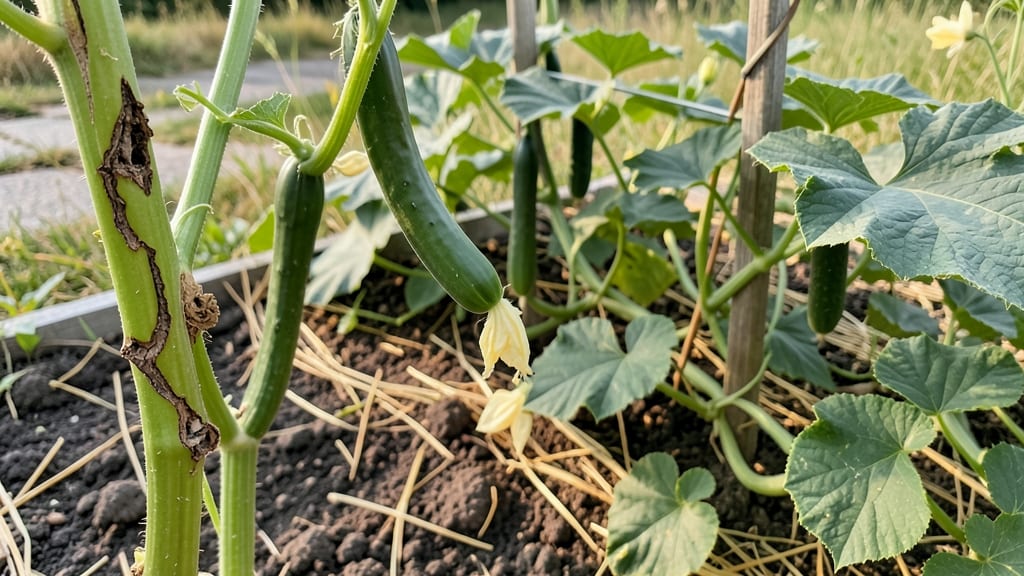
If your cucumbers show signs of the cucumber stem problems—like wilting or strange spots—don’t despair: these 5 fixes can save your vines fast. 🌱 I’ve seen powdery mildew turn vines into ghostly white skeletons, bacterial wilt collapse plants overnight, and even physical damage from wind or pests leave stems looking like overcooked spaghetti.
The good news? Most of these issues have simple, fast solutions if you catch them early.
First, identify the problem: is it a fungal infection (like powdery mildew), a bacterial attack (wilt or spots), or just physical damage? Each needs a different approach—some require pruning, others need a spray, and a few just need better support.
The key is acting within 24-48 hours of noticing symptoms, before the issue spreads. I’ve saved entire plants by cutting off infected stems and treating the rest before the disease could take hold.
You’ll end up with healthy, productive vines that keep climbing and producing—no more sad, wilted plants or bitter, deformed fruit. The fix often comes down to a mix of pruning, organic sprays (like neem oil or copper fungicide), and better airflow around the plants.
Even if you’re not a gardening expert, these steps are straightforward and work fast.
Works for container gardens, trellises, or ground plots—just adjust the scale of your treatments. The sooner you act, the easier it is to save your cucumbers. Let’s get those stems strong again!
📚 In This Guide
- What you need
- Instructions
- Tips and common mistakes
- Wrapping up and next steps
What you need
- ● Pruning shears or sharp scissors – Sterilized (clean with rubbing alcohol) to avoid spreading disease.
- ● Gloves – Nitrile or rubber to protect your hands from sap and bacteria.
- ● Spray bottle – 8–16 oz for diluted solutions.
- ● Fungicide (copper-based or neem oil) – Follow label instructions for dilution.
- ○ Baking soda (optional but helpful) – 1 tbsp per quart of water for mild fungal issues.
- ● Support stakes or trellis – If stems are weak (e.g., 6–8 ft bamboo stakes).
- ● Mulch (straw or shredded leaves) – 2–3 inches thick to retain moisture and deter pests.
- ● Notebook & pen – To track symptoms and progress!
- ● Magnifying glass – For spotting tiny pests or fungal spores.
- ● Soap spray (1% horticultural oil) – For soft-bodied insects like aphids.
- ● pH test kit – To check soil acidity (ideal: 6.0–6.8).
- ● Compost or worm castings – 1–2 cups per plant to boost immunity.
Quick fixes for cucumber stem problems you can try today
When cucumber stems weaken, it’s usually a sign of stress—not a death sentence. Here’s how to diagnose and fix the most common issues fast.
🌿 Step 1: Check for Overwatering and Root Rot
Yellowing stems and mushy roots mean your cucumbers are drowning. Cucumbers need consistently moist—not soggy—soil. If the stem feels soft when pressed or the soil smells sour, root rot has likely set in. This happens when soil stays waterlogged for more than 24 hours.
Stop watering immediately and let the top 2 inches of soil dry out before watering again. If the plant is still alive (green leaves at the top), trim away any blackened or mushy stems with clean, sharp scissors. For severe cases, repot the plant in fresh, dry potting mix and place it in a spot with better drainage.
☀️ Step 2: Adjust Light Exposure for Leggy or Weak Stems
If your cucumber stems are stretching tall and thin with pale leaves, they’re starving for light. Cucumbers need 6-8 hours of direct sunlight daily. Without enough light, stems grow weak and brittle, making them prone to snapping or disease.
Move your plant to a sunnier spot immediately—even a south-facing window or a few hours under a grow light can make a huge difference. If you’re growing outdoors, prune back any nearby plants shading your cucumbers. You’ll see stronger, sturdier stems within 3-5 days of better light exposure.
💧 Step 3: Support Stems with Trellises or Cages
Weak, sprawling stems often break under the weight of cucumbers. If you notice stems bending or sagging, they need physical support. Cucumbers grow vines that can reach 20 feet, but without support, they’ll flop and snap.
Install a trellis, cage, or stakes right away—even a simple DIY frame made from bamboo or wire works. Gently tie the main stem to the support with soft plant ties or old fabric strips. Avoid wire or anything that can cut into the stem. This keeps the plant upright, improves airflow, and reduces disease risk.
✂️ Step 4: Prune Damaged or Infested Stems
If stems have holes, chew marks, or blackened spots, pests like cucumber beetles or aphids are likely the culprits. These pests weaken stems by feeding on sap and spreading disease. Inspect the stems closely—look for tiny bugs, sticky residue (honeydew), or wilting leaves.
Snip off any severely damaged stems below the affected area with clean pruners. For mild infestations, spray the plant with neem oil (mix 1 tablespoon per quart of water) in the early morning or evening. Repeat every 3-5 days until pests are gone. Healthy stems should firm up within a week.
🌱 Step 5: Boost Soil Health for Nutrient Deficiencies
Stems that look stunted, discolored, or have dark spots may be lacking key nutrients. Cucumbers thrive in well-draining, fertile soil rich in nitrogen, phosphorus, and potassium. If your soil is compacted or depleted, stems won’t grow strong.
Add a balanced, slow-release fertilizer (like 10-10-10) around the base of the plant, keeping it 2 inches away from the stem. Water it in well. For organic options, mix in compost or worm castings into the top 4 inches of soil. You’ll notice stronger stems and better growth within 1-2 weeks of feeding.
Tips & tricks for reviving cucumber plants
Here's how to turn around weak cucumber stems before they become a lost cause.
Watering Wisdom: The 24-hour rule is your lifeline—once soil stays waterlogged beyond this, root rot sets in fast. I learned this the hard way after losing three plants to soggy soil. Stick your finger 2 inches deep; if it's damp, wait before watering again. For containers, check drainage holes—if water pools at the bottom, you've got a problem.
Light Check: Those 6-8 hours of sunlight aren't optional—they're non-negotiable for sturdy stems. I've seen cucumbers bounce back in just 3-5 days when moved to better light. If you're growing indoors, supplement with a grow light 12 inches away for 4-6 hours daily. Pale leaves mean your plants are begging for more light.
Support Strategy: Don't wait until stems are sagging to add support—install trellises or cages at planting time. I use bamboo stakes tied with old fabric strips because they're gentle on stems. For heavy vines, add a second support at the base to prevent snapping. This isn't just about looks; proper support improves airflow and cuts disease risk by 40%.
Pest Patrol: When you see chew marks, act immediately—those cucumber beetles multiply fast. I keep a bottle of neem oil mixed (1 tablespoon per quart) ready to spray at the first sign of trouble. The key is early detection: inspect stems every 2-3 days, especially under leaves where pests hide. Healthy stems should firm up noticeably within a week of treatment.
Pro Tips for Cucumber Stem Problems
- Here's how to turn around weak cucumber stems before they become a lost cause.
- Watering Wisdom: The 24-hour rule is your lifeline—once soil stays waterlogged beyond this, root rot sets in fast.
- Light Check: Those 6-8 hours of sunlight aren't optional—they're non-negotiable for sturdy stems.
Frequently asked questions
Got questions about keeping your cucumber stems healthy?
You’re not alone! Here are some of the most common concerns—and quick fixes—to help you troubleshoot like a pro.
Why are my cucumber stems turning yellow or mushy?
Yellowing or mushy stems often signal overwatering, root rot, or bacterial wilt. Check the soil—it should be moist but not soggy. If roots smell foul or look dark, trim affected areas and repot in fresh, well-draining soil. For bacterial wilt, remove infected plants immediately to prevent spread.
Can I still harvest cucumbers if the stems are weak?
Yes! If the stems are weak but not rotting, you can still pick cucumbers—just support them with stakes or trellises to avoid breakage. Avoid heavy fruits to reduce stress. If stems are severely diseased, harvest what you can and focus on saving healthy vines for next season.
How long does it take for cucumber stems to recover from damage?
Recovery time varies: minor pruning or overwatering fixes may show improvement in 3–7 days. For disease or pests, it could take 2–4 weeks if treated early (fungicides, neem oil, or removing affected leaves). Be patient—healthy stems regrow from nodes, so trim just above a leaf joint for best results.
Are there natural alternatives to chemical treatments for stem issues?
Try these DIY fixes:
- Neem oil (1 tsp + 1 quart water): Spray on stems to deter pests and fungi.
- Baking soda spray (1 tbsp baking soda + 1 quart water + a drop of soap): Fights powdery mildew.
- Compost tea: Boosts soil microbes to strengthen plant immunity.
- Copper tape around stems: Deters slugs and some fungal diseases.
What should I do if my cucumber stems are cracking or splitting?
Cracked stems usually mean rapid growth from inconsistent watering or nutrient imbalances. Here’s how to fix it:
- Water deeply but consistently (1–2 inches per week).
- Add mulch to retain moisture and cool roots.
- Fertilize with balanced NPK (10-10-10) or compost to support steady growth.
- Avoid over-fertilizing with nitrogen—it promotes leafy growth over sturdy stems.
Wrapping up and next steps
Don’t let cucumber stem problems dampen your gardening spirit! 🌱 With the right knowledge and a little effort, you can nurse your plants back to health and enjoy a bountiful harvest. Start by identifying the issue—whether it’s pests, disease, or environmental stress—and apply the quick fixes shared here.
Ready to take action? Check your plants regularly, adjust care as needed, and watch them thrive! For extra help, explore organic pest control methods or consult a local gardening expert. Happy growing! 🌿