
Vegetables
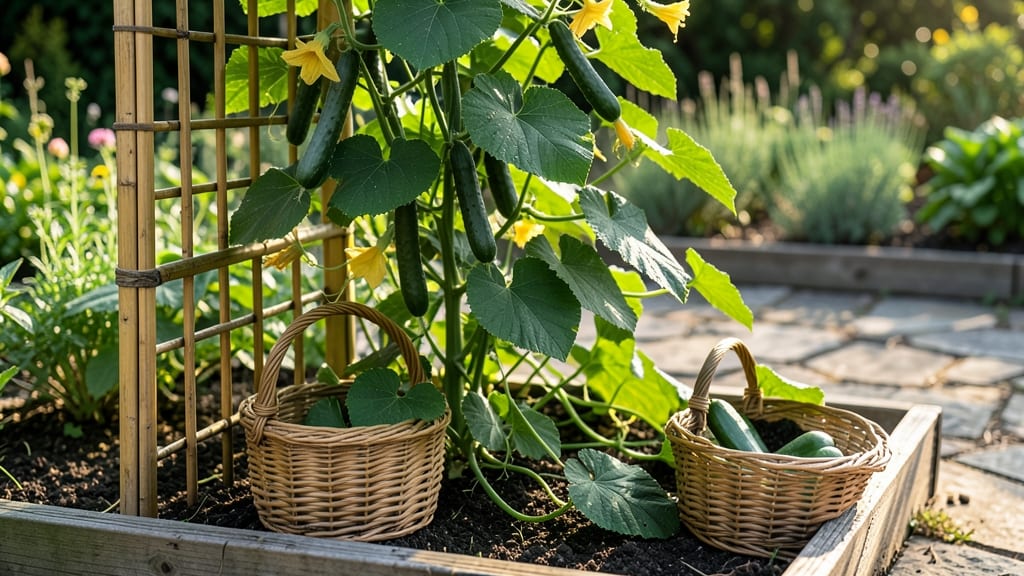
Knowing the cucumber season months means the difference between a bountiful harvest and a sad, wilted vine.
Timing is everything when growing cucumbers—plant too early or late, and you’ll miss the sweet, crisp harvest window. But with the right USDA zone planting calendar, you can extend your cucumber season for months of fresh, homegrown produce.
In warmer zones like 8-11, cucumbers thrive from March through October, while cooler zones (3-6) see their best months between May and September. The key is planting after the last frost and choosing varieties that match your climate.
Below, I break down the perfect planting windows for your zone, how to stretch your harvest into late fall, and the one mistake that ruins cucumber season every year.
Best months to plant cucumbers by USDA hardiness zones
Timing your cucumber planting by USDA hardiness zone ensures healthy vines and a bountiful harvest. Cucumbers thrive in warm soil and air, so frost-free dates and soil temperature are critical factors.
In Southern zones (8-11), you can start as early as February, while Northern zones (3-7) may wait until late May or June.
Cucumbers need at least 60°F soil temperature to germinate properly. Waiting until after the last frost date in your area prevents damage to tender seedlings. Regional variations also play a role—coastal areas may have milder winters, while inland zones face harsher conditions.
Below is a zone-specific planting calendar to help you determine the best months for your cucumber harvest. Adjust based on your local climate patterns for optimal results.
In Zones 3-5, where winters are long and cold, focus on short-season varieties like 'Northern Pickling' or 'Straight Eight'. These mature quickly and produce before the first frost.
Plant after your last frost date, typically in late May or early June, and use black plastic mulch to warm the soil faster.
For Zones 6-7, you have more flexibility. Start seeds indoors in late March and transplant outdoors in mid-April to late May. Varieties like 'Marketmore' or 'Lemon Cucumber' thrive in these zones. If your summer is hot, provide afternoon shade to prevent sunscald on fruits.
In warmer zones (8-11), cucumbers can grow year-round with minimal winter breaks. Plant in February or March for spring harvests and again in August for fall production.
Choose heat-tolerant varieties like 'Suyo Long' or 'Armenian Cucumber' to handle high temperatures. In Zone 11, you can even grow cucumbers in winter with protection.
Always check your local frost dates and adjust planting times accordingly. For example, if your area has an unusually late frost, delay planting until after May 15, even if the general guideline suggests earlier. Use a soil thermometer to confirm temperatures meet the 60°F minimum before planting.
If you live in a transition zone, like Zone 7b, you can experiment with early spring planting under row covers or in a greenhouse. Start seeds indoors in March and transplant outdoors in April, using protective covers until soil warms up.
This extends your growing season by 3-4 weeks.
Remember, cucumber varieties also influence planting times. Bush varieties like 'Bush Champion' mature faster than vining types, making them ideal for shorter growing seasons. Meanwhile, trellised varieties like 'Sweet Success' take longer but produce more consistently in warm climates.
By aligning your planting schedule with your USDA zone and local climate, you’ll maximize your cucumber harvest and enjoy fresh, homegrown produce for months. Keep an eye on weather forecasts and adjust as needed—flexibility is key to a successful garden!
How to extend your cucumber season for longer harvests
Want to enjoy fresh cucumbers well beyond the typical summer harvest? With the right techniques, you can push your cucumber season into late fall or even early spring, giving you months of homegrown produce.
The key lies in strategic planting, protective structures, and choosing the right varieties for your climate zone. Let me show you how to maximize your harvest window using proven methods that work in my garden—and yours!
Cucumbers thrive in warm soil and air, but their growing season can be extended by 2-3 months with minimal effort. Whether you're in a cool northern zone or a mild southern climate, these tactics will help you avoid the frustration of a short harvest window.
The best part? Many of these methods require little more than what you already have in your garden toolbox.
- Start with heat-tolerant varieties like 'Straight Eight' or 'Marketmore'—these thrive in 80°F+ temperatures and produce well into September.
- Use row covers in early spring (after last frost) to warm soil and protect young plants from light frosts—this can add 3-4 weeks to your growing season.
- Implement succession planting: Sow seeds every 2 weeks from May through July for a staggered harvest until frost.
- Harvest aggressively—picking cucumbers every 2-3 days encourages vines to produce more, extending the harvest by 4-6 weeks.
- Use cold frames or low tunnels in fall to trap heat and delay frost damage, pushing harvests into November or December in mild zones.
One of my favorite tricks is succession planting—this means planting new cucumber seeds every 2 weeks throughout the growing season. For example, in USDA Zone 6, I start my first planting in early May, then follow up with seeds every 14 days until mid-July.
This staggered approach ensures I have fresh cucumbers from June through September, with some late varieties lasting into October if protected.
For those chilly mornings in spring or early fall, row covers are a game-changer. These lightweight fabrics create a microclimate that warms the soil by 5-10°F, allowing cucumbers to germinate and grow faster.
In my experience, using row covers in Zone 5 lets me plant cucumbers 2-3 weeks earlier than usual, giving me an earlier harvest. Just remember to remove them during hot days to prevent overheating.
If you're in a warmer climate like Zone 8 or higher, focus on late-season varieties and shade cloth to protect plants from extreme heat. Varieties like 'Lemon Cucumber' or 'Armenian Cucumber' handle heat better than standard slicing types.
Pair this with drip irrigation to keep roots cool, and you’ll extend your harvest well into November—or even December in coastal areas.
Finally, don’t overlook the power of cold frames for fall harvests. A simple cold frame can add 4-6 weeks to your growing season by trapping heat during the day and insulating plants at night.
I’ve used them to grow cucumbers in Zone 6 until early November, long after my neighbors’ plants have died back. Just be sure to vent the frame on warm days to prevent condensation and fungal issues.