
Plants
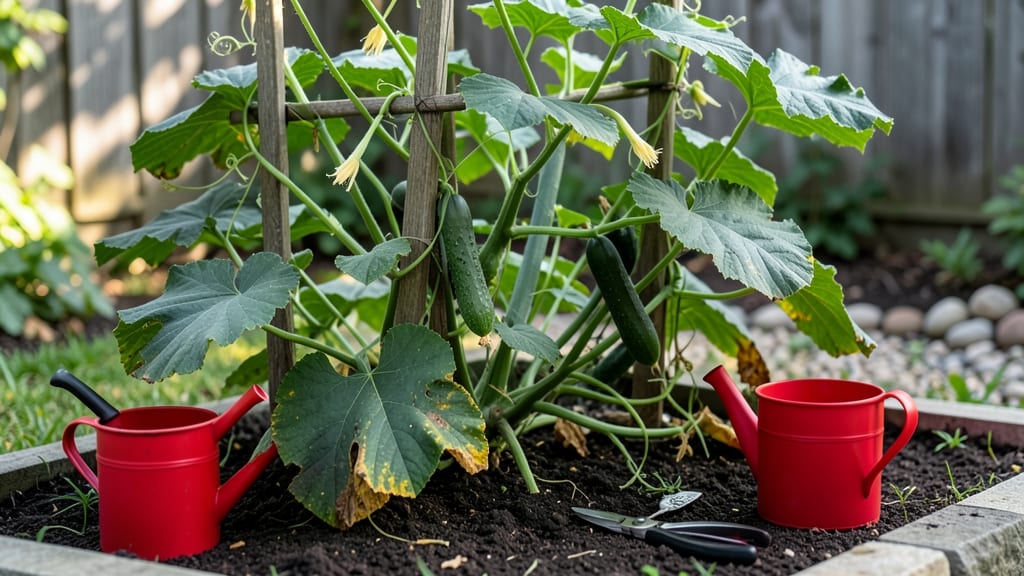
Cucumber plants turning yellow isn't the end of your harvest—it's a call for action. 🌱 I've seen this happen more than I'd like to admit, usually when the soil's missing key nutrients or watering gets out of balance.
The good news? Fixing it is simpler than you think, and you'll have crisp cucumbers again in no time.
Yellowing leaves often point to nitrogen deficiency, but it could also be magnesium, overwatering, or even fungal stress. The key is checking the pattern: edges turning yellow?
Likely nitrogen. Entire leaves yellowing? Probably water or magnesium. I always start by adjusting watering—cucumbers hate soggy roots—and then test the soil pH to rule out deficiencies.
Within days, you'll see new green growth as the plant recovers. Use a balanced organic fertilizer for nitrogen, Epsom salt for magnesium, and make sure your plants get consistent moisture—not too much, not too little.
Prevention is easy: mulch to retain moisture, space plants properly for airflow, and rotate crops yearly.
This fix works for backyard gardens, containers, or raised beds. The same principles apply whether you're growing bush varieties or vining cucumbers. Let's get those plants back to their vibrant best before the yellow spreads further.
Root Causes Behind Yellowing Leaves
When your cucumber plants start showing yellow leaves, it’s often a cry for help from the plant itself. Understanding the why behind this discoloration is the first step to saving your harvest.
Below, we break down the most common—and fixable—reasons your cucumbers are turning yellow, backed by science and actionable insights.
Yellowing leaves can be a classic sign of water stress, but not always from a lack of water—sometimes, it’s from too much. Cucumbers thrive in well-draining soil with consistent moisture, but soggy roots lead to oxygen deprivation, which triggers chlorophyll breakdown (the green pigment in leaves).
- The science: When roots sit in waterlogged soil, they can’t absorb oxygen efficiently. This leads to anaerobic conditions, where harmful bacteria and fungi thrive, damaging root cells and cutting off nutrient flow.
The older leaves (closest to the soil) yellow first because they’re the plant’s "sacrificial zone"—they lose nutrients to protect younger growth. - Actionable fix: - Test your soil: Stick your finger 1–2 inches deep—if it’s damp, hold off on watering.
Cucumbers need 1–1.5 inches of water per week, but adjust for rain. - Improve drainage: Amend heavy clay soil with compost or perlite (20–30% mix).
If growing in containers, ensure pots have drainage holes and elevate them slightly. - Mulch wisely: Use straw or wood chips (2–3 inches thick) to retain moisture without smothering roots. Avoid plastic mulch, which traps heat and moisture.
Yellowing leaves are often a nutritional red flag, and nitrogen (N) is the most common culprit. Nitrogen is the building block of chlorophyll, so when levels drop, leaves lose their green hue—starting with the older leaves (a process called senescence).
- The science: Nitrogen deficiency stalls plant growth, causing leaves to turn pale yellow or yellow-green.
This happens when: - Soil is depleted (cucumbers are heavy feeders). - You’re using low-quality fertilizer (e.g., slow-release only). - The pH is too high (alkaline soil locks out nitrogen). - Actionable fix: - Soil test first: Use a DIY test kit (like LaMotte) or send a sample to a local extension office.
Ideal pH for cucumbers: 6.0–6.8. - Quick nitrogen boost: Apply a balanced fertilizer (10-10-10 or 5-5-5) or compost tea (steep 1 part compost in 5 parts water for 24 hours, strain, and water plants).
For organic growers, try blood meal (1 tbsp per plant) or fish emulsion. - Side-dress: Sprinkle granular fertilizer 2–3 inches from the stem (not touching leaves) and water in. Repeat every 3–4 weeks.
Hidden invaders can sap nutrients or physically damage leaves, causing yellowing. Look for uneven discoloration, spots, or wilting—these are clues pests or pathogens are at work.
- Common culprits: - Aphids/spider mites: These tiny pests pierce leaves, sucking out chlorophyll-rich sap.
You’ll see stippled yellowing or webbing. - Powdery mildew: A fungal infection causing yellow patches with white powdery spots (common in humid conditions). - Root rot (Fusarium/Pythium): Yellowing + mushy stems = roots are rotting from overwatering or fungal infection. - Actionable fix: - Inspect leaves: Flip leaves over and check undersides for bugs, eggs, or webs.
Use a magnifying glass if needed. - Targeted treatment: - Pests: Spray with neem oil (1 tbsp per quart of water) or insecticidal soap.
For severe infestations, introduce ladybugs (natural predators). - Fungal diseases: Apply baking soda spray (1 tsp baking soda + 1 quart water + a drop of dish soap) or copper fungicide. Space plants for airflow (3–4 feet apart). - Root rot: Remove infected plants immediately.
Disinfect soil with hydrogen peroxide (3%) or vinegar rinse (1 part vinegar to 3 parts water).
Cucumbers are warm-season crops (70–90°F ideal). Extreme temperatures—whether scorching heat or chilly nights—can shock the plant, causing leaves to yellow as a survival mechanism.
- The science: - Heat stress: Temperatures above 95°F cause protein denaturation, disrupting photosynthesis. Leaves may also scorch (brown edges) or curl. - Cold stress: Below 50°F, cucumber growth stalls, and chlorophyll production slows.
Young leaves may yellow, and plants become stunted. - Actionable fix: - Shade cloth: Use 30–50% shade cloth during peak summer heat (12–4 PM). - Mulch heavily: Black plastic or straw mulch keeps roots 5–10°F warmer in spring/fall. - Adjust planting time: In hot climates, opt for heat-tolerant varieties (e.g., ‘Straight Eight’ or ‘Marketmore 76’).
In cool areas, use row covers at night. - Water deeply: During heatwaves, water early morning (6–9 AM) to reduce evaporation and stress.
Even after careful planting, cucumbers can yellow if their roots are disturbed or they struggle to adapt to a new environment.
- The science: When roots are damaged (e.g., during transplanting or weeding), the plant prioritizes root regrowth over leaf function.
This triggers nutrient redistribution, causing older leaves to yellow as the plant "recycles" resources. - Actionable fix: - Handle roots gently: If repotting, water plants 1–2 days before transplanting to reduce stress.
Use a larger pot (5+ gallons) if container-grown. - Avoid over-weeding: Cucumbers have shallow roots—disturbing soil too close to the stem can harm them.
Weed gently with a hand fork. - Root stimulator: After transplanting, soak roots in water + seaweed extract (1 tsp per gallon) for 10 minutes to boost recovery.
Sometimes, the problem isn’t a deficiency—it’s an overdose. Over-fertilizing or using synthetic chemicals can burn roots, leading to yellowing.
- Common triggers:
- Salt buildup: From tap water (high in chlorides/sulfates) or over-fertilizing with synthetic salts.
- Herbicide drift: Nearby weed killers (like glyphosate) can leach into soil, damaging cucumber roots.
- Actionable fix:
- Flush soil: Water heavily with rainwater or distilled water to leach out salts.
- Test water: If using tap water, let it sit out for 24 hours before watering to reduce chlorine.
- Organic switch: Replace synthetic fertilizers with compost, worm castings, or fish emulsion to avoid chemical burn.
Fix Yellowing Cucumbers Fast
Now that you know why your cucumber plants are turning yellow, let’s roll up our sleeves and get them back to their vibrant green selves! 🌱💚 The good news? Most of these fixes are simple, cost-effective, and require minimal effort.
Below, we’ve broken down the most common causes and matched them with step-by-step solutions—plus pro tips to keep your plants thriving long-term.
If your cucumbers are wilting or their leaves are yellowing (especially near the base), overwatering or soggy soil could be the culprit. Waterlogged roots struggle to absorb oxygen, leading to root rot and nutrient starvation.
How to Fix It:
- 👨🍳 Check the Soil Moisture
- Stick your finger 1-2 inches into the soil. If it’s damp or muddy, your plants are getting too much water.
- Pro Tip: Use a moisture meter for accuracy—no more guesswork!
- 🔪 Improve Drainage
- If your pots or garden bed retain too much water, add perlite, sand, or compost to loosen the soil.
- For container gardens, ensure pots have drainage holes (if not, drill them!). Elevate pots on saucers or bricks to prevent water pooling.
- ⏰ Adjust Your Watering Routine
- Water deeply but less frequently—aim for 1-1.5 inches per week (including rain).
- Water at the base of the plant (not the leaves) in the early morning to reduce fungal risks.
- Prevention Tip: Mulch around plants with straw or shredded leaves to retain moisture without over-saturating the soil.
Yellowing leaves with crispy or brown edges? Your cucumbers might be sunburned or heat-stressed, especially in peak summer.
How to Fix It:
- 🌿 Provide Partial Shade
- If your plants are in full sun (6+ hours/day), move them to a spot with 4-6 hours of morning sun + afternoon shade.
- Use lightweight shade cloth (30-50%) if relocating isn’t an option.
- 💧 Boost Hydration During Heatwaves
- Water more frequently (but still deeply) during extreme heat—early morning or late evening only.
- Pro Tip: Mist leaves gently in the evening to cool them down (avoid wetting leaves in direct sun).
- 🎯 Choose Heat-Tolerant Varieties
- If you live in a hot climate, opt for heat-resistant cucumbers like ‘Straight Eight’ or ‘Lemon Cucumber’.
Yellow leaves with green veins (especially on older leaves) often signal a nutrient deficiency, like nitrogen, magnesium, or iron.
How to Fix It (Pick Your Problem):
| Symptom | Likely Deficiency | Quick Fix | Prevention Tip |
|---|---|---|---|
| Pale yellow leaves | Nitrogen (N) | Apply balanced fertilizer (10-10-10) or compost tea. | Side-dress with alfalfa meal every 4 weeks. |
| Yellow edges, crispy | Magnesium (Mg) | Spray Epsom salt solution (1 tbsp per gallon of water) weekly for 2 weeks. | Add dolomitic lime to soil in fall. |
| Yellow between veins | Iron (Fe) | Use chelated iron supplement or fish emulsion. | Test soil pH—iron absorbs best at 6.0-7.0. |
| Stunted growth + yellow | Potassium (K) | Feed with banana peel tea or potassium-rich fertilizer (like 0-0-50). | Add wood ash or greensand to soil. |
💡 Pro Tip: For organic fixes, try liquid seaweed extract—it’s packed with micronutrients and stress-relief hormones!
Yellowing leaves with holes, spots, or sticky residue? Pests like aphids, spider mites, or powdery mildew could be to blame.
How to Fix It:
- 🦟 Identify the Culprit
- Aphids? Look for sticky honeydew and curled leaves.
- Spider mites? Check for tiny webs on undersides of leaves.
- Fungal spots? Yellow patches with white powder = powdery mildew.
- 🚿 Blast Them Off
- For pests: Spray with neem oil solution (1 tsp neem oil + 1 tsp mild soap per quart of water). Repeat every 3-5 days.
- For mildew: Apply baking soda spray (1 tbsp baking soda + 1 tsp oil + 1 gallon water).
- 🌡️ Improve Airflow
- Space plants 12-24 inches apart to reduce humidity and fungal growth.
- Prune overcrowded vines for better airflow.
✨ Prevention Tip: Rotate crops yearly to prevent soil-borne diseases from building up.
If your cucumber plant is severely yellow, wilted, or mushy at the base, it might be beyond saving. Here’s how to decide:
- 🔄 Save It If:
- Only a few leaves are yellow (not the whole plant).
- The stem is still firm (not soft or black).
- You’ve adjusted water/nutrients and seen improvement in 3-5 days.
- 🗑️ Replace It If:
- Root rot (smells foul, black roots).
- More than 50% of leaves are yellow/crispy.
- The plant won’t perk up after 1 week of care.
💡 Pro Tip: If you’re replacing, sterilize your pots with a 10% bleach solution to kill lingering pathogens!
Final Thought: Most yellowing cucumbers recover within a week of proper care. Stay consistent with watering, nutrients, and pest control, and your plants will bounce back stronger than ever! 🚀🌿
Frequently asked questions about cucumber plants turning yellow
Why do older leaves turn yellow first?
Cucumbers use a survival strategy called senescence—older leaves yellow to redirect nutrients to new growth. This is normal as long as younger leaves stay green. If new leaves are also yellowing, check for nutrient deficiencies or pests.
Is yellowing always a sign of a problem?
Not always! Some yellowing happens naturally as leaves age, especially in hot weather. The red flag is when more than 20% of leaves yellow suddenly, or if the yellow spreads to new growth. Healthy plants should have mostly green leaves with just a few yellowing at the base.
How quickly should I see improvement after fixing the issue?
With proper care, you should notice new green growth within 3-5 days. For nutrient deficiencies, it may take 1-2 weeks to see full recovery. If no improvement occurs after 7 days, re-evaluate the cause—it might be a more serious issue like root rot.
Can I still harvest cucumbers if the leaves are yellow?
Yes! The fruit forms from the plant's energy, not the leaves. However, severe yellowing can reduce yield. Harvest any cucumbers that are half their mature size to encourage more production. Avoid harvesting when plants are under extreme stress (like heatwave or disease).
What's the easiest way to test for nutrient deficiencies?
Do a simple DIY soil test with a kit (like LaMotte) or send a sample to your local extension office. For quick checks: Nitrogen deficiency shows as pale yellow leaves; magnesium causes yellow between veins; potassium results in yellow edges with brown spots.