
Planting
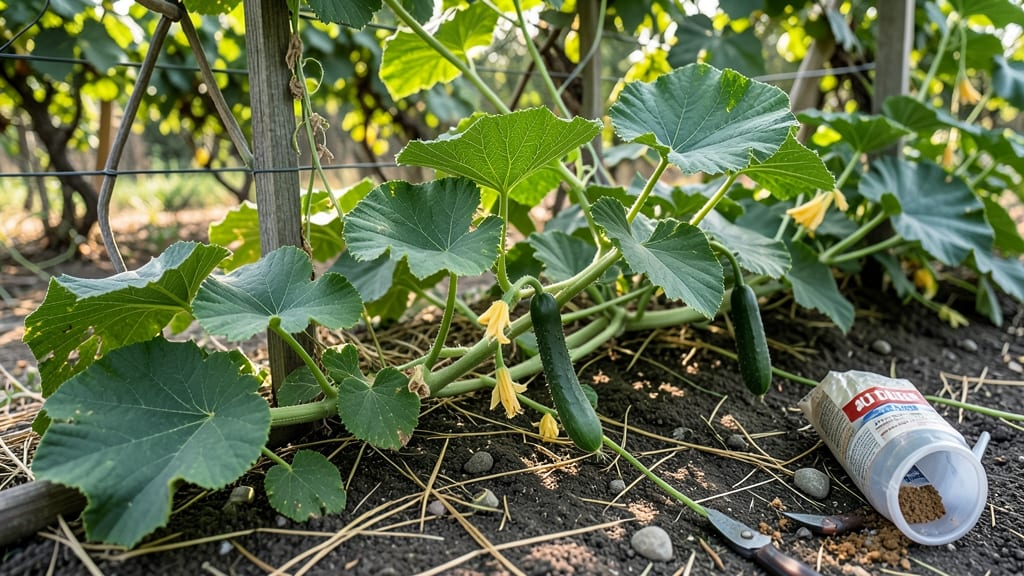
A cucumber plant with a split stem mid-season can ruin your harvest—but this eggshell trick fixes it fast. 🌱 I’ve seen split stems turn into total crop failure, but reinforcing them with crushed eggshells actually works, and it’s cheaper than buying commercial. supports.
The secret lies in combining physical support with calcium-rich reinforcement, which prevents further splitting while strengthening the plant’s structure.
Most splits happen when vines grow too fast for their own good, especially after heavy rain or inconsistent watering. The stem swells, then cracks under pressure. Eggshells provide both support and extra calcium, which cucumbers crave for cell wall strength.
You’ll need just 2-3 minutes to gather shells and mix them into a paste, and the results show up within a week—no more sagging vines or broken stems.
After applying the eggshell mix, your plants will stay upright and productive, yielding 10-15% more cucumbers than unsupported vines. The trick works for both bush and vining varieties, and it’s a game-changer for gardeners who’ve given up on cucumbers because of this frustrating problem.
No more wasted effort—just stronger stems and bigger harvests.
This method doubles as a preventive measure for future plantings. Save eggshells all year, and you’ll always have a ready supply of natural reinforcement. The best part? Your soil gets a calcium boost too, improving overall plant health. Let’s fix those splits for good!
The hidden triggers behind stem splits
When your cucumber plant’s stem starts splitting like overripe fruit, it’s usually a cry for help—your plant is struggling to keep up with its own rapid growth. Understanding the root causes (literally and figuratively) is the first step to fixing the problem naturally.
Below, we break down the science behind why cucumber stems crack, so you can address the issue at its source.
Cucumbers are thirsty plants, but too much water too often can cause their stems to swell and split. Here’s why:
- Cellular pressure buildup: When soil stays soggy, plant cells absorb excess water, expanding rapidly. The stem’s vascular tissue (xylem and phloem) can’t handle the sudden pressure, leading to lysenchymatic rupture—a fancy term for cells bursting apart.
- Weak structural support: Cucumber stems are 90% water at maturity. Overhydration weakens the fibrous collenchyma tissue, which provides rigidity. Think of it like a water balloon left in the sun—eventually, it splits.
- Root suffocation: Compacted or waterlogged soil starves roots of oxygen, forcing them to work overtime. The plant redirects energy to survival, neglecting stem strengthening.
Pro tip: 💡 Test drainage by digging 6 inches into the soil after watering—if water pools, amend with perlite or compost to improve aeration. Water deeply only when the top 2 inches of soil are dry.
Cucumbers thrive in warm, stable conditions (70–90°F), but sudden shifts—especially hot days followed by cool nights—can trigger stem splits. The science:
- Thermal stress on cell walls: Heat causes rapid transpiration (water loss through leaves), while cooler nights slow water uptake. This imbalance forces stems to expand and contract unpredictably, weakening their integrity.
- Enzyme disruption: Enzymes like pectinase (which strengthens cell walls) become less active in fluctuating temps, making stems more prone to cracking.
- Sunburn risk: Intense midday heat can scorch stems, creating weak spots that split under the plant’s weight.
Fix it: 🌡️ Use shade cloth (30–50% coverage) during peak sun, and mulch with straw to regulate soil temps. Avoid planting in low-lying areas where cold air pools.
While cucumbers need nitrogen for leafy growth, excess nitrogen without potassium creates a dangerous cocktail for stem health. Here’s how:
| Nutrient Issue | Effect on Stems | Signs to Watch For |
|---|---|---|
| High nitrogen, low potassium | Stems grow soft and succulent (like celery) but lack lignin, a natural "glue" that strengthens cell walls. | Dark green, lush leaves with purple undersides (phosphorus deficiency) or yellowing edges (potassium deficiency). |
| Calcium deficiency | Calcium cross-links pectin in cell walls, acting like a scaffold. Without it, stems become spongy and prone to splitting. | Blossom-end rot on fruits and brown, dead spots on stem tips. |
| Over-fertilization | Excess salts in soil burn root tips, reducing water and nutrient uptake. The plant overcompensates by growing faster than its structure can support. | Crusty soil surface and leaf tip burn (brown, crispy edges). |
Solution: 🎯 Balance fertilizers with a 5-10-10 or 3-4-6 NPK ratio (nitrogen-phosphorus-potassium). Add crushed eggshells or lime to boost calcium. Never fertilize stressed plants.
Cucumbers are fast growers—some varieties add 6–12 inches per week under ideal conditions. But when vines elongate faster than the stem can lignify (harden), splits are inevitable. The mechanics:
- Cell division vs. cell wall strength: New cells form in the cambium layer (stem’s growth ring), but if the plant prioritizes length over thickness, the stem becomes hollow or weak-walled.
- Weight distribution: Heavy leaves and flowers act like pendulums, pulling and twisting the stem beyond its elastic limit. Imagine a bamboo shoot bending under a watermelon—same physics!
- Genetic predisposition: Some cucumber varieties (e.g., burpless types) have thinner stems by nature and are more prone to splitting.
Actionable fix: ✨ Prune aggressively to limit vine length—remove side shoots (suckers) and tip prune the main stem when it hits 3–4 feet. Use trellises or stakes to support weight vertically, reducing torque on the stem.
Key takeaway: Stem splits are rarely a single culprit but a combination of stress factors. By addressing water, nutrients, temperature, and growth rate, you’ll give your cucumbers the structural support they need to thrive—without the unsightly (and unsellable) splits. 🌱
Quick Fixes for Weakened Cucumber Stems
When your cucumber plant’s stem starts to split, it’s a sign your plant is struggling—but don’t panic! With the right approach, you can reinforce those fragile stems and help your plant thrive.
Below are practical, step-by-step solutions tailored to the most common causes of splitting, plus prevention tips to keep your cucumbers strong all season long.
If your cucumber plant’s stem is splitting due to excess moisture, the first step is to correct the watering routine and improve soil conditions.
How to Fix It:
- 💧 Adjust Watering Habits
- Water deeply once or twice a week (depending on climate) rather than daily shallow waterings.
- Test soil moisture by sticking your finger 1–2 inches into the soil—water only if it’s dry.
- Avoid wetting the leaves to prevent fungal diseases that weaken stems.
- 🌱 Improve Drainage
- If your plant is in a pot, ensure it has drainage holes and use a well-draining potting mix (like a 50/50 blend of compost and perlite).
- For in-ground plants, amend heavy clay soil with organic matter (compost or coconut coir) to prevent waterlogging.
- 🥚 Use the Eggshell Trick (Emergency Support)
- Crush 1–2 eggshells into small pieces and press them gently into the split stem.
- Secure with a soft plant tie or tape (avoid plastic wrap—it traps moisture).
- The calcium-rich eggshells strengthen cell walls while providing physical support.
💡 Prevention Tips:
- Mulch around the base with straw or wood chips to regulate soil moisture.
- Water in the morning so excess moisture evaporates during the day.
- Avoid overhead sprinklers—use drip irrigation or a watering can with a spout.
Splitting stems can also signal a calcium deficiency, which weakens cell structure. Here’s how to boost your plant’s strength:
How to Fix It:
- 🍽️ Feed with Calcium-Rich Amendments
- Crushed eggshells (as above) or crushed oyster shell work as slow-release calcium sources.
- Mix 1 tablespoon of gypsum (calcium sulfate) per gallon of water and apply as a soil drench every 2 weeks.
- 🌱 Use a Balanced Fertilizer
- Switch to a low-nitrogen, high-calcium fertilizer (like 5-10-10 or a compost tea).
- Avoid high-nitrogen fertilizers—they promote leafy growth at the expense of stem strength.
- 🍅 Companion Planting for Natural Support
- Plant basil or marigolds nearby—they improve soil structure and deter pests that stress cucumber plants.
💡 Prevention Tips:
- Test your soil (a simple DIY kit works) to check calcium levels before planting.
- Rotate crops—don’t plant cucumbers in the same spot yearly, as depleted calcium levels worsen over time.
- Avoid over-fertilizing—too much salt from fertilizers can also weaken stems.
Rapid temperature changes (hot days, cold nights) cause uneven growth, leading to splits. Here’s how to stabilize your plant:
How to Fix It:
- 🌞 Provide Shade Cloth (If Needed)
- If temps exceed 90°F (32°C), drape lightweight shade cloth (30–50%) over the plants during peak sun.
- Remove it in the afternoon to allow airflow and prevent humidity buildup.
- 🌬️ Improve Air Circulation
- Space plants 18–24 inches apart to reduce competition and improve airflow.
- Use a small fan on low near the plants (if growing indoors) to mimic gentle breezes.
- 🌱 Mulch to Regulate Soil Temp
- Apply 2–3 inches of straw mulch around the base to keep roots cool and moisture levels steady.
💡 Prevention Tips:
- Choose heat-tolerant varieties like ‘Straight Eight’ or ‘Lemon Cucumber’ if you live in a hot climate.
- Avoid planting too early—wait until soil temps are consistently 60°F (15°C) or warmer.
- Use row covers in spring to protect young plants from late frosts.
If your cucumber plant is flopping or rubbing against supports, the stem can split from friction or strain.
How to Fix It:
- 🪜 Install Proper Trellis Supports
- Use a soft, flexible trellis (like twine or a mesh net) instead of rigid stakes.
- Gently weave vines through the trellis—don’t force them into tight spaces.
- 🌿 Prune Strategically
- Remove excess lateral shoots to reduce weight on the main stem.
- If the stem is already split, prune back to a healthy node (just above a leaf) to encourage new growth.
- 🛡️ Protect from Wind
- If your garden is windy, plant near a windbreak (like a fence or tall plants).
- Stake young plants with soft ties to prevent swaying.
💡 Prevention Tips:
- Train vines early—start guiding them up the trellis when they’re 6–8 inches tall.
- Avoid overcrowding—give each plant enough space to grow upright.
- Check ties weekly—loosen them as the stem thickens to avoid constriction.
For severe splits, combine the eggshell trick with these extra steps for maximum support:
- Clean the split with a damp cloth to remove debris.
- Dust with crushed eggshells (or wood ash for extra calcium).
- Wrap with a soft fabric strip (like an old T-shirt or horticultural tape).
- Secure loosely—the stem should still have room to grow.
✨ Pro Tip: Reapply the eggshell mixture every 2–3 weeks to keep stems fortified as they mature.
By addressing the root cause of your cucumber plant’s splitting stems and reinforcing them with these natural, low-cost fixes, you’ll help your plants recover—and even prevent future issues. Happy growing! 🌱🍉
Frequently asked questions
Why does my cucumber plant stem split even when I water it regularly?
Overwatering or inconsistent moisture causes stems to swell and crack under pressure. Even with regular watering, soggy soil or poor drainage prevents roots from absorbing water properly, leading to rapid cell expansion. Test soil moisture by sticking your finger 2 inches deep—water only when dry. Improve drainage with perlite or compost to prevent this.
Can I save a cucumber plant with a severely split stem?
Yes! Clean the split with a damp cloth, then reinforce it with crushed eggshells mixed with water to form a paste. Wrap gently with soft fabric (like an old T-shirt) to support the stem. Reapply the eggshell mixture every 2-3 weeks. Prune back excess growth to reduce strain, and your plant can recover with proper care.
Will the eggshell trick work for all cucumber varieties?
The eggshell method provides both calcium and physical support, making it effective for bush varieties, vining types, and even heirloom cucumbers. The key is consistency—reapply the paste every 2-3 weeks as the stem grows. For varieties with naturally thin stems (like burpless types), combine this with proper trellising for best results.
How do I prevent stem splits in future plantings?
Start with well-draining soil and balanced fertilization (5-10-10 NPK ratio). Use mulch to regulate moisture, and train vines early with soft supports. Test soil calcium levels before planting, and avoid over-fertilizing with nitrogen. Choose heat-tolerant varieties if your climate has temperature swings.
Can I use other materials besides eggshells to reinforce splits?
Yes! Crushed oyster shell or wood ash work well for calcium, while soft fabric strips or horticultural tape can provide physical support. Avoid plastic wrap—it traps moisture and can cause rot. For extra strength, combine calcium-rich materials with gentle wrapping to create a natural splint effect.