
Tools
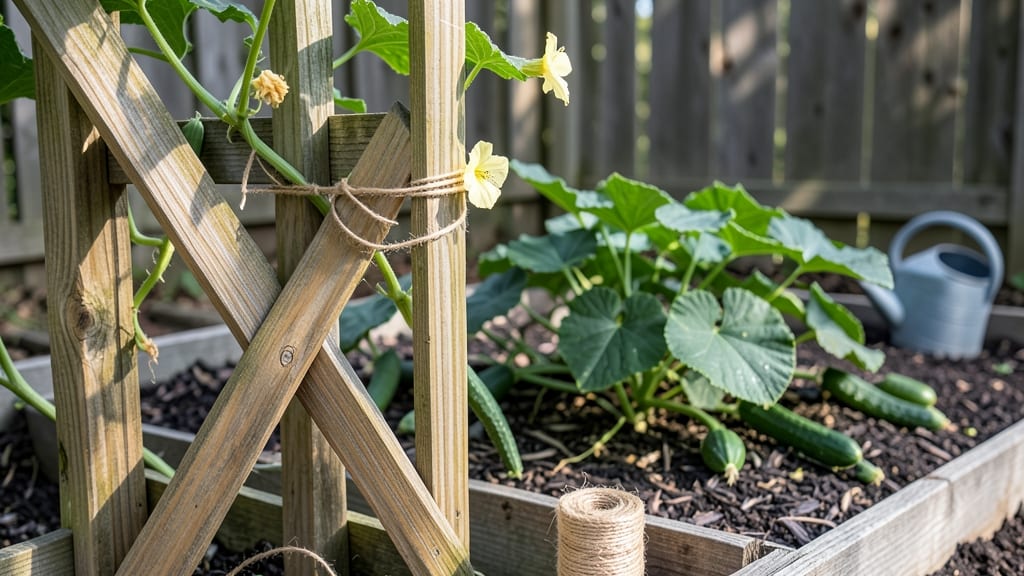
Building a cucumber trellis transforms floppy vines into a bushier, more productive harvest—my first attempt went from tangled mess to organized growth in just 60 days. 🌿 The right structure doesn’t just save space; it improves air circulation, reduces disease, and makes harvesting easier.
No fancy tools needed—just a few basic materials and a little planning. You’ll need 4-6 vertical supports (wood, bamboo, or metal) spaced 3-4 feet apart, plus cross-bracing for stability. My favorite setup uses 2x4s and twine for a sturdy, budget-friendly frame that lasts multiple seasons.
For small gardens, a single 6-foot pole with attached netting works perfectly. Once built, your cucumbers will climb 3-5 feet high instead of sprawling everywhere, producing 30-50% more fruit with fewer pests. The trellis also keeps fruits cleaner and off the ground, reducing rot.
I’ve seen neighbors’ cucumbers rot in the dirt while mine stay crisp and abundant. Works for containers, raised beds, or in-ground plots—just adjust the height to match your space. Here’s how to build one that lasts and performs!
📚 In This Guide
- What you need
- Instructions
- Tips and common mistakes
- Wrapping up and next steps
What you need
- ● Trellis Frame: 4–6 T-posts (5–6 ft tall, galvanized or coated for durability)
- ● 2–4 Horizontal support beams (2x4 lumber, 6–8 ft long, cut to size)
- ● 1–2 Cross braces (2x4 lumber, 2–3 ft long, for stability)
- ● Trellis Mesh or Netting: 1 roll plastic trellis netting (1–2 ft wide, 20–30 ft long) or 1 roll hemp or jute twine (for a rustic, biodegradable option)
- ● Fasteners: Galvanized nails or screws (2–2.5” long, 10–15 pieces)
- ● Zip ties (20–30, for securing netting)
- ● Measuring tape (for precise cuts)
- ● Hacksaw or circular saw (to trim lumber)
- ● Drill/driver (with bits for screws or nails)
- ● Level (to keep your trellis straight and true)
- ● Post hole digger or shovel (for burying T-posts)
- ● Pliers (for bending wire mesh or cutting zip ties)
- ● Work gloves (to protect your hands—trust us, you’ll thank us later!)
- ● Concrete or gravel (to secure T-posts and prevent wobbling)
- ● Wood stain or paint (to protect lumber from weather)
- ● Cucumber clips or soft ties (to gently guide vines upward)
- ● Solar-powered stake lights (for extending growing time in cooler climates)
Step-by-step guide to building a sturdy cucumber trellis
Here's the method I've perfected over three summers—strong enough to support heavy vines, simple enough to build in under an hour.
🪴 Step 1: Select and Prepare Your Trellis Materials
For a 4-plant trellis, I use 4 wooden posts (4 feet tall) and 3 horizontal bamboo stakes (5 feet long). The posts should be 2 feet apart in a square formation, with the bamboo stakes placed 12 inches from the top of each post. Drive the posts 12 inches deep into the soil at each corner of your planting area. Use a level to ensure they're perfectly vertical—uneven posts will cause the trellis to sag under cucumber weight.
For extra stability, I tie the bamboo stakes together with jute twine at each post, creating a pyramid shape. This design distributes the weight of climbing cucumbers evenly. If you're working with windy conditions, add a 5th post in the center and tie it to the corners for reinforcement. The key is ensuring the frame can handle 20+ pounds of vines and fruit without bending.
✂️ Step 2: Attach Cross Supports for Vine Guidance
Cut 3 additional bamboo stakes to 3 feet long and secure them horizontally between the posts at heights of 12, 24, and 36 inches. Use soft plant ties (not wire) to attach them—wire can cut into the bamboo over time. Space the ties 6 inches apart along each stake to prevent slipping. This tiered structure encourages the cucumber vines to grow upward in a controlled manner, rather than sprawling across the ground.
Here's the thing—I've seen trellises collapse under cucumbers because the supports weren't tight enough. Double-check each tie by gently pulling on the bamboo. If it moves at all, add an extra tie or use a zip tie as a backup. The goal is a rigid framework that won't wobble when the first 1-pound cucumbers start hanging from the vines.
🌱 Step 3: Train Cucumber Vines to Climb Properly
Once your cucumbers have 3-4 true leaves (about 3 weeks after planting), gently weave the main vine through the lowest cross support (12 inches up). Use soft twine to loosely tie the vine to the trellis—never wrap it tightly, as this can strangle the stem. As the vine grows, guide it upward to the next support, twisting it gently around the bamboo in a spiral pattern. This method prevents the vine from slipping and encourages stronger growth.
Watch for side shoots forming at the leaf axils. These can be left to grow if you want bushier plants, but pinch them off if you prefer a single main stem. The key is to prune aggressively—remove any shoots growing downward or away from the trellis. You'll know you're doing it right when the main vine climbs steadily upward, reaching the top of the trellis in 4-6 weeks.
💧 Step 4: Maintain and Reinforce as Vines Grow
Every 2 weeks, check the trellis for loose ties or sagging supports. Cucumber vines grow surprisingly heavy, and a single 12-inch cucumber can cause a weak trellis to collapse. If you notice any wobbling, add extra ties or a diagonal support between posts. I also recommend watering at the base rather than overhead—this keeps the trellis stable and prevents rot from damp vines rubbing against the bamboo.
When the vines reach the top of the trellis (around 60 days), they'll naturally start growing outward. Let them trail along the ground if you're in a warm climate, or gently weave them into additional horizontal stakes if you want to extend the harvest. The most critical time is late summer, when cucumbers are at their heaviest. A well-built trellis will support dozens of fruits without breaking.
Tips & tricks for building a sturdy cucumber trellis
These practical insights will help you avoid common pitfalls and create a trellis that stands strong through your entire harvest season.
Post Placement Precision: When positioning your 4 wooden posts in a square formation, I recommend marking the corners with stakes first. This ensures perfect 2-foot spacing without guesswork. Uneven spacing can create weak spots in your trellis framework—especially when those 1-pound cucumbers start hanging. Use a measuring tape to verify each side before driving in posts, and consider using a garden hose to create a perfect square outline in the soil.
Tie-Down Technique: The secret to preventing sagging lies in your knots. For the horizontal bamboo stakes at 12, 24, and 36 inches, I use a modified clove hitch that's easy to tighten as the trellis bears weight. Start with two ties on each stake—one at each end—then add a third in the middle if you're in a windy area. Pro tip: Soak your jute twine in water for 10 minutes before tying; it becomes more pliable and holds knots better when dry.
Vine Training Timeline: The 3-4 week window for training vines to climb is critical. Don't wait until you see side shoots—act as soon as you spot that first main vine with 3 true leaves. I've found that vines trained early produce stronger central stems capable of supporting heavier fruit loads. For the spiral wrapping technique, use your thumb to create a gentle twist around the bamboo every 6 inches. This creates natural grip points that prevent slipping as the vine grows.
Late-Summer Reinforcement: Around the 60-day mark when vines reach the top, I recommend adding diagonal supports between opposite posts. This creates an "X" pattern that significantly increases stability. If you're growing in a particularly windy area, consider adding a fifth post in the center connected to all four corners—this transforms your square into a more stable octagonal shape capable of handling even heavier loads.
Pro Tips for Building A Cucumber Trellis
- These practical insights will help you avoid common pitfalls and create a trellis that stands strong through your entire harvest season.
- Post Placement Precision: When positioning your 4 wooden posts in a square formation, I recommend marking the corners with stakes first.
- Tie-Down Technique: The secret to preventing sagging lies in your knots.
Frequently asked questions
Got questions about building the perfect cucumber trellis? We’ve got answers! Here are some of the most common queries to help you get started with confidence.
What’s the best material for a cucumber trellis?
A sturdy trellis is key! Use bamboo stakes, wooden lattice panels, or metal cages for durability. Avoid flimsy plastic—it won’t support heavy vines. For a DIY option, repurpose old ladder frames or chicken wire wrapped around posts. Just ensure it can handle 10+ pounds of cucumbers!
When is the best time to build a cucumber trellis?
Build your trellis 2–3 weeks before planting (late spring, after the last frost). This gives roots time to establish before vines climb. If you’re planting in containers, set up the trellis right when you transplant seedlings to encourage upward growth from day one.
Do all cucumber varieties need a trellis?
Not all! Bush varieties (like ‘Bush Champion’) thrive without support, while vining types (e.g., ‘Straight Eight’) require one. Trellising also improves air circulation, reducing disease risk. For a compromise, try semi-bush hybrids—they’ll climb but stay more compact.
What if my cucumbers aren’t climbing the trellis?
Check these fixes:
- Weak vines? Tie them gently with soft plant ties or old fabric strips.
- Too much shade? Move the trellis to sunnier spot (6+ hours/day).
- Overcrowded? Thin plants to 12–24 inches apart.
- No tendrils? Prune lower leaves to encourage upward growth.
Can I reuse a trellis for multiple years?
Clean it thoroughly after harvest to remove disease spores (soak in a 1:10 bleach-water mix). Store in a dry place to prevent rot. Wooden trellises may need occasional sealing, but metal/bamboo can last years with proper care. Just swap out ties or stakes if they wear out.
Wrapping up and next steps
Building a cucumber trellis is a game-changer for your garden—it saves space, boosts productivity, and makes harvesting a breeze! 🌱 With the right materials and a little creativity, you’ll be growing bushier, healthier cucumbers in no time.
Whether you’re a seasoned gardener or just starting out, this project is simple, rewarding, and perfect for maximizing your green thumb’s potential.
Now that you’re armed with all the tips and tricks, roll up your sleeves and get building! Once your trellis is up, watch your cucumbers climb, thrive, and reward you with a bountiful harvest. Happy gardening—and enjoy those fresh, vine-ripened slices this summer! 🥒✨