
Aphids
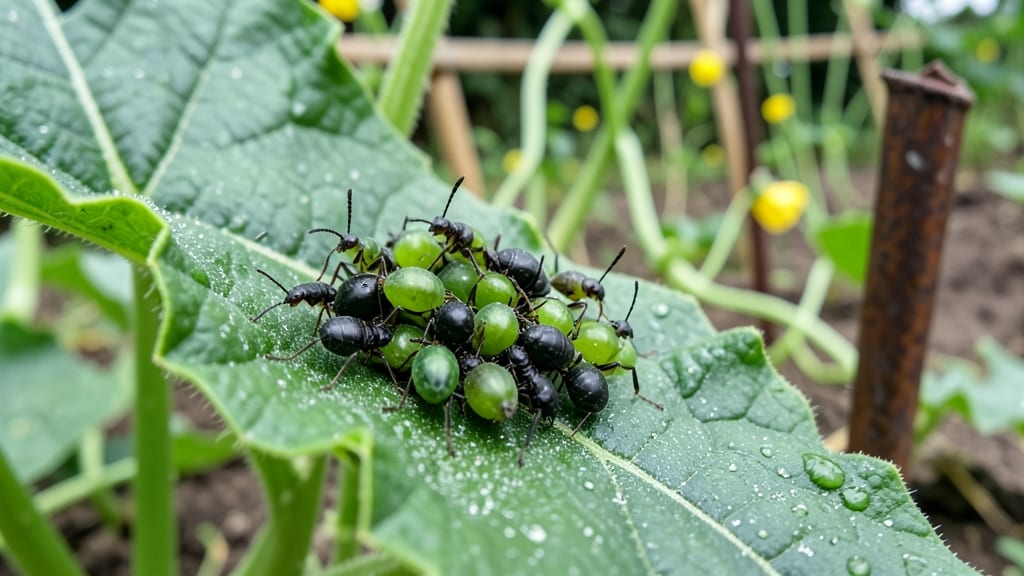
Aphids on cucumber leaves turn vibrant green into a sticky, curled mess in days. 🌿 I’ve watched my cucumbers go from thriving to struggling because of these tiny pests—and I’ve learned the 5-minute natural spray that clears them without harsh chemicals.
The secret isn’t complicated: it’s about timing, ingredients you already have, and knowing when to spray for maximum impact.
These sap-sucking insects love cucumbers because they’re soft and tender. You’ll spot them clustered on new growth, leaving behind a shiny residue called honeydew that attracts mold. The good news?
Aphids multiply fast, but so do their natural predators—ladybugs, lacewings, and parasitic wasps. The key is acting before they take over, which is where that quick spray comes in.
With the right mix of soapy water, neem oil, or garlic spray, you’ll see aphids drop off within minutes. The plants bounce back faster than you’d expect, and the spray keeps working for days.
No more wilting leaves, no more sticky messes—just healthy, productive cucumbers ready to climb your trellis.
This method works for any garden, whether you’re growing in containers or rows. The best part? You’ll also prevent future infestations by encouraging beneficial insects to stick around. Let’s get those leaves clean and those cucumbers growing strong again.
Root Causes Of Leaf Infestations
Aphids don’t just randomly appear on your cucumber leaves—they’re drawn by a mix of environmental, plant health, and ecological factors. Understanding these triggers helps you prevent outbreaks before they start.
Below, we break down the science behind why these tiny pests target your cucumbers, so you can act fast and protect your harvest.
Aphids are like nature’s opportunists—they home in on stressed or weakened plants because they’re easier to feed on. When cucumbers lack nutrients, water, or proper care, their sap becomes sweeter and more appealing to aphids. Here’s why:
- Nutrient Deficiencies: Aphids thrive on nitrogen-rich sap. If your soil lacks nitrogen (a common issue in sandy or overworked soil), your plants may overproduce sugars in their leaves to compensate—making them a buffet for aphids.
- Overwatering or Drought Stress:
- Too much water = soft, tender leaves (aphids love these).
- Too little water = concentrated sugars in leaves (aphids detect this via scent).
- Poor Air Circulation: Crowded plants or dense foliage trap humidity, creating a perfect microclimate for aphids to multiply. Stagnant air also slows plant recovery, making them more vulnerable.
Actionable Fix: Test your soil for nitrogen levels (aim for 20–40 ppm in the root zone) and adjust watering to keep soil consistently moist but not soggy. Prune leaves to improve airflow—especially in greenhouses or shaded areas.
Aphids don’t have eyes—they rely on chemical cues. Your cucumber plants might be unknowingly advertising their presence to aphids through:
| Plant Feature | Why Aphids Love It | How to Reduce Appeal |
|---|---|---|
| New Growth | Tender, fast-growing leaves have high sugar content and thin cell walls, making them easy pickings. | Pinch off tips of vines to slow new growth (aphids will move to older leaves). |
| Yellowing Leaves | Stressed or nutrient-deficient leaves emit volatile organic compounds (VOCs) that aphids detect from up to 3 feet away. | Fertilize with a balanced NPK (e.g., 10-10-10) and remove heavily yellowed leaves. |
| Honeydew Residue | Aphids excrete honeydew, which attracts ants (their protectors) and fungal growth, further stressing the plant. | Wipe leaves with a damp cloth to remove residue and disrupt the aphid-ant relationship. |
Pro Tip: 🌡️ Heat stress (temps above 85°F) can make cucumbers emit distress signals. Use shade cloth during peak afternoon sun to keep leaves cool.
Aphids and ants have a symbiotic relationship: ants farm aphids for honeydew, while aphids get protection. Here’s how it plays out:
- Ant “Milking”: Ants stroke aphids to make them produce more honeydew, which the ants eat. In return, ants aggressively defend aphid colonies from predators (like ladybugs).
- Bridge-Building: Ants create physical pathways (using their own secretions) to connect aphids on different plants, spreading infestations faster.
- Indoor/Greenhouse Risk: Ants can carry aphid eggs indoors on their bodies, leading to sudden outbreaks even if your outdoor plants are clean.
Actionable Fix:
- Disrupt the relationship by blocking ant trails with sticky barriers (e.g., petroleum jelly on plant stems).
- Introduce aphid predators like ladybugs or lacewings—ants won’t protect them!
- Use diatomaceous earth around the base of plants to deter ants (but avoid direct contact with aphids, as it can harm them too).
Aphids are cold-sensitive but thrive in specific conditions. If your garden matches their ideal habitat, they’ll stick around like uninvited guests. Key triggers:
- Mild Winters: Aphids often survive winter as eggs on nearby plants (e.g., roses, dandelions). If your region has freeze-free winters, they hatch earlier and colonize faster.
- Warm Springs: Temperatures between 60–80°F are prime aphid breeding weather. They reproduce asexually, meaning one female can birth 50–100 nymphs in a week.
- High Humidity: Aphids prefer 60–80% humidity. Greenhouses or plastic tunnels trap moisture, creating a aphid paradise.
- Wind Patterns: Aphids can’t fly far, but gentle breezes help them disperse to new plants. Windbreaks or dense foliage can trap them near your cucumbers.
Pro Tip: ✨ Reflective mulch (like aluminum foil or silver plastic) can disorient aphids by reflecting light and heat, making your plants less appealing. Try it in high-risk areas!
Now that you know why aphids target your cucumbers, the next step is act fast with targeted, chemical-free fixes. The good news? Most infestations can be stopped in minutes with the right approach.
Quick Fixes for Cucumber Aphids
Aphids on your cucumber leaves don’t have to be a garden nightmare—with the right approach, you can banish them fast and keep your plants thriving. Below are practical, natural solutions tailored to the root cause of your infestation, from quick fixes to long-term prevention.
Let’s tackle this pest problem step by step!
Aphids love weak, crowded plants because they’re easier to feed on. If your cucumbers are struggling, give them a fighting chance before attacking the pests.
🌱 Step 1: Prune for Better Airflow
- Why? Aphids thrive in tight, humid spots where leaves touch.
Good airflow reduces their hiding places and discourages them from sticking around. - How? - Snip away any yellowing or damaged leaves (🔪). - Space out vines if they’re tangled—use stakes or trellises to elevate them. - Thin out excess foliage so sunlight reaches the lower leaves (⏰ Best time: Early morning or late afternoon).
💡 Pro Tip:
If your cucumbers are root-bound, gently loosen the soil around the base (but don’t disturb roots). This encourages stronger growth and makes plants less appealing to aphids.
🌡️ Step 2: Fertilize Smartly Aphids target nutrient-deficient plants.
A quick boost of balanced fertilizer (like 10-10-10) or compost tea can make your cucumbers less tempting. - Quick fix: Mix 1 tbsp of fish emulsion or kelp meal into water and spray on leaves (👨🍳 Wear gloves!). - Prevention: Use a slow-release organic fertilizer at planting time to avoid nutrient spikes that attract pests.
If you’ve spotted sticky residue (honeydew) or curled leaves, it’s time for direct action. These methods work in minutes to hours—no harsh chemicals needed.
💦 Method 1: Blast Them Away (Physical Removal)
- Why? A strong stream of water dislodges aphids and washes away their sticky trails.
- How?
- Hold a hose nozzle close to the leaves and spray for 10–15 seconds (💦 Use a gentle but firm stream).
- Repeat every 2–3 days until they’re gone.
- Bonus: This also removes spider mites or whiteflies if they’re lurking.
🌿 Method 2: Soap or Oil Spray (Instant Kill)
- Why? Insecticidal soap or neem oil suffocates aphids on contact without harming your plants.
- How to make a homemade soap spray: 1.
Mix 1 tbsp mild liquid Castile soap (or 1 tsp dish soap) with 1 quart of water. 2. Add 1 tsp vegetable oil (like coconut or canola) to help it stick. 3. Spray directly on aphids (cover both tops and undersides of leaves).
- Reapply every 3–5 days until infestation clears (⏰ Apply in early morning or evening to avoid burning leaves). - Store-bought option: Use neem oil spray (follow package instructions).
✨ Method 3: Introduce Natural Predators
- Why? Ladybugs, lacewings, and parasitic wasps eat aphids—they’re nature’s pest control!
- How?
- Buy ladybug larvae or lacewing eggs from garden centers (🐞 Release them at dusk).
- Plant companion flowers like dill, fennel, or marigolds to attract them.
- Avoid pesticides—even "organic" ones can harm these helpful bugs.
Once you’ve kicked aphids to the curb, keep them from coming back with these easy habits:
🌱 Plant Smart, Stay Ahead
- Choose resistant varieties: Some cucumbers (like ‘Straight Eight’ or ‘Lemon’) are less aphid-prone.
- Rotate crops: Don’t plant cucumbers in the same spot every year—aphids overwinter in soil.
- Interplant with repellents: Garlic, chives, or basil near cucumbers can deter aphids.
🚿 Keep Plants Clean & Hydrated
- Wipe leaves with a damp cloth weekly to remove eggs or early signs of infestation.
- Water at the base (not overhead) to avoid creating damp leaf conditions aphids love.
- Remove fallen leaves/debris where aphids hide (🧹 Check under pots too!).
🎯 Monitor & Act Fast
- Check leaves daily (aphids multiply fast—200 babies in a week!).
- Isolate new plants for a few days to spot hitchhiking pests early.
- Avoid broad-spectrum pesticides (like malathion)—they kill beneficial insects too.
- Don’t ignore yellowing leaves—aphids spread faster on weak plants.
- Skip the "wait and see" approach—aphids reproduce exponentially!
With these targeted fixes, your cucumber plants will bounce back stronger—and aphids won’t stand a chance. Happy gardening! 🌱💚
Frequently asked questions
Why do aphids cluster on the undersides of cucumber leaves?
Aphids prefer the undersides because they’re cooler, more humid, and provide better protection from predators and strong sunlight. The tender new growth there is also packed with sweet sap they crave. Check both sides of leaves daily—you’ll often spot them hiding there first.
How quickly can a small aphid infestation become a big problem?
Aphids reproduce exponentially—one female can produce 50–100 nymphs in just 7 days under ideal conditions. If left unchecked, a few dozen can turn into thousands in 2–3 weeks, completely defoliating your cucumber plants. Act within 48 hours of first sighting for best results.
Will homemade sprays actually kill aphids, or just move them?
Good homemade sprays (like soapy water or neem oil) will kill most aphids on contact, but some may temporarily relocate. For best results, spray both sides of leaves and repeat every 3–5 days. Combine with physical removal (blasting with water) to maximize effectiveness and prevent regrowth.
Can I use garlic spray on cucumber leaves, or will it burn them?
Garlic spray is safe for cucumbers when used correctly! Mix 1 chopped garlic clove with 1 quart of water and 1 tsp mild soap, then strain. Apply in the evening and avoid direct sunlight for 24 hours afterward to prevent any potential leaf burn. Always test a small area first.
What should I do if ants are protecting my aphids?
Break their partnership by creating physical barriers! Apply petroleum jelly to plant stems (ants can’t cross it) or sprinkle diatomaceous earth around the base. Introduce aphid-eating predators like ladybugs—ants won’t protect them! For severe cases, use borax bait stations (1 tbsp borax + 1 cup sugar + warm water) placed away from plants.