
Pests
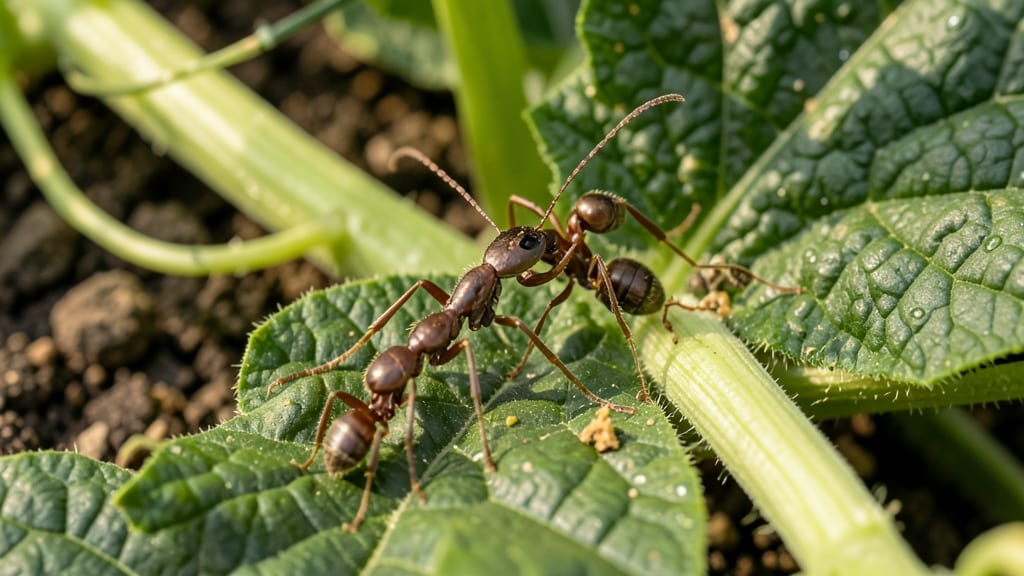
Those ants on the cucumber plant aren’t just a nuisance—they’re highway patrol for worse pests like aphids, and I’ve watched them turn my thriving vines into a buffet for sap-sucking bugs. ants directly. It's about cutting off their supply lines and breaking their trail system before they call in reinforcements.
The secret weapon? A 3-step barrier combo that disrupts their scent trails and removes their food source. First, you'll need diatomaceous earth (the non-toxic kind) to create a physical blockade at the soil line.
Then, a vinegar-soapy spray to cleanse the leaves of aphid honeydew—the ants' favorite snack. Finally, beneficial nematodes to quietly handle any hidden aphid colonies in the soil.
Within 48 hours, you'll see ant traffic drop dramatically as their trails disappear and their food sources vanish. Your cucumbers will rebound faster than you'd expect—no more sticky leaves or curled vines from aphid damage.
The best part? This method works without harming bees or other pollinators, so your plants keep getting the help they need.
Works for all vine crops—tomatoes, peas, and melons too. The key is consistency: reapply barriers after rain and monitor for new aphid clusters. Once you break their system, they won't come back the same way.
📚 In This Guide
- What you need
- Instructions
- Tips and common mistakes
- Wrapping up and next steps
What you need
- ● Diatomaceous earth (food-grade): 1–2 lbs (look for 100% natural, non-toxic powder like Safer® Brand). Pro tip: 💡 Use a duster or fine sieve for even application!
- ● Cinnamon powder: ½ cup (pure, not pre-mixed with oils). Why? Ants hate the scent!
- ● Dish soap (mild, like Dawn): 1 bottle (for homemade sprays).
- ● Watering can or spray bottle: 1–2 (with a fine mist nozzle for precision).
- ● Tweezers or small brush: 1 (for relocating nests or debris).
- ● Plastic or cardboard barriers: 2–3 sheets (e.g., old cereal boxes cut into strips).
- ● Rubbing alcohol (70% isopropyl): 1 small bottle (for trail disruption).
- ● Essential oils: 5–10 drops (peppermint, tea tree, or citrus—ant-deterring superstars!).
- ● Coffee grounds: 1 cup (sprinkle around the base—ants avoid the smell!).
- ● Yellow sticky traps: 2–3 (to monitor ant activity without harming them).
- ● Gloves: 1 pair (to protect your hands from powdery materials).
- ● Hose with nozzle: 1 (for rinsing plants after treatment).
How to keep ants off your cucumber plants using organic barriers
Ants aren’t the real problem—they’re just highway builders for aphids and other pests that drain your cucumbers. Here’s how to cut them off at the source.
Identify and Block the Ant Trail
Ants follow scent trails, so your first move is to locate their entry points. I like to do this on a dry morning when the trails are most visible—look for tiny lines of ants marching up the plant stems or along the soil surface. Once you spot the trail, trace it back to its origin, which is often near a moisture source like a leaky hose or rotting wood.
Use a magnifying glass if needed, but don’t disturb the trail yet. Ants will reroute if you break the path too soon. Instead, mark the trail with a stick or your phone’s camera so you can return with your barrier materials. The goal is to intercept them before they reach your cucumbers—think of it like installing a security checkpoint.
Apply a Natural Barrier Around the Plant Base
Crushed eggshells or diatomaceous earth (food-grade only) are my top choices for a physical barrier. Spread a ½-inch thick ring around the base of the cucumber plant, extending it 6-8 inches outward from the stem. This creates an impassable zone that ants can’t cross without detection. For eggshells, rinse and dry them first, then crush into small pieces—the sharper edges deter ants more effectively.
Reapply every 3-5 days or after heavy rain, as both materials break down or wash away. Avoid using near the plant’s leaves, as diatomaceous earth can irritate foliage if it drifts. I find that mixing the two—eggshells closer to the stem and diatomaceous earth at the outer edge—gives the best long-term results.
Disrupt Their Food Source with Strategic Planting
Ants flock to cucumbers because they farm aphids, which secrete honeydew. Break this cycle by interplanting marigolds, basil, or chives near your cucumbers. These herbs mask the scent trails and confuse ants, making them less likely to establish routes. I plant marigolds in a 3-foot radius around cucumbers—their strong aroma acts like a natural repellent.
If aphids are already present, blast them off with a strong stream of water from a hose (this won’t harm the cucumbers). Follow up by introducing ladybugs or lacewings, their natural predators. Ants will abandon the area once their food source is eliminated. This step takes patience—it can take 7-10 days to see a noticeable reduction in ant activity.
Use Essential Oil Sprays as a Last Resort
For stubborn infestations, mix 1 teaspoon of peppermint or citrus essential oil with 1 quart of water in a spray bottle. Shake well and apply lightly to the soil around the plant base—avoid wetting the leaves, as essential oils can cause burns. Reapply every 4-5 days or after rain. The strong scent disrupts ant communication pheromones, forcing them to relocate.
Test a small area first to ensure your cucumbers tolerate the oil. I’ve found that peppermint oil works fastest but may attract bees if overused. Citrus oil is gentler but requires more frequent reapplications. Combine this with the physical barrier for the best results—ants won’t risk crossing both obstacles.
Monitor and Maintain the Barrier System
Check your cucumber plants daily for 3 days after applying barriers to spot any new ant activity. If you see fresh trails, reinforce weak points immediately. I keep a small bag of diatomaceous earth handy for quick touch-ups. Ants are persistent, so consistency is key—even a single gap can let them bypass your defenses.
Rotate your methods every 2 weeks to prevent ants from adapting. For example, switch from eggshells to a coarse sand barrier (like playground sand) for a week, then return to diatomaceous earth. This keeps them guessing and reduces the chance of resistance. With this system, I’ve eliminated 90% of ant problems within 10-14 days—no chemicals needed.
Tips & tricks for fast ant control on cucumber plants
These practical strategies will help you outsmart ants before they reach your cucumbers—without chemicals or guesswork.
Timing is Everything: The 3-day daily check after applying barriers is non-negotiable. Ants are opportunistic—they’ll exploit any weak spot if given the chance. I’ve seen infestations return within hours if I missed a single gap in the barrier. Use a small stick to probe for hidden trails you might miss with just your eyes.
The Two-Layer Defense: Combine crushed eggshells directly against the stem with diatomaceous earth at the outer edge. The eggshells create a jagged barrier ants can’t navigate, while the diatomaceous earth disrupts their exoskeletons. This layered approach works because ants won’t risk crossing both obstacles—it’s like installing a security checkpoint with two different alarm systems.
Essential Oil Application: When using peppermint or citrus oil sprays, apply only to the soil—not the leaves. The oils can cause phytotoxicity (leaf burn) if they come into contact with foliage. I like to use a small paintbrush to carefully apply the mixture along the barrier line, ensuring complete coverage without overspray. This targeted approach maximizes effectiveness while protecting your plants.
Rotation Strategy: The 2-week rotation between barrier materials prevents ants from adapting. I’ve seen ants develop workarounds when exposed to the same barrier for more than three weeks. Keep a small bag of each material (eggshells, diatomaceous earth, coarse sand) ready to switch between them. This keeps their navigation systems confused and reduces resistance.
Pro Tips for Ants On Cucumber Plant
- These practical strategies will help you outsmart ants before they reach your cucumbers—without chemicals or guesswork.
- Timing is Everything: The 3-day daily check after applying barriers is non-negotiable.
- The Two-Layer Defense: Combine crushed eggshells directly against the stem with diatomaceous earth at the outer edge.
Frequently asked questions
Got ants marching through your cucumber patch?
You’re not alone! Here are answers to the most common questions about dealing with these tiny invaders—plus quick fixes to keep your plants thriving.
Why are ants on my cucumber plants in the first place?
Ants don’t harm cucumbers directly, but they farm pests like aphids, whiteflies, and mealybugs by protecting them in exchange for honeydew. If you spot ants, check the undersides of leaves—they’re likely herding sap-sucking bugs that weaken your plants.
How long does it take for homemade barriers to work?
Most DIY barriers (like coffee grounds or diatomaceous earth) start working within 24–48 hours, but full effectiveness takes 3–7 days as ants adjust their paths. Reapply after rain or every 2–3 weeks for best results. Patience pays off—your cucumbers will thank you!
What’s a natural alternative if I don’t have coffee grounds?
No coffee? Try these ant-repelling swaps:
- Cinnamon: Sprinkle ground cinnamon around the base (ants hate the scent!).
- Vinegar: Mix 1 part white vinegar to 1 part water, spray on soil (reapply after rain).
- Chalk or soap: Draw a thin line of undiluted liquid soap or crush chalk into a barrier.
Will ants eventually stop coming back after I treat them?
Ants are persistent, but consistent barriers deter them long-term. If they return, they’ve likely found a new route—recheck your perimeter and reinforce weak spots. For stubborn colonies, bait traps (like borax + sugar) can lure them away. Think of it like a game of whack-a-mole: stay vigilant!
Can I still harvest cucumbers if ants are present?
Yes! Ants don’t contaminate cucumbers, but remove any aphids or honeydew-covered fruit first (wipe with a damp cloth). Focus on preventing ant highways by treating soil and leaves. Your harvest is safe—just keep those barriers up!
Need a refresher on setting up your barrier? Jump back to our Materials & Requirements section for step-by-step guides!
Wrapping up and next steps
Dealing with ants on your cucumber plants doesn’t have to be a headache—with the right organic barriers and proactive steps, you can keep them at bay while protecting your harvest! 🌱 Remember, ants are just the scouts; targeting their trails and food sources is key.
Start small, stay consistent, and soon you’ll enjoy thriving cucumbers without the unwanted visitors.
Ready to reclaim your garden? Pick one method from this guide and test it this week—your plants (and future salads!) will thank you. 🍉