
Picking
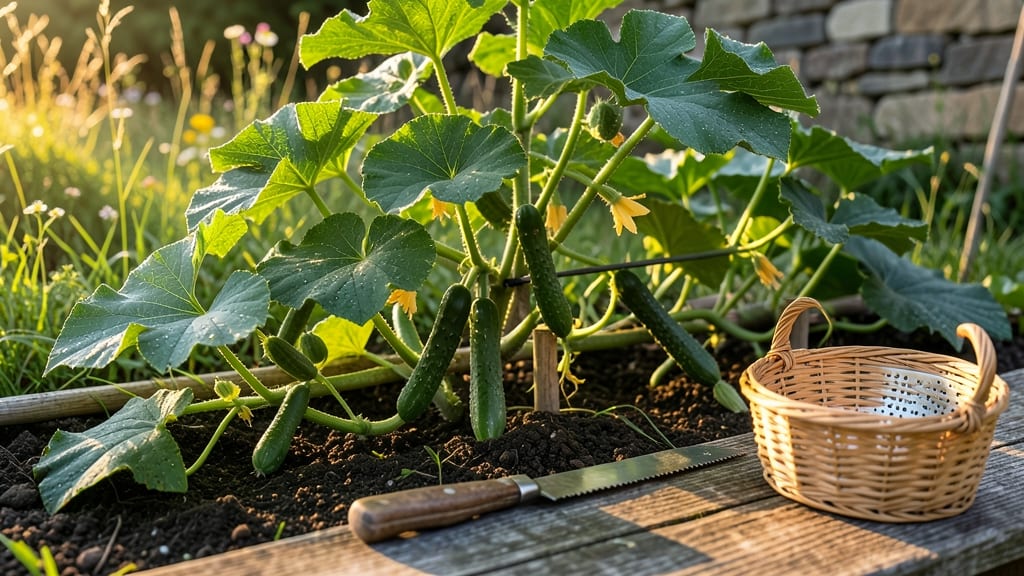
Picking cucumbers from the garden at the right moment means the difference between a crisp, sweet bite and a bitter, seedy disappointment.
Harvesting too early leaves you with undersized fruit, while waiting too long turns them into tough, watery logs. But with the right timing, you’ll enjoy cucumbers that are tender, flavorful, and perfect for slicing, pickling, or stuffing.
Most gardeners focus on size—around 6-8 inches for slicing types—but color, firmness, and even the stem’s appearance play a role. A quick check of these three cues will tell you when your 🥒 is ready to pick.
Below, I’ll walk you through the exact signs to watch for, how to adjust for different varieties, and why checking your plants every 2-3 days keeps the harvest flowing all summer.


3 Size and color checks to harvest cucumbers at peak freshness
Harvesting cucumbers at the perfect moment transforms your garden bounty from bland to brilliant. The key lies in understanding three critical visual cues: length, diameter, and color.
These checks ensure your cucumbers stay crisp, sweet, and seedless—whether you're growing slicing varieties like Marketmore or pickling types such as Boston Pickling. Miss these cues, and you risk bitter, seedy disappointment that even the best recipes can't salvage.
Start with length, the most straightforward indicator. Most slicing cucumbers hit peak freshness between 6 and 8 inches, while pickling varieties should be harvested at 3 to 4 inches.
Seedless varieties like Sweet Success often mature slightly smaller—around 5 to 6 inches—so always check the seed packet for variety-specific guidelines. Remember, cucumbers continue growing after reaching the vine, so regular checks prevent overripeness.
Next, examine the diameter of your cucumbers. Ideal slicing cucumbers should measure about 2 to 2.5 inches in width, while pickling types should be closer to 1 to 1.5 inches. A diameter larger than these ranges often signals overmaturity, which leads to tough skin and bitter flavor.
Use a ruler or your hand as a quick reference—most adult fingers span roughly 1.5 inches when held together.
Color provides the final clue to perfect harvest timing. For green slicing varieties, look for a uniform, vibrant hue without yellowing or brown spots. Pickling cucumbers should be a slightly darker green, often with a glossy finish.
Varieties like Lemon Cucumber will develop their signature yellow color when ready, while Armenian cucumbers should turn a rich, deep green. Avoid harvesting when the skin shows signs of yellowing or softening, as this indicates overripeness.
| Cucumber Type | Ideal Length | Ideal Diameter | Color Cues | Best For |
|---|---|---|---|---|
| Slicing (e.g., Marketmore) | 6-8 inches | 2-2.5 inches | Bright green, no yellow | Salads, sandwiches |
| Pickling (e.g., Boston Pickling) | 3-4 inches | 1-1.5 inches | Dark green, glossy | Fermenting, pickling |
| Seedless (e.g., Sweet Success) | 5-6 inches | 1.5-2 inches | Uniform green | Fresh eating |
| Lemon (e.g., Lemon Cucumber) | 4-5 inches | 1-1.5 inches | Yellow when ripe | Garnishes, salads |
| Armenian (e.g., Snake Cucumber) | 12-18 inches | 1 inch | Deep green, bumpy | Stir-fries, grilling |
Variety-specific adjustments are crucial for peak freshness. For example, Armenian cucumbers can grow up to 18 inches long before reaching their best flavor, while bush varieties like Bush Champion mature faster and should be harvested at 4 to 5 inches.
Always check the seed packet for exact measurements, as some heirloom varieties have unique standards. Pro tip: Keep a small notebook near your garden to track which varieties perform best in your climate.
Environmental factors also influence harvest timing. Hot, dry weather can accelerate ripening, so check your cucumbers every 2 to 3 days during heatwaves. Conversely, cooler temperatures may slow growth, giving you more time to monitor size and color.
Pay attention to the stem end—when it turns yellow or brown for slicing types, it's a clear signal that harvest time has arrived. For pickling cucumbers, the stem end often remains green but becomes slightly softer.
Don’t overlook the importance of skin texture as a secondary check. At the perfect harvest stage, cucumber skin should yield slightly to gentle pressure from your thumbnail but not feel mushy. If the skin feels
How to test cucumber ripeness beyond size and color
Even when cucumbers look perfect, their true ripeness hides in tactile clues and subtle sensory cues. Skin texture and seed development reveal whether your cucumbers are at their peak—or past it.
I’ve learned that relying solely on color can lead to disappointing, seedy harvests, so I always double-check with these three sensory tests before cutting.
Start by gently pressing the cucumber’s skin with your thumbnail. A perfectly ripe cucumber should yield slightly but still feel firm to the touch.
If it’s rock-hard, it’s underripe; if it feels mushy, it’s overripe. This simple test helps me avoid both extremes and ensures crisp, flavorful slices every time.
⚠️ WARNING: Overripe Cucumbers Can Ruin Your Harvest ⚠️
- Bitter taste from cucurbitacin buildup
- Large, mature seeds (hard and unpalatable)
- Yellowing or spongy skin (sign of decay)
Next, slice open a cucumber to inspect the seeds. Tiny, pale seeds mean it’s ready for slicing or salads. If the seeds are large, dark, and developed, the cucumber is past its prime. I also look for gelatinous seed coats, which signal overripeness and a watery, bland texture.
For the ultimate test, take a bite! A ripe cucumber should be crisp, refreshing, and slightly sweet with no bitterness. If it tastes harsh or seedy, it’s time to harvest more frequently. This taste test is my final quality check before using cucumbers in salads, sandwiches, or pickling.
Pay attention to the stem end too. A ripe cucumber’s stem end will turn yellow or brown for slicing types, while greenhouse varieties often stay green but develop a slight softness. This color shift is a clear signal that the cucumber is ready to pick.
Mastering these sensory tests ensures you’ll always harvest cucumbers at their peak flavor and texture. The more you practice, the easier it becomes to spot the perfectly ripe cucumber—no guesswork required! 🌱