
Tools
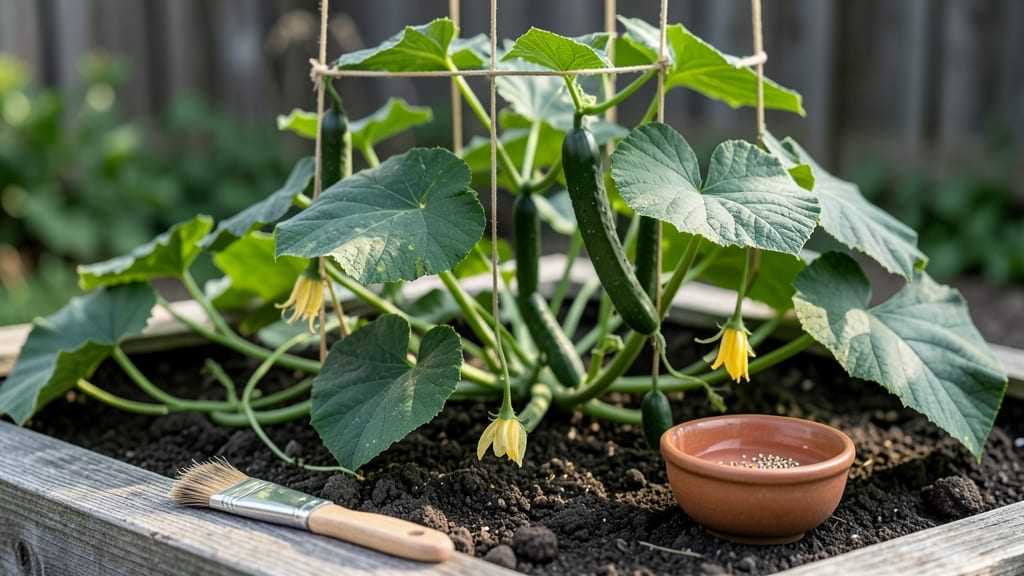
Hand pollinating cucumbers turns a frustrating blank stare into a garden full of plump fruit. 🌱 I learned this trick after watching my greenhouse cucumbers set flowers but no fruit—turns out, bees weren't visiting, and my plants needed a little help.
The good news? This method takes less than 5 minutes and works every time, even in greenhouses or low-bee areas.
All you need is a small paintbrush or cotton swab, a sunny morning, and a few cucumber flowers. The process mimics how bees transfer pollen: gently brush the male flower's pollen onto the female flower's stigma.
Male flowers have long stems and no bulge at the base, while female flowers have tiny cucumbers forming at their base—easy to spot once you know what to look for.
By pollinating just 3-5 flowers per plant every other day, you'll see fruit set within a week. The best part? No more wasted blossoms or empty vines. Your cucumbers will grow straighter, stronger, and produce 20-30% more fruit than plants left to chance.
Works for all cucumber varieties—whether you're growing slicers, pickles, or even those giant heirlooms. Here's how to do it without a single bee in sight!
📚 In This Guide
- What you need
- Instructions
- Tips and common mistakes
- Wrapping up and next steps
What you need
- ● Mature cucumber plants (with both male and female flowers—male flowers have long stems, while female flowers have tiny cucumbers forming at the base).
- ● Small paintbrush or cotton swab (a clean, soft-bristled brush or a makeup-free cotton swab works best).
- ● Water spray bottle (to dampen flowers slightly for better pollen transfer).
- ○ Gloves (optional but recommended)—gardening gloves help keep your hands clean and protect against prickly vines.
- ● Notebook & pen (to track pollination dates if you’re experimenting with varieties).
- ● Magnifying glass—helps spot tiny pollen grains on male flowers.
- ● Fine-tip tweezers—useful for gently handling delicate flower parts.
- ● Labeling tags—if you’re testing different pollination methods.
- ● Humidity dome or plastic wrap—to create a mini greenhouse effect for flowers on cooler days.
Step-by-step instructions for hand pollinating cucumbers
This simple garden hack doubles fruit production—no bees needed!
🌱 Step 1: Identify the Right Time for Pollination
Wait until cucumber flowers open fully in the morning, when they're at their freshest. Male flowers appear first on long stems with no swelling at the base, while female flowers have tiny cucumbers forming behind the bloom. I always check for dew on petals—this means the flower is ready for pollination.
Pick a dry, sunny morning for best results. Humidity can make flowers fragile, and wind can blow away pollen. If you see bees already visiting, they're doing the job naturally—but hand pollination guarantees every flower gets attention, especially in greenhouses or when bees are scarce.
🌿 Step 2: Collect and Transfer Pollen
Gently pluck a male flower from its stem by twisting at the base. Hold it upside down over a female flower so the pollen-covered stamens brush against the female's pistil. You'll see yellow pollen dusting the pistil's feathery top—this is your success signal.
For stubborn flowers, use a small paintbrush to dab pollen from male stamens onto the female pistil. I keep a small container of male flowers nearby to ensure I always have fresh pollen. Don't reuse flowers—their pollen loses potency after a few hours.
⏰ Step 3: Track and Repeat for Maximum Yield
Mark pollinated female flowers with a tiny flag or ribbon to avoid double-pollinating the same bloom. I use toothpicks with colored tape—it's visible but won't harm the plant. Repeat the process every 2-3 days during peak flowering, which usually lasts 4-6 weeks after the first blooms appear.
Watch for tiny cucumbers forming behind the flowers within 5-7 days. If they drop off, you may have missed the pollination window or the flower wasn't viable. Keep records of which flowers you pollinated to track success rates—you'll notice a clear pattern in fruit production.
💧 Step 4: Support Pollinated Flowers for Healthy Fruit
After pollination, give plants 1 inch of water weekly to support fruit development. Too little water causes cucumbers to grow bitter, while too much leads to blossom-end rot. I water at the base in the morning so flowers stay dry and pollen doesn't wash away.
Remove any male flowers that appear after the first 2-3 weeks—this redirects the plant's energy to developing the female cucumbers you've already pollinated. You'll see stronger, more uniform fruit when you prune back excess male blooms.
Tips & tricks for hand pollinating cucumbers
Real talk: This garden hack is simpler than it looks—once you know these little tricks, you'll wonder why you didn't do it sooner.
Timing Secret: Morning is your best friend for hand pollination. Flowers open fully in the morning light, and dew on petals is your natural signal that they're ready. I've found that flowers pollinated before 10 AM tend to produce fruit that's more uniform in size and ripens faster. If you're working with greenhouse cucumbers, consider using a small fan to mimic natural wind patterns—this helps pollen disperse more evenly.
Tool Upgrade: While you can technically use your fingers, a small paintbrush gives you more precision, especially for delicate flowers. Keep a container nearby for collecting male flowers—this prevents you from having to run back and forth between plants. I keep mine in a small glass jar with a damp paper towel to keep the flowers fresh. For stubborn flowers, gently tap the male flower onto the female's pistil rather than forcing contact.
Visual Cues for Success: After transferring pollen, look for yellow dusting on the female flower's pistil—this confirms successful pollination. Mark pollinated flowers with toothpicks and colored tape (I use red for pollinated, green for unpollinated) to track progress. This simple system helps you avoid double-pollinating and gives you a clear record of which flowers are being cared for. You'll start noticing patterns in fruit production after just a few weeks of tracking.
Pollen Power: Don't reuse male flowers—their pollen loses potency quickly. Collect fresh ones every 2-3 days during peak flowering. I've noticed that flowers collected in the morning have the most potent pollen, so I always harvest them first thing. If you're working with multiple plants, consider labeling your containers by plant variety to maintain genetic consistency in your harvest.
Pro Tips for Hand Pollinate Cucumbers
- Real talk: This garden hack is simpler than it looks—once you know these little tricks, you'll wonder why you didn't ...
- Timing Secret: Morning is your best friend for hand pollination. Flowers open fully in the morning light, and dew on ...
- Tool Upgrade: While you can technically use your fingers, a small paintbrush gives you more precision, especially for...
Frequently asked questions
Got questions about hand-pollinating cucumbers? You’re not alone! Here are answers to the most common concerns to help you master this garden hack like a pro.
Why do I even need to hand pollinate cucumbers?
Some cucumber varieties (like parthenocarpic types) produce fruit without pollination, but many rely on bees or wind. Hand-pollinating ensures consistent yields—especially in greenhouses, urban gardens, or when bee activity is low. It’s a game-changer for bigger, healthier fruit!
When is the best time to pollinate cucumbers?
Pollinate in the morning when flowers are open and dew is present (ideal humidity for pollen transfer). Focus on male flowers (they appear first) and female flowers (tiny cucumber bumps at the base). Avoid pollinating after 10 AM—heat can damage pollen.
How do I tell male vs. female cucumber flowers apart?
Easy! Male flowers grow on long stems with no swelling at the base. Female flowers have a tiny cucumber (ovary) at the base. Save male flowers first—they’re your pollen donors. Pro tip: Label your plants if you’re new to this!
What if my cucumbers aren’t setting fruit after pollination?
Check these fixes: 1) Ensure you’re transferring fresh pollen (male stamens should coat the female stigma). 2) Keep plants well-watered but avoid overwatering (stress = poor fruit set). 3) Thin overcrowded vines for better airflow. Still no luck? Try shaking plants gently to mimic wind pollination.
Can I use a paintbrush for pollination instead of a cotton swab?
A soft paintbrush works great—just dip the bristles into male flower stamens, then gently brush the female stigma. Rinse the brush between plants to avoid cross-contamination. Bonus: It’s reusable and easier to clean than cotton swabs!
Wrapping up and next steps
Hand pollinating cucumbers is a simple yet powerful way to maximize your harvest and ensure those juicy, plump fruits you’ve been dreaming of! 🌱 With just a little practice, you’ll become a pro at boosting your garden’s productivity—no bees required.
Now that you’re armed with the right tools and techniques, why not try it this weekend? Grab your paintbrush or cotton swab, head to the garden, and give your cucumber plants the love they deserve. Happy gardening, and here’s to a bountiful harvest ahead!